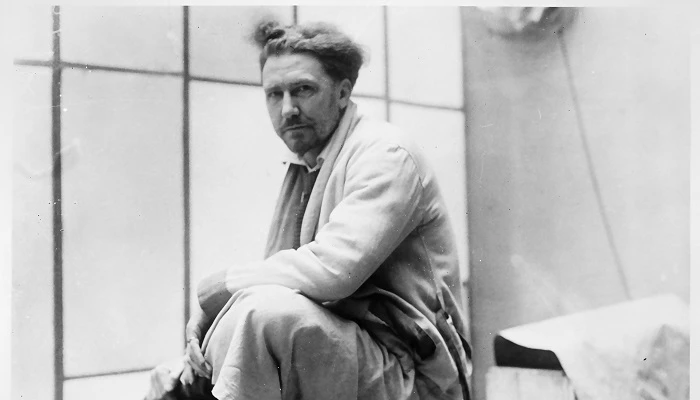

The poetry and prose of Ezra Pound stand among the most influential—and controversial—literary contributions of the twentieth century. Pound’s stylistic innovations shaped modernist poetry, yet his political views, expressed both explicitly and indirectly through his work, complicate his legacy. Understanding how these views function in his poetry requires examining the intellectual, economic, and ideological currents that shaped him, as well as tracing how they appear in the imagery, structure, and thematic concerns of his major works. This essay explores the political landscape of Pound’s writing, focusing particularly on his critiques of economic systems, his attraction to authoritarian solutions, and the moral contradictions that permeate his oeuvre.
Pound’s Early Political Interests
Economic Dissatisfaction and the Roots of His Ideology
Before the more infamous political positions for which he later became known, Ezra Pound exhibited deep concern with economics. His early correspondence and essays reveal frustration with what he saw as corruption, exploitation, and inefficiency in Western financial systems. Pound believed that poetry and culture could not flourish when distorted by unjust economic forces. This perspective appears subtly in his early poems, where he criticizes materialism and emphasizes the importance of artistic integrity.
His interest in economics was influenced by thinkers such as C. H. Douglas and his theory of Social Credit. Pound adopted the idea that a flawed monetary system created unnecessary poverty and social decay. This conviction would later shape his belief that political intervention—rather than laissez-faire capitalism—was necessary for societal renewal.
National Identity and Cultural Regeneration
Pound was also drawn to concepts of national identity. He believed that nations must cultivate strong cultural foundations rooted in authentic traditions. This idea appears in works such as Cathay, where Pound uses translations and adaptations of Chinese poetry to argue, indirectly, for the preservation of cultural memory and moral order. Though not overtly political in a modern sense, these works reflect his belief that artistic heritage contributes to political stability.
Pound’s Turn Toward Authoritarianism
The Appeal of Strong Leadership
As Pound grew increasingly disillusioned with Western democracies and their economic structures during the late 1920s and early 1930s, he turned toward authoritarian models that seemed to promise efficiency and social coherence. Italy under Mussolini became his primary example. Pound admired what he perceived as Mussolini’s ability to act decisively, implement economic reforms, and unify national identity.
This admiration appears explicitly in his prose, but thematic echoes also emerge in The Cantos, where the poet juxtaposes historical examples of strong rulers with eras of corruption and decadence. Pound often evokes leaders such as Jefferson or Confucius as embodiments of balanced governance, using them as symbols for what he believed modern society lacked.
Political Lecture Through Poetic Form
Pound’s poetic techniques reflect his political thought. His use of fragmentation, juxtaposition, and dense historical layering mirrors his belief that society must return to earlier models of just governance. By creating collage-like sequences, he not only experiments aesthetically but also constructs an argument: that contemporary society is disordered because it has lost connection to ancient wisdom and economic justice.
In this way, The Cantos becomes both a political and artistic project. Pound intended it not merely as a poem but as a cultural monument capable of reshaping political consciousness.
Economic Critique as Political Argument
Money, Power, and Corruption
A central theme of Pound’s political views is his critique of usury. In Pound’s definition, usury was the lending of money at interest in a way he believed harmed society. He held that usury produced cycles of debt and control that undermined both artistic creation and moral order.
In Canto XLV, often called the “Usura Canto,” Pound presents usury as a destructive force that corrupts architecture, prevents artistic beauty, and impoverishes society. The poem uses repetitive structure, rhythmic insistence, and cultural imagery to emphasize his conviction that unjust financial practices destroy human potential. While not a systematic economic treatise, the poem expresses Pound’s belief that economic reform was essential for cultural rebirth.
The Moralization of Economics
Pound saw economic problems not just as technical issues but as moral failures. He connected monetary corruption with spiritual and ethical decline. This perspective shaped his conviction that political change must begin with economic reform. His poetry often links beauty, justice, and economic fairness, making aesthetics inseparable from political philosophy.
Though compelling in its artistic force, this view led Pound down a path where economic critique became a justification for extreme ideological positions. His moral certainty contributed to his later political entanglements.
The Controversial Dimensions of Pound’s Politics
Extremism and Propaganda
Pound’s admiration for Mussolini and his belief in authoritarian economic reform led him to participate in Italian radio broadcasts during World War II. These broadcasts included content that aligned with fascist ideology and contained antisemitic statements. While these broadcasts are separate from his poetry, they shape how modern readers interpret the political dimensions of his writing.
In The Cantos, occasional passages reflect his fixation on conspiratorial explanations for economic crises. These moments reveal the darker side of his political imagination, which fused genuine economic concern with harmful and prejudiced ideas. His poetry does not consistently express these views, but they create moral tension within his work.
The Problem of Moral Responsibility
Scholars continue to debate how readers should navigate the political contradictions in Pound’s poetry. Some argue that the beauty of The Cantos is inseparable from the flawed ideology that shaped it. Others contend that Pound’s innovations in poetic form stand apart from his political errors. Regardless of interpretation, the complexity of his work forces readers to confront questions about the relationship between art and ideology.
Literary Responses to Pound’s Politics
The Modernist Community’s Reaction
Pound’s contemporaries admired his artistic genius but were troubled by his political statements. Poets such as T. S. Eliot and William Carlos Williams acknowledged his influence while distancing themselves from his ideological views. The modernist movement, shaped in part by Pound’s editorial and poetic contributions, nonetheless had to reckon with the implications of his political commitments.
The Cantos as a Political Document
Readers of The Cantos often observe that Pound’s political passions are intertwined with his aesthetic project. The poem acts as a historical archive, collecting references to ancient China, Renaissance Italy, early America, and other periods Pound believed exemplified just governance. This eclectic structure reveals Pound’s attempt to build a political philosophy from the fragments of world history. The result is both ambitious and, at times, contradictory.
Conclusion
The political views expressed in the works of Ezra Pound are complex, influential, and deeply controversial. Rooted in economic frustration, shaped by admiration for authoritarian leadership, and expressed through poetic innovation, these views reveal a writer searching for solutions to what he perceived as global disorder. His critiques of capitalism, emphasis on cultural heritage, and longing for strong governance form the backbone of his political thought. Yet these ideas also led him to embrace harmful ideologies that cast a shadow over his literary achievements.
Understanding Pound’s political views requires careful navigation of his poetry, considering both its artistic brilliance and its troubling implications. In doing so, readers gain insight not only into Pound’s oeuvre but into the broader question of how art and politics influence one another in ways that are both illuminating and morally challenging.




























Sign in to leave a comment.