




Managing stormwater runoff has become a critical concern, particularly in urban areas with high levels of development. One of the most effective solutions to manage this runoff is through a SuDS Attenuation Tank. But what exactly is a SuDS Attenuation Tank, how does it work, and why should it be part of any modern drainage solution? In this article, we explore the ins and outs of SuDS Attenuation Tanks, their importance in sustainable water management, and how they integrate into larger drainage systems.
What Is a SuDS Attenuation Tank?
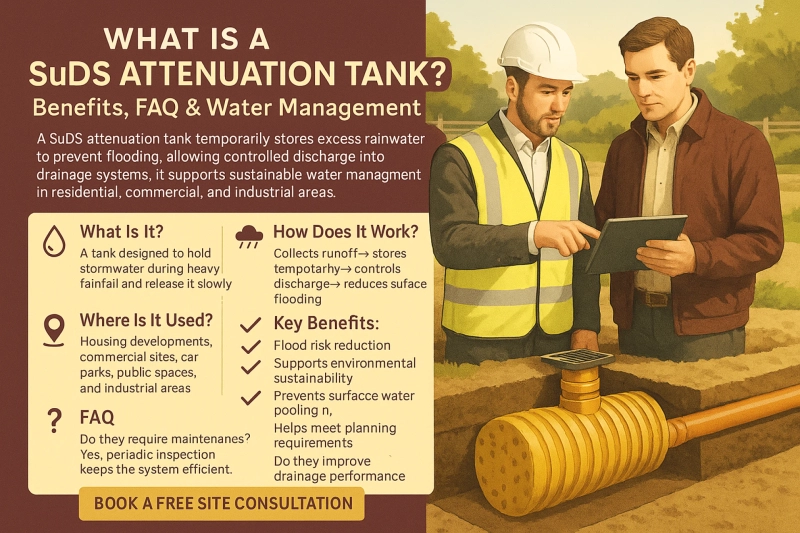
A SuDS Attenuation Tank (Sustainable Drainage System) is a designed structure used to manage surface water runoff from areas like roofs, parking lots, roads, and other impermeable surfaces. These tanks temporarily store rainwater or surface runoff and release it gradually into the drainage system or local watercourse. This controlled release prevents the system from being overwhelmed during heavy rain, reducing the risk of flooding and erosion.
SuDS Attenuation Tanks are crucial in urban environments where natural drainage is often disrupted by development. These systems allow the land to manage excess water in a more sustainable and environmentally friendly way. They reduce the strain on traditional drainage networks and help protect local watercourses from pollution.
How Does a SuDS Attenuation Tank Work?
A SuDS Attenuation Tank operates by holding stormwater in a designated area until it can be safely released over time. The tanks are typically buried underground and consist of chambers or tanks that store water. They are designed to handle large volumes of water in short periods, especially during heavy rainfalls.
The main function of a SuDS Attenuation Tank is to slow down the release of water into the drainage network, allowing it to flow gradually over time. This reduces the risk of flash flooding, waterlogging, and stress on downstream drainage systems. The tank can be sized according to the volume of runoff expected, based on factors such as the surface area of the property and the intensity of local rainfall.
Benefits of SuDS Attenuation Tanks
- Flood Prevention: By storing and slowly releasing water, SuDS Attenuation Tanks help prevent flash floods that could cause damage to infrastructure and properties.
- Pollution Control: These tanks can help filter out pollutants from surface runoff, such as oils, chemicals, and debris, before they reach local watercourses.
- Improved Water Quality: The controlled release of water into natural systems helps maintain the ecological balance, ensuring healthier streams, rivers, and lakes.
- Compliance with Regulations: In many urban areas, regulations require developers to implement SuDS to manage stormwater runoff. SuDS Attenuation Tanks ensure compliance with local water management laws.
- Space-Efficient: SuDS Attenuation Tanks are often installed underground, making them an ideal solution for areas with limited space above ground.
How SuDS Attenuation Tanks Integrate with Other Drainage Systems
While SuDS Attenuation Tanks are highly effective on their own, they are often part of a larger drainage system designed to manage water runoff more effectively. One common system that works alongside a SuDS Attenuation Tank is the Underground Sewer Drainage Lateral.
An Underground Sewer Drainage Lateral is a pipe that connects a property’s drainage system to the main sewer system. This lateral pipe helps direct wastewater and stormwater runoff away from buildings and into the public drainage network.
When used together, a SuDS Attenuation Tank and an Underground Sewer Drainage Lateral form an integrated solution that captures, stores, and gradually releases runoff, while also ensuring that excess water is directed safely away from the property. These systems work hand in hand to reduce the risk of flooding, prevent overflows in the public sewer network, and protect local waterways.
Underground Sewer Drainage Lateral: Key Considerations
An Underground Sewer Drainage Lateral is essential for conveying wastewater or surface water from a building’s drainage system to the main sewer line. It is typically located underground and connected to the building’s downspouts, drains, and other drainage outlets.
For optimal performance, the Underground Sewer Drainage Lateral should be properly sized and regularly maintained. Clogs, blockages, or improper installation can prevent water from being diverted properly, leading to drainage issues such as flooding or damage to infrastructure.
The Underground Sewer Drainage Lateral also plays a key role in maintaining the effectiveness of the SuDS Attenuation Tank by ensuring that once water is stored, it is safely directed into the larger drainage network.
Frequently Asked Questions About SuDS Attenuation Tanks and Underground Sewer Drainage Laterals
1. What is the purpose of a SuDS Attenuation Tank?
A SuDS Attenuation Tank is designed to store surface water temporarily and release it gradually to prevent flooding, erosion, and pollution in drainage systems.
2. How do SuDS Attenuation Tanks reduce flooding?
By capturing rainwater and slowly releasing it, SuDS Attenuation Tanks prevent the overwhelming of traditional drainage systems during heavy rainfall, reducing the risk of flash floods.
3. Can a SuDS Attenuation Tank be used in all types of properties?
Yes, SuDS Attenuation Tanks can be used for residential, commercial, and industrial properties. They are adaptable to different sizes and types of developments, helping manage runoff effectively.
4. What is the relationship between a SuDS Attenuation Tank and an Underground Sewer Drainage Lateral?
The SuDS Attenuation Tank stores runoff and gradually releases it into the drainage system, while the Underground Sewer Drainage Lateral directs excess water to the main sewer network. Both systems work together to manage water more effectively.
5. How does the Underground Sewer Drainage Lateral function in water management?
An Underground Sewer Drainage Lateral connects a property’s drainage system to the main sewer system, ensuring that water flows efficiently away from the property, preventing backups and flooding.
6. Why is it important to maintain the Underground Sewer Drainage Lateral?
Regular maintenance ensures that the Underground Sewer Drainage Lateral remains free from clogs and blockages, allowing water to flow freely and helping prevent drainage issues like flooding or water damage.
7. Are SuDS Attenuation Tanks mandatory for new developments?
In many urban areas, implementing a SuDS Attenuation Tank is a requirement to meet local regulations aimed at reducing flood risks and improving water management practices in new developments.
Conclusion: SuDS Attenuation Tanks and Underground Sewer Drainage Laterals Work Together for Better Water Management
Both SuDS Attenuation Tanks and Underground Sewer Drainage Laterals play an essential role in modern water management systems. By capturing, storing, and releasing stormwater safely, they help reduce flooding, improve water quality, and protect the environment. With their combined use, these systems offer a comprehensive solution to managing runoff and maintaining the integrity of public sewer systems, ensuring sustainable urban development.
As urban areas continue to grow, the importance of integrating effective water management systems, such as SuDS Attenuation Tanks and Underground Sewer Drainage Laterals, will only increase, helping to create cities that are better prepared to handle the challenges of climate change and heavy rainfall.