
Electrical protection is a foundational requirement in modern power systems, from residential distribution boards to complex industrial and renewable energy installations across the UK. As circuits become more advanced and sensitive, the need for precise, application-specific protection devices has never been greater. Among these devices, the Time Limit Fuse and the Semiconductor Fuse play critical yet distinct roles in safeguarding electrical equipment from overloads and short circuits.
This in-depth guide explains what a Time Limit Fuse is, how it functions, and how a Semiconductor Fuse works in comparison. Written from a practical engineering perspective, the article aims to deliver real-world clarity, technical depth, and decision-making insight for professionals, students, and informed buyers alike.
Understanding the Purpose of Electrical Fuses
Before diving into specific fuse types, it is essential to understand the fundamental purpose of a fuse.
A fuse is a sacrificial protection device designed to interrupt current flow when it exceeds a predefined safe limit. By melting or breaking the internal element, the fuse isolates the circuit, preventing:
- Damage to electrical equipment
- Fire hazards caused by overheating
- Catastrophic failure of connected components
- Safety risks to people and infrastructure
Different applications require different fuse behaviours. This is where time-current characteristics become critically important.
What Is a Time Limit Fuse?
A Time Limit Fuse is a type of fuse designed to tolerate temporary overcurrent conditions for a specific duration before operating. Unlike fast-acting fuses, it does not open the circuit immediately when current exceeds the rated value.
This delayed response allows the fuse to accommodate normal, short-term current surges without unnecessary interruptions.
Why Time Delay Matters
Many electrical systems experience brief current spikes during normal operation. Examples include:
- Motor start-up currents
- Transformer energisation
- Inrush currents in inductive loads
- Temporary load fluctuations
If protection devices responded instantly to every surge, systems would suffer from frequent nuisance tripping. The Time Limit Fuse solves this problem by distinguishing between harmless transient currents and genuine fault conditions.
How a Time Limit Fuse Works
The operation of a Time Limit Fuse is based on its time-current characteristic curve.
Key Operating Principles
- Thermal Response: The fuse element heats gradually as current increases.
- Time Delay: Short-duration overloads do not generate enough heat to melt the element immediately.
- Fault Reaction: Sustained overcurrent or severe faults raise the temperature beyond the melting point, causing the fuse to operate.
This behaviour ensures continuity during normal conditions while still providing reliable fault protection.
Common Applications of Time Limit Fuses
In the UK, Time Limit Fuses are widely used in applications where controlled delay is essential:
- Electric motors and motor control centres
- HVAC systems
- Industrial machinery
- Power distribution panels
- Lighting circuits with high inrush currents
Their ability to balance reliability and protection makes them indispensable in both commercial and industrial environments.
Advantages of Using a Time Limit Fuse
Some key benefits include:
- Reduced nuisance fuse blowing
- Improved system uptime
- Better compatibility with inductive loads
- Reliable protection against sustained overloads
- Cost-effective circuit protection
These advantages explain why this fuse type remains a standard choice in many British electrical installations.
Limitations of Time Limit Fuses
Despite their strengths, Time Limit Fuses are not ideal for every application.
Potential limitations include:
- Slower response to high-speed faults
- Less suitable for protecting sensitive electronic components
- Limited effectiveness in semiconductor-based systems
For applications requiring ultra-fast fault interruption, a different solution is needed.
What Is a Semiconductor Fuse?
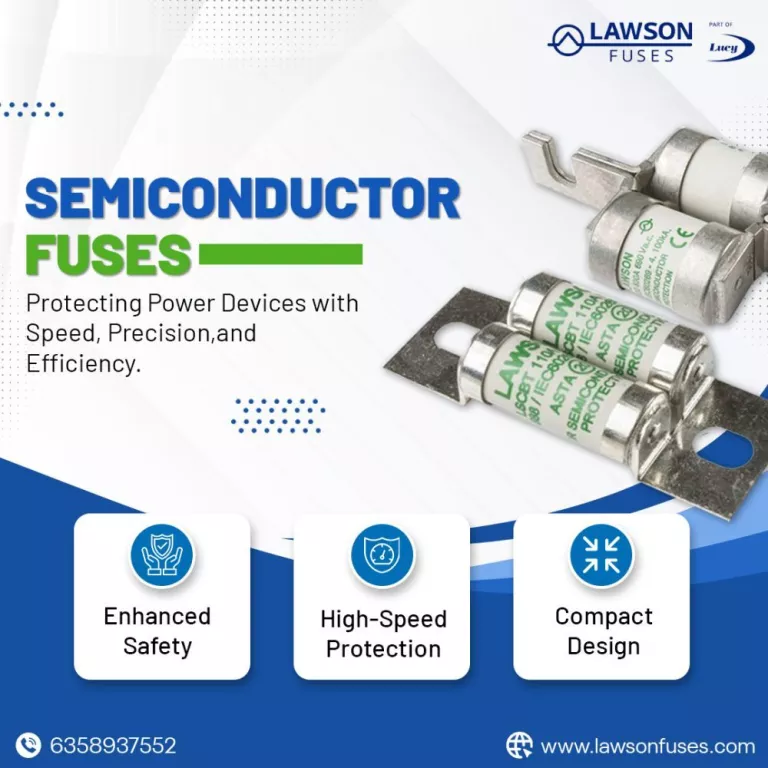
A Semiconductor Fuse is specifically engineered to protect power electronic components such as diodes, thyristors, IGBTs, and rectifiers. These components can be damaged in microseconds during fault conditions.
Unlike standard fuses, Semiconductor Fuses are designed for extremely fast operation and precise current limitation.
How a Semiconductor Fuse Works
The working principle of a Semiconductor Fuse is fundamentally different from time-delay devices.
Key Functional Characteristics
- Ultra-Fast Melting: The fuse element melts almost instantaneously during a fault.
- Low I²t Value: It limits the energy let-through, protecting sensitive devices.
- Current Limitation: Prevents fault current from reaching destructive levels.
The goal is not just to interrupt current, but to do so before semiconductor junctions experience irreversible thermal or electrical stress.
Typical Applications of Semiconductor Fuses
In the UK’s growing power electronics and renewable energy sectors, Semiconductor Fuses are commonly used in:
- Variable frequency drives (VFDs)
- Solar inverters and wind energy systems
- UPS systems and data centres
- Industrial power supplies
- Electric vehicle charging infrastructure
These environments demand precision protection where milliseconds can make the difference between normal operation and equipment failure.
Key Differences Between a Time Limit Fuse and a Semiconductor Fuse
Understanding the distinction between these two fuse types is critical for correct selection.
Response Time
- Time Limit Fuse: Delayed operation
- Semiconductor Fuse: Ultra-fast operation
Primary Purpose
- Time Limit Fuse: Protects wiring and electromechanical equipment
- Semiconductor Fuse: Protects sensitive electronic components
Energy Limitation
- Time Limit Fuse: Moderate energy let-through
- Semiconductor Fuse: Extremely low energy let-through
Typical Use Environment
- Time Limit Fuse: Motors, transformers, general power circuits
- Semiconductor Fuse: Power electronics and solid-state devices
Choosing the Right Fuse for Your Application
Selecting between a Time Limit Fuse and a Semiconductor Fuse should never be based on cost alone. The decision must consider system behaviour, load type, and fault sensitivity.
Key Factors to Evaluate
- Nature of the load (inductive vs electronic)
- Inrush current characteristics
- Fault clearing speed requirements
- Thermal sensitivity of components
- Compliance with UK electrical standards
In some complex systems, both fuse types may even be used together, each protecting different parts of the circuit.
Compliance and Safety Standards in the UK
Electrical installations in the UK must comply with recognised standards to ensure safety and reliability. Fuse selection often aligns with:
- British Standards (BS)
- IEC guidelines
- Manufacturer technical data
- System coordination studies
Proper coordination ensures that the correct protection device operates first during a fault, minimising system disruption.
Practical Insights from Real-World Installations
Experienced engineers often highlight that misapplication of fuses is a common cause of equipment failure. Using a Time Limit Fuse where a Semiconductor Fuse is required can lead to:
- Costly component damage
- Extended downtime
- Safety risks
Conversely, using an ultra-fast fuse where time delay is needed may result in frequent and unnecessary interruptions.
Understanding how each fuse works in practice—not just in theory—is essential for long-term system reliability.
Future Trends in Fuse Technology
As the UK transitions towards smarter grids and increased renewable energy integration, fuse technology continues to evolve. Modern designs focus on:
- Improved current-limiting performance
- Enhanced coordination with electronic protection devices
- Compact designs for space-constrained installations
- Higher interrupting capacities
Despite advances in electronic protection, fuses remain a trusted, fail-safe solution due to their simplicity and reliability.
Conclusion
Understanding what a Time Limit Fuse is and how a Semiconductor Fuse works is essential for anyone involved in electrical system design, maintenance, or safety. A Time Limit Fuse provides dependable protection for circuits with temporary overcurrent conditions, ensuring stability and operational continuity. In contrast, a Semiconductor Fuse delivers ultra-fast, precise protection for sensitive electronic components where even minimal delays can cause irreversible damage.
By selecting the correct fuse type based on application requirements, professionals across the UK can achieve safer systems, longer equipment life, and improved performance. In an era of increasingly complex electrical infrastructure, informed protection choices are not optional—they are essential.
For More Details: Lawson Fuse


























Sign in to leave a comment.