




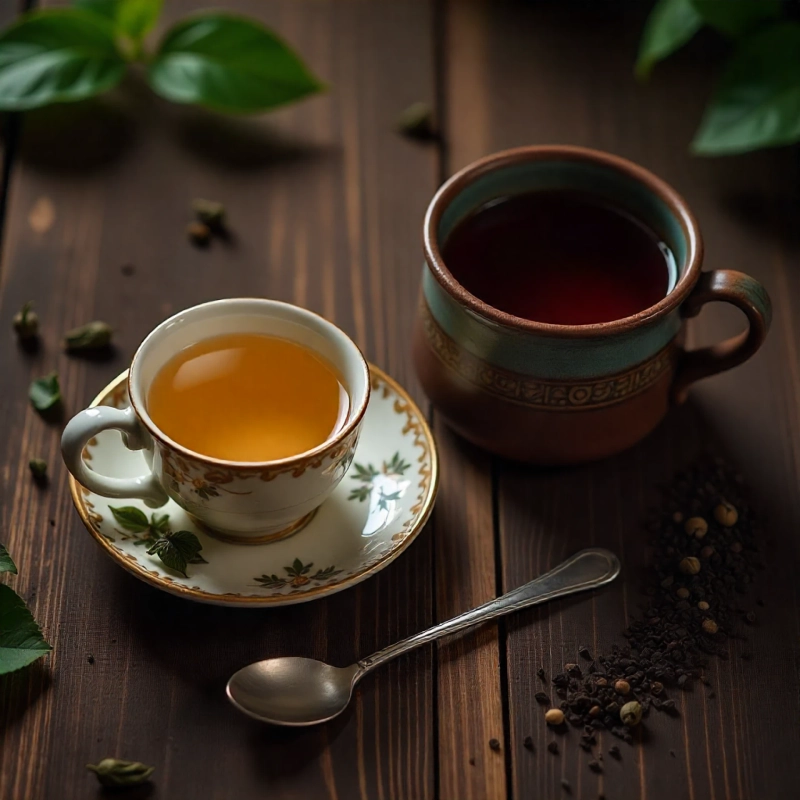
Tea is more than just a beverage—it’s a daily ritual, a comfort drink, and for many, a health companion. Among the many types of tea, white tea and black tea often spark curiosity. Both come from the Camellia sinensis plant, yet they differ in processing, flavor, and health benefits.
Let’s dive into how they’re made, how they help your body, and which one might be your perfect cup.
Processing: Minimal vs Fully Oxidized
White Tea – The Purest Form
- Processing: Least processed of all teas.
- How it’s made: The youngest tea leaves and buds are plucked and simply air-dried.
- No oxidation involved.
- Flavor: Delicate, light, floral.
White tea is basically tea in its most natural state—no rolling, no heavy heat, just sun-dried goodness.
Black Tea – Fully Matured & Oxidized
- Processing: Fully oxidized.
- How it’s made: Leaves are rolled and exposed to air to oxidize (turn brown).
- Oxidation gives it a bold color and strong taste.
- Flavor: Rich, malty, robust.
Black tea goes through the most transformation during processing, giving it its signature depth and strength.
Health Benefits: Gentle Boost vs Bold Protection
Benefits of White Tea
White tea is packed with antioxidants, especially catechins, which fight cell damage.
- Anti-aging: Fights free radicals that cause premature aging.
- Skin health: Promotes collagen and protects against UV damage.
- Weight management: May support fat-burning and metabolism.
- Heart health: Helps reduce cholesterol and blood pressure.
- Dental health: Contains fluoride and tannins that strengthen teeth.
Great for people who want a gentle energy boost and are sensitive to caffeine.
Benefits of Black Tea
Black tea offers strong antioxidant and anti-inflammatory properties, thanks to theaflavins and thearubigins.
- Heart health: Lowers risk of stroke and heart disease.
- Improved focus: Contains more caffeine than white tea, ideal for staying alert.
- Digestive aid: Can soothe the digestive tract.
- Blood sugar control: Helps regulate glucose levels.
- Immunity boost: Supports the body’s defense system.
Perfect for those needing a stronger kick to start the day.
Taste & When to Drink
- White Tea: Soft, slightly sweet, best enjoyed in the morning or afternoon for calm clarity.
- Black Tea: Strong, bold, great as a morning wake-up drink or even a base for chai.
Final Thoughts: Which One Is Better?
Honestly, it depends on your needs.
- Want a mild, skin-friendly tea with low caffeine? Choose white tea.
- Need an energizing, full-bodied brew? Go with black tea.
Both are healthy in their own way, so why not include both in your daily routine?