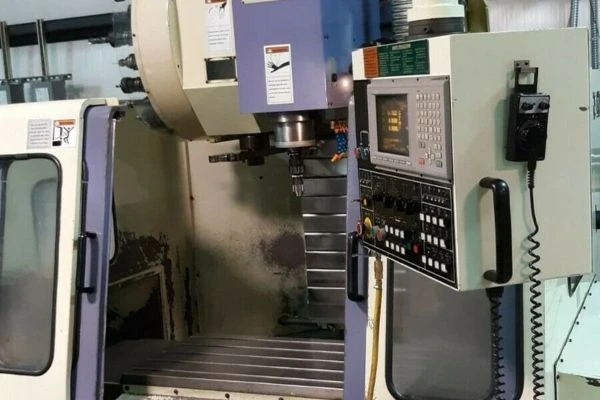

If you've ever watched a CNC machine at work, you know it’s a beautiful thing—precise, fast, and almost hypnotic. But as with any high-performance piece of equipment, things can start to drift over time. And when you're talking about tolerances in the microns, even the slightest misalignment can lead to scrap parts, wasted time, and unhappy customers. That’s where ballbar testing comes in—and why it’s one of the smartest things you can do for your CNC shop.
Let’s break it down like you’re explaining it to a new machinist on their first day.
What Is Ballbar Testing, Anyway?
Picture this: your CNC machine is running parts, and everything seems fine. But you’re noticing inconsistencies—maybe holes aren’t quite round, or there’s a weird finish on a contour. You check your program, your tooling, your fixturing... nothing seems off. That’s usually when the lightbulb goes off: maybe the machine itself isn’t moving quite the way it should.
Ballbar testing is like a health check for your CNC machine. It involves attaching a precision measurement tool—a ballbar—between the machine’s spindle and a fixed point. As the machine performs a programmed circular path, the ballbar records tiny deviations from what should be a perfect circle. Those deviations tell a story.
And that story? It’s written in backlash, servo mismatch, squareness errors, and other alignment issues that can throw off your precision.
Why It Matters More Than You Think
You wouldn’t drive your car 100,000 miles without ever checking the tires or brakes, right? CNC machines are no different. Over time, wear and tear—on guideways, ballscrews, encoders—can silently impact performance. The scary part? You might not notice until it's too late.
Ballbar testing helps you catch those early signs before they snowball into costly downtime. A 30-minute test can reveal issues that might otherwise take hours (or days) to diagnose through trial and error. And when you're running high-volume or high-precision jobs, even a 0.01mm deviation can become a big problem fast.
Real-World Impact: A Quick Story
We once worked with a shop producing aerospace parts—tight tolerances, lots of 5-axis work, no room for error. Their machine had been slowly drifting out of spec, but no one realized it. They thought it was a tooling issue, then blamed fixturing, then reprogrammed the CAM paths.
It wasn’t until a ballbar test was run that the problem was clear: servo lag and backlash on one axis. A quick servo tuning and ballscrew adjustment later, and the machine was back to holding spec. No more rejected parts, no more frantic troubleshooting.
That’s the magic of ballbar testing: it gives you clarity.
Proactive Maintenance, Not Just a Diagnostic Tool
Ballbar testing isn’t just for when something’s wrong. In fact, it’s most valuable when used before things go sideways. Shops that include ballbar testing as part of their preventative maintenance routine tend to run leaner, with fewer surprises and better part consistency.
Think of it as a data-driven tune-up. You’re not guessing if something’s off—you know. And with historical ballbar reports, you can actually spot trends and predict when maintenance will be needed. That means less reactive downtime, and more time doing what matters: making quality parts.
Final Thoughts: Don’t Skip the Small Stuff
CNC machining is all about control—of motion, of variables, of quality. Ballbar testing gives you back control in a way that’s quick, affordable, and incredibly insightful. Whether you’re running a single vertical mill or a fleet of multi-axis centers, taking time for a ballbar check can save you from major headaches down the line.
Accuracy isn’t just a feature—it’s the foundation. And ballbar testing? It’s how you protect it.

























Sign in to leave a comment.