
Understanding the Purpose of a Double Regulating Valve
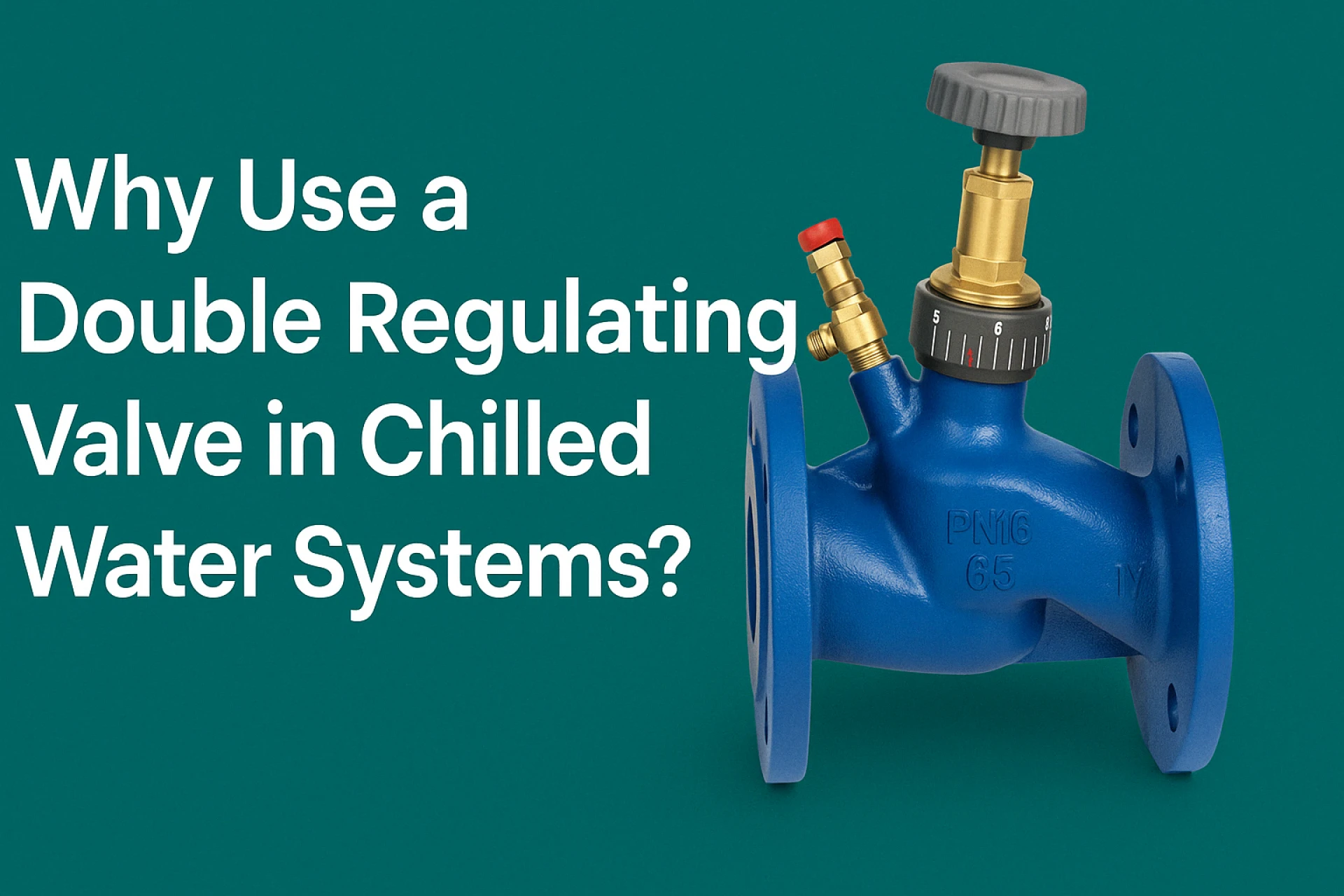
Chilled water systems rely on precise control of water flow to ensure consistent performance across multiple terminal units. A double regulating valve serves a dual function: it adjusts flow and also allows system engineers to set and lock a defined position, helping maintain those flow rates even if the system undergoes maintenance or rebalancing.
Unlike a standard isolation valve, it enables engineers to return to the original setting without recalibration. This makes it particularly valuable in large commercial HVAC systems where flow stability is vital for energy efficiency and comfort.
How it manages flow and balance
The key advantage lies in its ability to manually regulate the flow through each terminal branch, allowing engineers to ensure that every coil receives the right amount of chilled water. In larger systems with varying loads, maintaining this balance helps avoid temperature drift, uneven cooling, and increased energy use.
Role in maintaining design conditions
When design flow rates are not achieved, terminal units may overcool or underperform. A double regulating valve ensures that each component operates within the intended parameters. Whether it's a fan coil in an office zone or a chilled beam in a data room, consistent delivery of chilled water means stable thermal comfort throughout the building.
Common Challenges in Chilled Water Systems
Pressure fluctuations and flow rate instability
Fluctuating differential pressure is a known issue in variable flow chilled water systems. When pumps ramp up or down to meet load conditions, the pressure can swing significantly. This often results in certain terminal units receiving too much flow, while others get too little. These variations compromise performance and put unnecessary strain on equipment.
Balancing multi-terminal systems efficiently
Modern buildings often feature complex networks with numerous branches and terminal units. Achieving hydraulic balance in such systems can be labour-intensive and prone to human error. A lack of control leads to commissioning delays and ongoing performance issues, especially as tenant needs or usage patterns change.
The Importance of Balancing in Hydronic Systems
Avoiding over and under-flow at terminal units
Poorly balanced systems are characterised by uneven cooling. Overflowing coils not only waste chilled water but also cause excessive wear on control valves. Conversely, underflow leads to user complaints and comfort issues. A balanced system ensures optimal performance from the outset and simplifies troubleshooting if problems arise later.
Effects on energy efficiency and comfort
When systems are unbalanced, pumps often compensate by working harder, which drives up energy use. More importantly, spaces with underperforming terminals can prompt occupants to adjust thermostats or raise complaints, leading to inefficient adjustments across the system. Proper balancing, enabled by double regulating valves, eliminates these inefficiencies at the source.
How a Double Regulating Valve Solves Balancing Issues
Manual setting and memory feature
The manual control mechanism on a double regulating valve allows the commissioning engineer to set a specific flow rate using precise turns on the handwheel. Once the correct setting is achieved, the valve’s memory feature locks the position. This ensures that even if the valve is closed for maintenance or seasonal shutdown, it can be reopened to the exact original setting. This repeatability removes the need for time-consuming recalibration during future interventions.
Enabling reproducible settings during commissioning
In large systems where multiple technicians may be involved in commissioning over time, consistency is vital. A double regulating valve supports this by providing scale indicators and numerical dials, allowing anyone accessing the system later to reproduce the settings accurately. This adds long-term operational value, particularly in buildings with evolving usage patterns or phased tenant occupancy.
The Role of a Double Regulating Valve in Commissioning
Integration into a commissioning set
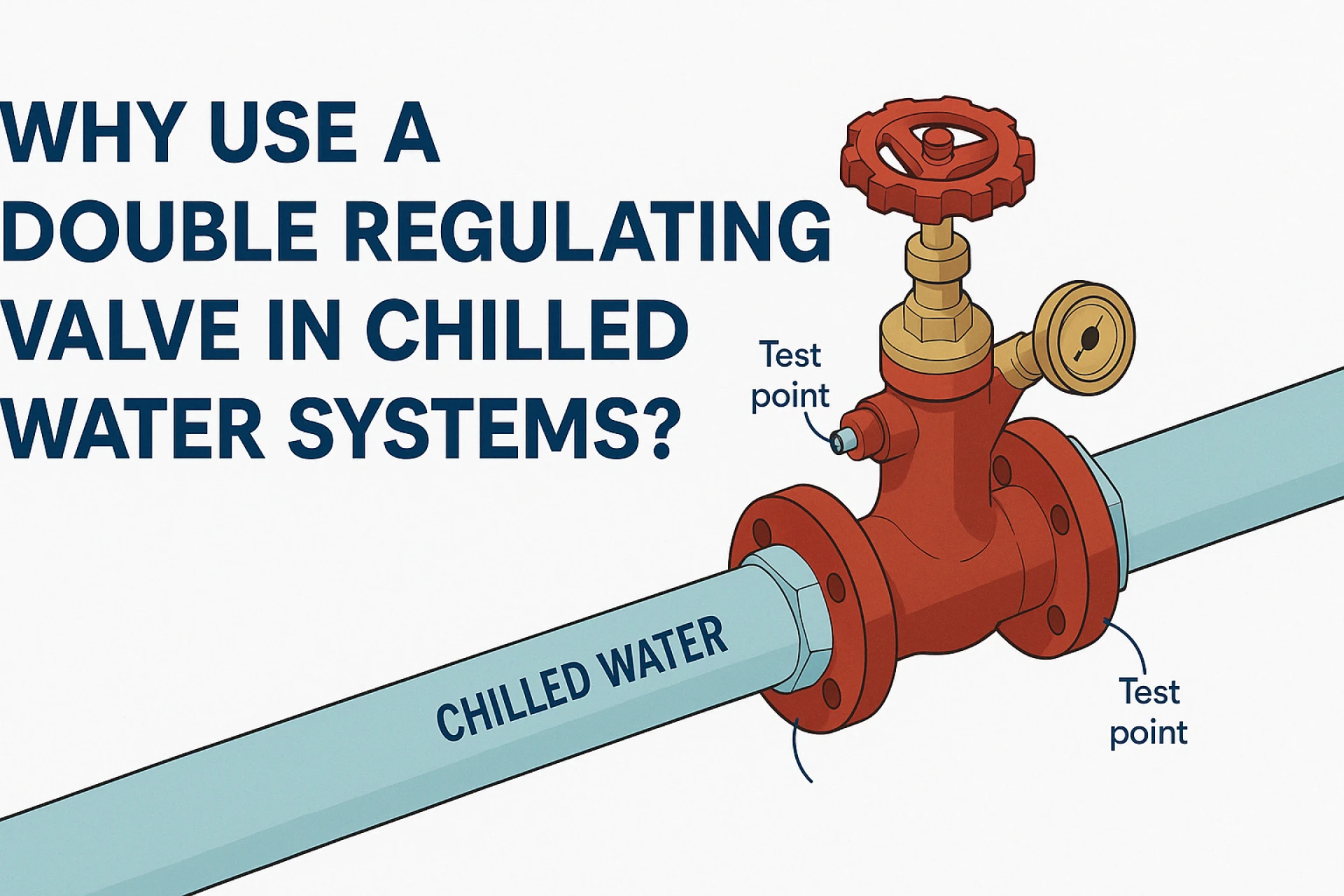
A double regulating valve is often installed as part of a commissioning set, where it pairs with test points and differential pressure devices. This configuration enables engineers to measure flow rates directly and adjust accordingly. By using a commissioning set, systems can be fine-tuned with high accuracy, improving both energy performance and long-term reliability.
The combination ensures that commissioning isn’t just a one-time event, but a repeatable process that can be revisited during seasonal checks or retrofits. This approach minimises risk and supports more predictable performance outcomes.
Ensuring precise flow measurement and verification
With integral test points, the valve allows direct measurement of differential pressure. When paired with the valve’s published flow coefficient (Kv value), technicians can verify actual flow against design intent. This process improves confidence in the system’s hydraulic performance and provides documented settings for facilities teams or service contractors.
Comparing with Alternative Flow Control Devices
Pressure-independent control valves
Some systems use pressure-independent control valves (PICVs) as an alternative. While PICVs simplify flow control under varying pressure, they come with higher costs and are not always necessary in systems with stable differential pressure. They also require a different commissioning approach, often involving electronic tools.
Fixed orifice devices and their limitations
Fixed orifice devices can offer basic flow regulation, but they lack adjustability. Once installed, their flow characteristics are static, making them unsuitable for systems where future flexibility or load adjustment is required. In contrast, a double regulating valve provides both adaptability and ease of adjustment during rebalancing exercises.
Best Practices for Installing Double Regulating Valves
Placement relative to terminal units
Correct placement is essential for reliable performance. Double regulating valves should be installed on the return side of each terminal unit. This positioning ensures that the terminal receives full system pressure, aiding accurate flow measurement and control. It also makes the valve less susceptible to air entrapment and debris, both of which can affect measurement accuracy.
For fan coils, chilled beams, or air handling units, locating the valve on the return leg provides a more stable environment for commissioning engineers to carry out accurate diagnostics and adjustments.
Orientation and access for flow measurement
Ease of access is often overlooked during the design stage. If valves are hidden behind ceiling panels or installed without sufficient clearance, future maintenance and verification become problematic. When installing a double regulating valve, there should be adequate room to attach test equipment and clearly read the scale indicators.
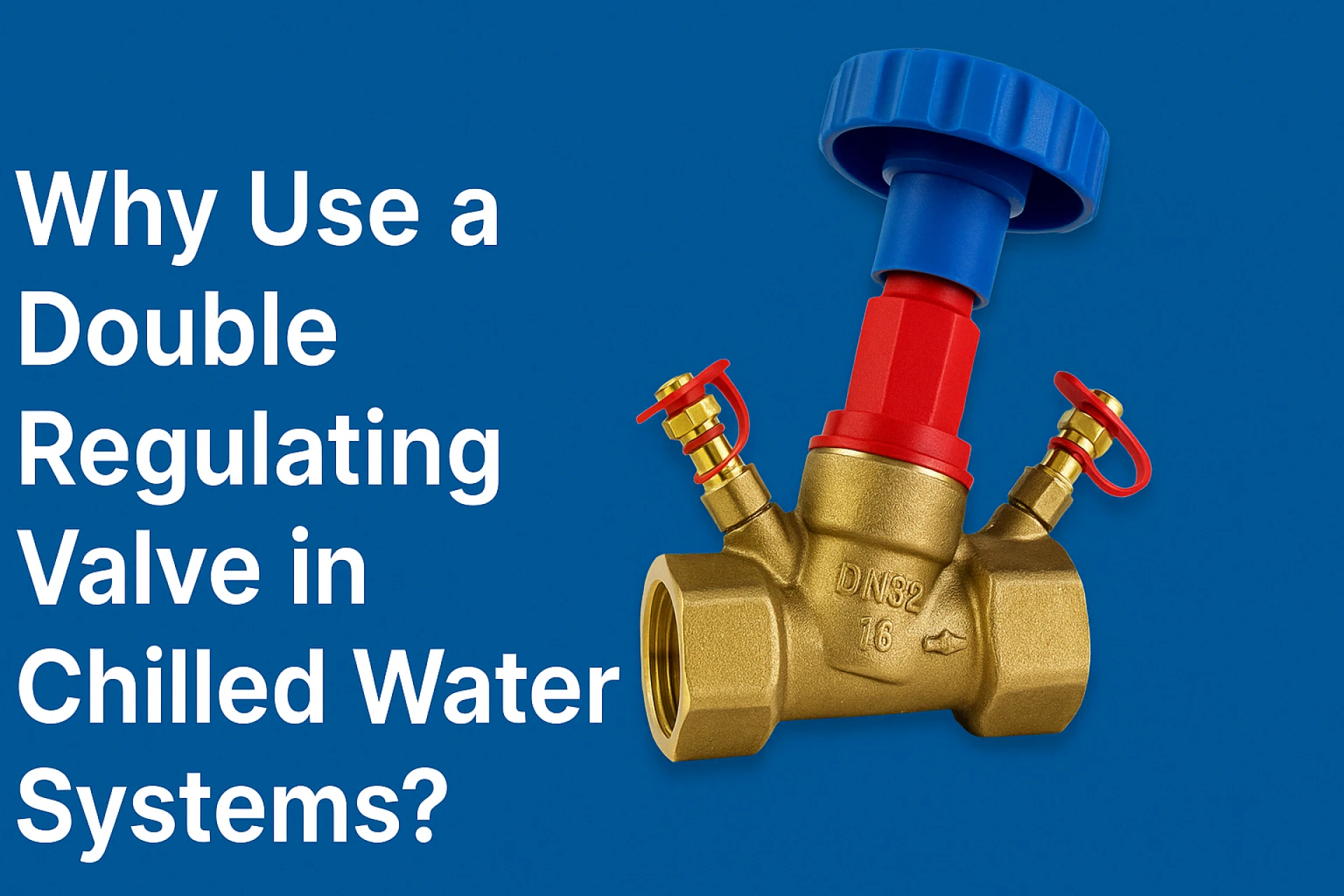
Wherever possible, the valve body should be horizontal, and the test points should face upwards or at an angle accessible to technicians. This small consideration improves both the commissioning experience and the long-term serviceability of the system.
Long-Term Benefits in Chilled Water Applications
Reduced energy consumption and operational costs
Well-balanced systems require less pump energy to deliver the correct flow. By ensuring each terminal receives only the water it needs, double regulating valves prevent over-pumping and eliminate the need for inefficient pressure adjustments. Over time, this leads to noticeable savings in energy bills and prolongs the life of pumps and actuators.
Building operators also benefit from fewer complaints and callouts related to temperature inconsistency or poor system performance. With accurate flow settings and easy recalibration, maintenance teams spend less time investigating issues and more time optimising overall plant operation.
Supporting system flexibility for future adjustments
Whether a floor is reconfigured, new zones are added, or load profiles change, a system equipped with double regulating valves remains adaptable. Settings can be easily modified to suit new conditions without replacing components or recommissioning the entire network.
This makes the system future-proof and supports more sustainable building operations. As occupant demands shift or retrofits introduce new equipment, engineers can confidently adjust flow rates and maintain system balance without introducing new inefficiencies.
Final Thoughts
A double regulating valve may appear simple, but its role in achieving accurate balancing, repeatable commissioning, and long-term system efficiency cannot be overstated. When incorporated correctly into chilled water systems—especially as part of a well-designed commissioning set—it delivers value throughout the lifecycle of the installation.

























Sign in to leave a comment.