




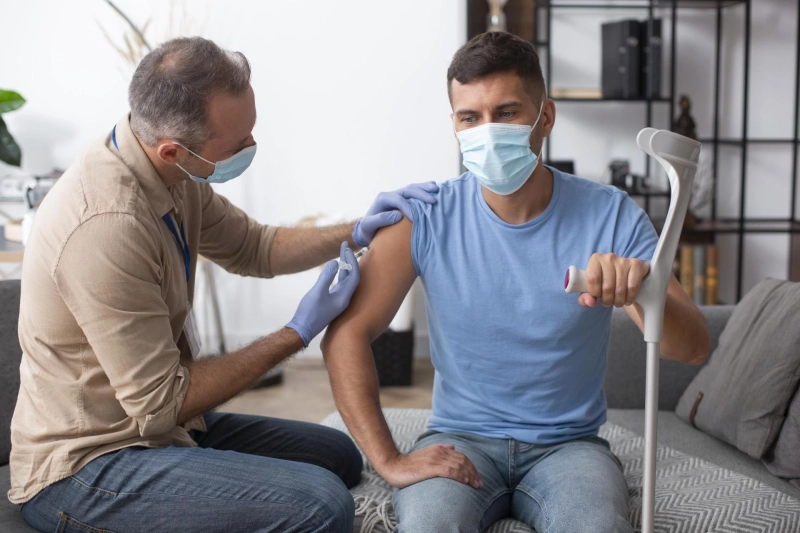
Injections are important, in sickness and in health. Considered one of the most important channels to deliver medication in the body for faster and better health results, it is important to know the self-injection risks and the ways to manage them. It is always advised to take safe injection services at home or take them from trained medical experts at a hospital or clinic. Understand the underlying issues of self-injection without supervision in this insightful blog.
Who can give injections?
Doctors should administer injections; however, in their absence, trained medical experts or nurses can administer injections, as they are trained and have hands-on experience giving injections to people of different age groups and medical conditions.
What are unsafe injection practices?
Unsafe injection practices can sometimes prove to be fatal and cause major health risks. It is better to know about them and avoid them.
Lack of expertise, training, and awareness.
- Lack of awareness about how to manage emergencies.
- Re-using Syringes and needles for giving injections.
- Using single-dose vials twice.
- Not storing the medicines properly as per the guidelines.
- Being negligent about the expiry date of medication.
- Less awareness about the injection site, technique, and dosage of injection.
- Lack of hygiene that might lead to infections.
- Not being considerate about the current health situation of the patient.
- Lacking basic compassion for the patient and their comfort.
- Lack of knowledge about proper waste disposal.
What are safe injection practices?
Safe injection practices are a lifesaver for the patient as well as for the families. It helps them remain worry-free about the safety and trustworthiness of the injection services.
Proper knowledge, expertise, training, and awareness about the human anatomy.
- Managing emergencies such as allergic reactions, injury, overdoses, etc., effectively.
- Using single-use syringes and needles for giving injections to prevent the risk of blood-related infections.
- Ensuring proper storage of the injection in a cool place away from sunlight or as per the guidelines.
- Checking the expiry date of medication before administering it to the patient.
- Thorough assessment of the injection site, ensuring correct technique and dosage of injection.
- Practicing needle safety and hygiene guidelines.
- Ensuring proper hand hygiene before and after giving injections.
- Considerate of the age and health of the patient, especially the elderly and children.
- Ensuring patient comfort at all times.
- Ensuring proper waste disposal to ensure there is no cross-contamination.
What are the risks involved with self-injection?
Knowing about the dangers of self-injection without a nurse is very important, as it makes the patient aware of the dangers of self-injection and why one should take it from a trained professional.
Infection risk from improper injection.
- Risk of bloodborne infections such as HIV, Hepatitis B, and Hepatitis C.
- Nerve damage caused by incorrect injection technique.
- Allergic reaction to medication.
- Tissue damage, hardness of skin, abscess, or pus.
- Blockage in a blood vessel caused by incorrect technique.
Note: Subcutaneous injections, such as insulin for diabetes management or fertility injections, can be administered in the fatty layer of the skin using a special injection pen. However, practicing self-injection after specific training and guidance is the best route to take for your health.
How do trained nurses ensure safe injection and help manage the risks of self-injection?
For the best outcomes and to manage the risk of self-injections to health, it is always advised to call a professional nurse for injections at home or go to hospitals or clinics for taking injections. With thorough knowledge, skill, and training, they ensure patient safety, efficiency of the medication, and overall well-being of the patient.
Conclusion:
Injection may seem like a small act in the plethora of medical services; however, it is one of the most important procedures administered during different phases of illness and recovery. The importance of trained medical staff to administer injections and guide patients and their families cannot be ignored. They are the pillars of trust and support for both the patients and the medical fraternity. Thus, finding the right home healthcare service provider nearby to give injections at home is beneficial for health in the long run.