
At Focus Medical and Mental Healthcare, we know that taking medications the right way is crucial for effective mental health treatment. Whether you're dealing with depression and mood disorders, bipolar disorder, ADHD, or other psychiatric conditions, following a clear medication plan helps improve stability, safety, and overall wellness.
In this guide, we’ll explore 10 Essential Tips for Effective Medication Management that can make your treatment journey smoother and more effective.
1. Know the Purpose of Each Medication
Learn why each medication was prescribed, how it helps, and what side effects to watch for. Whether you're receiving expert bipolar disorder services or undergoing a psychiatric evaluation, understanding your treatment helps you take an active role in your recovery.
2. Keep a Medication Record
Maintain a written or digital log of all medications, including names, dosages, and instructions. This makes it easier to manage changes and communicate with providers, especially when using the best telepsychiatry services in Missouri.
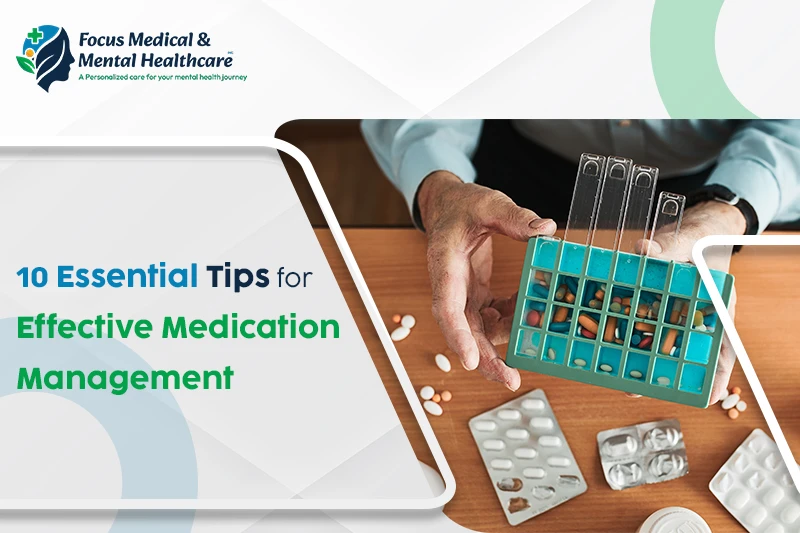
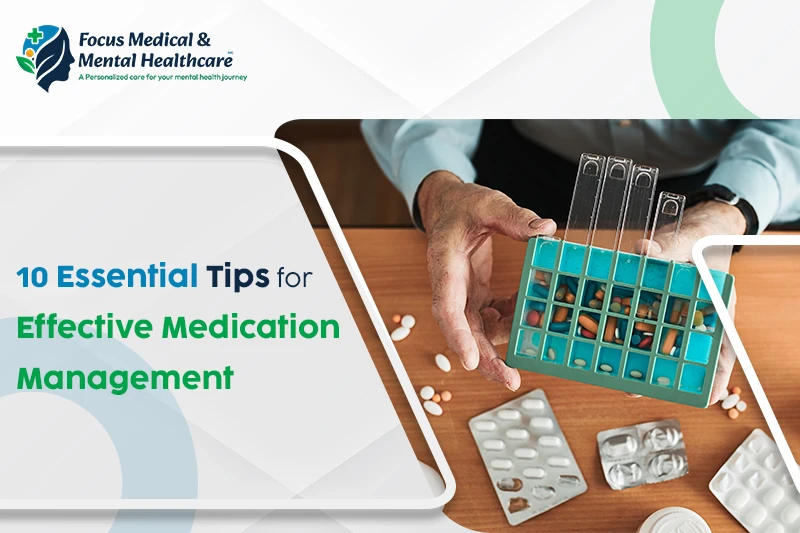
3. Use a Pillbox or Medication Organizer
A weekly pill organizer can help ensure you take your medications correctly and on time. This is especially helpful for people managing complex regimens, such as those on ADHD treatment for children and adults.
4. Set Timely Reminders
Use alarms, mobile apps, or calendars to stay on schedule. Consistency is a major part of successful medication management, particularly for those living with depression and mood disorders.
5. Stay in Contact With Your Psychiatrist
Frequent check-ins with your mental health provider allow for adjustments and early detection of any issues. At Focus Medical and Mental Healthcare, we deliver expert mental health care both in-office and virtually.
6. Store Medications Properly
Always store medications as instructed—usually in a cool, dry place away from sunlight and out of reach of children. Safe storage is critical for prescriptions used in psychiatric care.
7. Be Aware of Food and Drug Interactions
Ask your provider if there are any substances or foods you should avoid while on your medication. Interactions can impact how medications work, especially for those in treatment for bipolar disorder or ADHD.
8. Track Your Reactions
Pay attention to how you feel after taking your medication. Keep a journal of any side effects or changes in symptoms, and report them to your provider for timely adjustments.
9. Keep All Follow-Up Appointments
Don’t skip follow-ups. Regular evaluations—whether in person or via telepsychiatry services in Missouri—help your provider assess progress and fine-tune your plan as needed.
10. Never Adjust or Stop Medications Without Guidance
Discontinuing medications on your own can lead to serious setbacks. If you're being treated for depression and mood disorders or other psychiatric conditions, always consult your provider before making any changes.
The Value of Medication Management
Good medication management is a key factor in successful treatment. Whether you're just starting ADHD treatment, receiving a thorough psychiatric evaluation, or managing long-term conditions like bipolar disorder, the way you take your medications matters.
At Focus Medical and Mental Healthcare, we’re here to guide you with compassionate and professional psychiatric support tailored to your needs.
Reach Out to Our Team
Need help managing your medication plan? We offer both in-person and virtual care through the best telepsychiatry services in Missouri. Let us support your journey to better mental health.
Let’s connect online:
- Facebook – Follow us for mental health tips, service updates, and helpful resources
- LinkedIn – Learn more about our team and services
Final Takeaway
These 10 Essential Tips for Effective Medication Management are designed to help you take charge of your mental health safely and confidently. Contact Focus Medical and Mental Healthcare today to learn more about how we can support your treatment with trusted, expert care.
























Sign in to leave a comment.