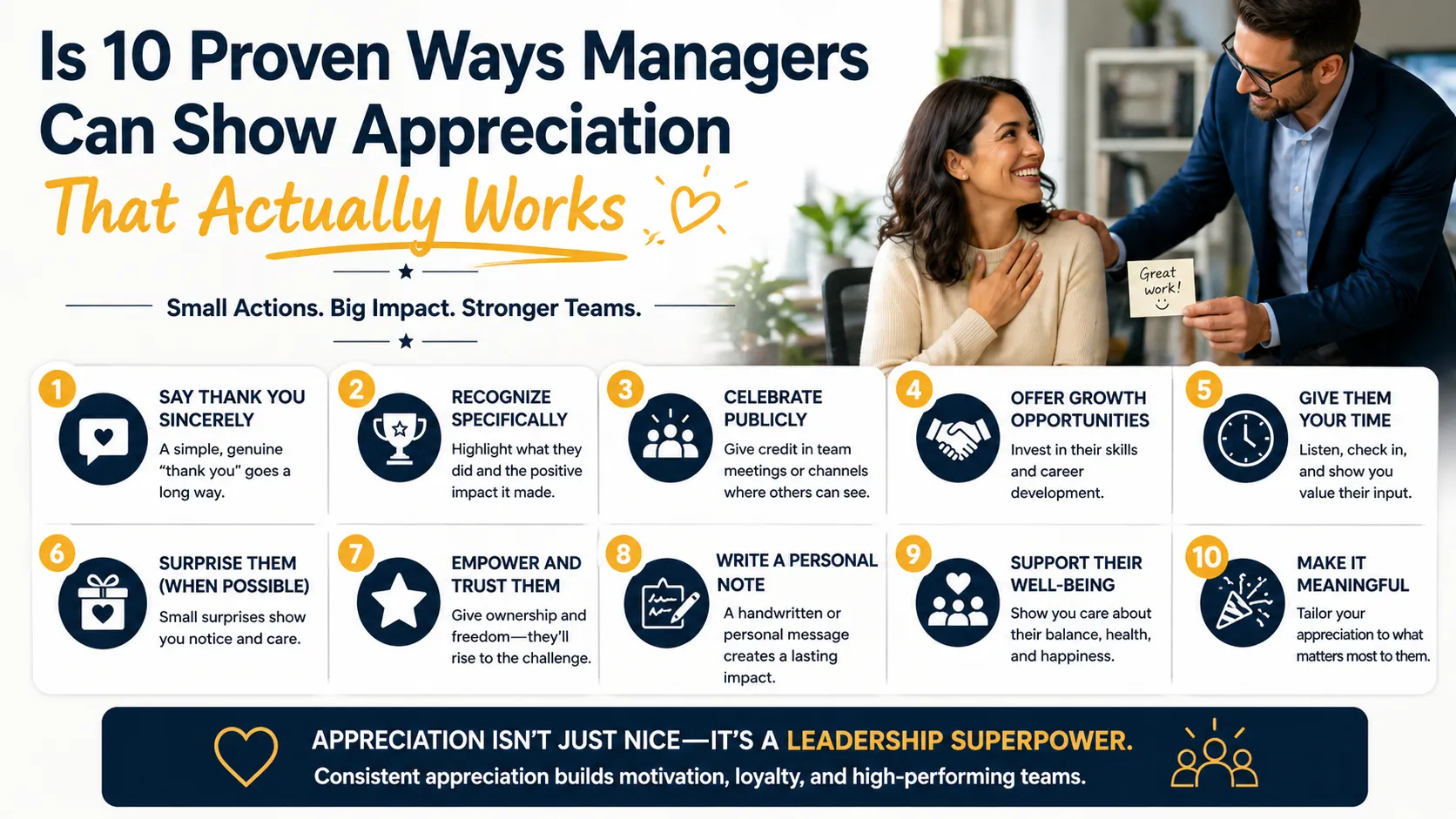

Real appreciation at work rarely comes from grand gestures alone. It grows through consistent, thoughtful actions that make people feel seen and valued. While moments like International Employee Appreciation Day create awareness, they often highlight a deeper truth. Recognition needs to show up regularly, not just once a year.
Managers who understand this shift build stronger teams, higher trust, and better performance. Appreciation is not complicated, it just needs intention and consistency.
1. Make Recognition Immediate and Specific
Appreciation works best when it feels real and timely. Waiting too long dilutes impact. Managers need to recognize effort as close to the moment as possible. A simple, specific acknowledgment builds stronger emotional connection than a generic thank you note.
Even during occasions like associate appreciation day, teams respond more to genuine, detailed recognition than broad announcements.
Small details matter here. Saying "great job" feels vague, while pointing out how someone handled a tough client or supported a teammate builds clarity. Over time, this level of precision shapes a culture where people understand what excellence looks like.
2. Personalize the Way You Appreciate
Not everyone values recognition in the same way. Some enjoy public praise, others prefer a quiet note. Managers need to understand individual preferences to make appreciation meaningful.
Events like International Employee Appreciation Day offer a great chance to observe how different employees respond and refine future recognition.
Managers need to pay attention to cues. Some team members light up during team meetings, others appreciate one on one conversations. Keeping a simple record of preferences helps maintain consistency without guesswork.
3. Connect Appreciation to Impact
Recognition feels more powerful when it links effort to results. Employees need to see how their work contributes to a bigger goal. This builds purpose along with motivation.
During associate appreciation day, highlighting real contributions instead of generic praise creates a deeper connection.
When managers connect actions to outcomes, employees understand why their work matters. This clarity drives ownership and accountability. It also reduces confusion around expectations.
For example, instead of appreciating effort alone, managers need to highlight how that effort improved customer experience, saved time, or supported team success. This strengthens both confidence and direction.
4. Encourage Peer Recognition
Appreciation does not need to flow only from the top. Teams that recognize each other build stronger bonds and shared accountability. Managers need to create space where peers feel comfortable acknowledging contributions.
Moments like International Employee Appreciation Day can introduce peer recognition programs that continue throughout the year.
Peer recognition builds a sense of community. Employees often notice contributions that managers may miss. Encouraging this behavior creates a more complete and balanced recognition culture.
Managers need to keep the process simple. Whether through team meetings or shared platforms, making it easy to appreciate others increases participation. Over time, this becomes a natural part of team interaction.
5. Celebrate Small Wins Consistently
Big achievements matter, yet small wins keep momentum alive. Managers need to notice progress, not just final outcomes. This approach keeps morale steady and reduces burnout.
Instead of saving recognition for associate appreciation day, consistent acknowledgment keeps teams engaged daily.
Recognizing small wins builds confidence. It shows employees that progress matters, not just perfection. This encourages continuous effort and reduces fear of failure.
Managers need to create a rhythm around this. Weekly check ins or brief shoutouts during meetings help maintain consistency. Over time, this builds a positive and motivated work environment.
6. Offer Growth Opportunities as Appreciation
Recognition is not always verbal. Offering learning opportunities, mentorship, or new responsibilities shows trust and belief in potential. This form of appreciation creates long-term impact.
During International Employee Appreciation Day, highlighting growth paths reinforces that appreciation goes beyond words.
When managers invest in development, employees feel valued beyond their current role. This increases retention and engagement. It also prepares teams for future challenges.
Managers need to align opportunities with individual goals. Whether it is a new project or skill development, growth-based appreciation creates a lasting impression.
7. Be Authentic and Honest
People sense forced appreciation instantly. Managers need to stay genuine in tone and intent. Honest acknowledgment builds credibility and trust over time.
Even on associate appreciation day, authenticity matters more than elaborate gestures.
Authenticity builds trust. Employees value honesty more than perfection. When managers speak with sincerity, appreciation feels meaningful and believable.
Managers need to avoid scripted language. Simple, clear communication often works best. Over time, this creates a culture where appreciation feels natural, not staged.
8. Make Appreciation Visible Across Teams
Recognition should not stay hidden. Sharing success stories across teams builds inspiration and alignment. It also helps employees feel valued beyond their immediate circle.
Using platforms during International Employee Appreciation Day to highlight achievements can extend appreciation across the organization.
Visibility amplifies impact. When employees see others being recognized, it motivates them and sets benchmarks for performance. It also creates a sense of shared success.
Managers need to balance visibility with fairness. Recognition should feel inclusive and transparent. This ensures trust remains strong across teams.
9. Align Appreciation with Company Values
Recognition works better when it reflects core values. Managers need to connect appreciation with behaviors that drive culture. This reinforces what truly matters.
Celebrations like associate appreciation day become more meaningful when tied to values rather than routine activities.
When appreciation aligns with values, it shapes behavior. Employees understand what the organization stands for and how they contribute to it. This builds consistency across teams.
Managers need to highlight examples that reflect these values. Over time, this reinforces culture in a practical and visible way.
10. Build Appreciation into Everyday Leadership
Appreciation is not an event, it is a leadership habit. Managers need to integrate recognition into daily interactions, feedback, and communication. This creates a culture where people feel valued consistently.
While International Employee Appreciation Day plays a role in awareness, lasting engagement grows from everyday actions.
Daily appreciation strengthens relationships. It creates an environment where employees feel supported and motivated. This leads to better collaboration and performance.
Managers need to stay consistent. Small, regular actions often create more impact than occasional large gestures. Over time, appreciation becomes part of leadership identity rather than a task.
Not everyone values recognition in the same way. Some enjoy public praise, others prefer a quiet note. Managers need to understand individual preferences to make appreciation meaningful.
Events like International Employee Appreciation Day offer a great chance to observe how different employees respond and refine future recognition.
Conclusion
Effective appreciation does not rely on occasional celebrations. It grows through consistent, thoughtful behavior that managers bring into daily work. Teams respond to authenticity, clarity, and genuine effort.
Days like International Employee Appreciation Day and associate appreciation day serve as useful reminders, yet real impact comes from what happens in between. When appreciation becomes part of leadership style, engagement strengthens naturally and performance follows.



























Sign in to leave a comment.