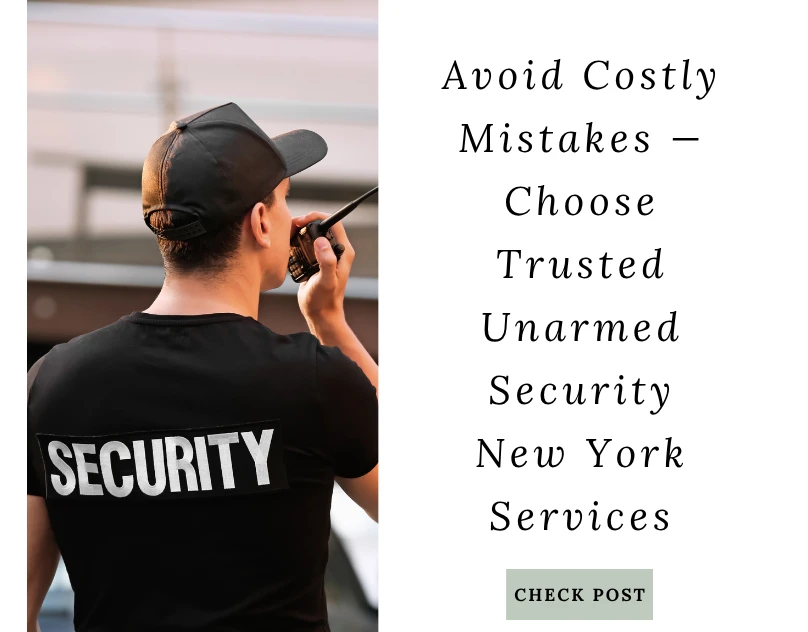

Finding the right security provider for your business or residential property can feel overwhelming. With countless companies offering unarmed security guard services in New York, how do you separate the professionals from the pretenders? The wrong choice could leave your property vulnerable and your budget drained.
Whether you need protection for a retail store, apartment complex, or corporate office, understanding what to avoid is just as important as knowing what to look for. This guide will walk you through ten critical warning signs that should make you think twice before signing any contract for unarmed security services in New York.
1. Lack of Proper Licensing and Certification
New York State requires all security companies to hold valid licenses issued by the New York State Department of State. Any company providing unarmed guard services in New York City must meet these strict regulatory standards.
When a company can't immediately provide proof of licensing, that's your first red flag. Legitimate security firms will proudly display their credentials and provide documentation upon request. Without proper licensing, you're dealing with an illegal operation that offers zero protection if something goes wrong.
Additionally, individual guards should carry valid security guard registration cards. Ask to see these credentials before allowing anyone to work on your property. Companies that hesitate or make excuses about licensing documentation are telling you everything you need to know about their legitimacy.
2. Inadequate Training Programs
Training distinguishes competent security personnel from those merely wearing uniforms—a professional unarmed security. New York companies invest heavily in comprehensive training programs that go beyond the state-required minimum hours.
Red flags in this area include:
- Companies that only provide the bare minimum of eight-hour pre-assignment training
- No ongoing training or professional development opportunities
- Guards who can't articulate their emergency response procedures
- Absence of specialized training for your specific industry or property type
Quality security firms understand that an unarmed security professional in New York needs skills in conflict de-escalation, customer service, emergency response, and report writing. Furthermore, they should receive regular refresher courses to keep their skills sharp and stay current with evolving security challenges.
3. No Verifiable Track Record or References
Every established security company should have satisfied clients willing to vouch for their services. When a company refuses to provide references or claims all their clients are "confidential," proceed with extreme caution.
Take the time to research the company's reputation thoroughly. Look for online reviews, Better Business Bureau ratings, and testimonials from businesses similar to yours. Companies offering unarmed guard services should maintain a visible presence in the community, accompanied by verifiable success stories that demonstrate their effectiveness.
Ask potential providers for at least three references you can contact directly. Moreover, request examples of properties similar to yours that they currently protect. A company with nothing to hide will gladly connect you with happy clients.
4. Unusually Low Pricing
Security services require significant investment in training, insurance, proper wages, and quality personnel. When a company's rates seem too good to be true, they probably are.
Rock-bottom pricing often indicates:
- Guards are paid below fair market rates, leading to high turnover
- Inadequate insurance coverage that could expose you to liability
- Corners cut on training and background checks
- Limited supervision and quality control
While budget matters, the cheapest unarmed security guard in New York rarely provides the protection you're paying for. Instead of focusing solely on price, consider the overall value proposition. A slightly higher rate that includes proper training, insurance, and reliable personnel is worth every penny compared to dealing with the consequences of inadequate security.
5. Poor Communication and Responsiveness
How a company treats you during the sales process reveals how they'll treat you as a client. Security companies should respond promptly to inquiries, provide clear answers, and demonstrate a genuine interest in understanding your specific needs.
Warning signs include delayed responses to emails or calls, vague answers to direct questions, and sales representatives who seem more interested in closing the deal than addressing your concerns. Professional unarmed security providers in New York maintain open lines of communication and assign a dedicated account manager who is familiar with your property and its requirements.
Additionally, ask about their emergency communication protocols. You should have 24/7 access to a supervisor or manager who can address urgent situations immediately.
6. High Guard Turnover Rates
Constantly rotating security personnel creates multiple problems for your property. Guards become familiar with your specific vulnerabilities, know your tenants or employees, and understand your unique security needs. Frequent turnover means starting from scratch repeatedly.
High turnover usually stems from poor pay, inadequate support, or toxic management. During your vetting process, ask companies about their average guard retention rates. Quality unarmed guard services providers maintain stable teams with low turnover because they treat their employees well.
Meet the actual guards who will be assigned to your property before signing any contract. This step allows you to assess their professionalism and ensures you're comfortable with the individuals protecting your space.
7. Inadequate Insurance Coverage
Proper insurance protects both the security company and your business from potential liabilities. Any reputable provider should carry comprehensive general liability insurance, workers' compensation insurance, and professional liability insurance.
Request certificates of insurance directly from the company's insurance provider, not just from the security firm itself. These certificates should clearly show coverage amounts that adequately protect your property. Most commercial properties require at least $1 million in general liability coverage; however, higher-value properties may need more.
Companies that can't provide current insurance documentation or seem uncomfortable discussing coverage details are hiding something. Never compromise on this requirement when selecting unarmed security guard services in New York.
8. No Written Contracts or Vague Terms
Professional security relationships require detailed written agreements that clearly outline services, expectations, pricing, and termination clauses. Avoid companies that want to operate on handshake deals or provide contracts filled with vague language.
Your contract should specify:
- Exact services provided and guard duties
- Detailed pricing structure with no hidden fees
- Clear termination procedures for both parties
- Liability and insurance provisions
- Emergency response protocols
- Reporting requirements and frequency
Read every word before signing, and don't hesitate to have an attorney review the agreement for you. Companies pressuring you to sign quickly without adequate review time are prioritizing their interests over yours.
9. Limited Supervision and Quality Control
Even the best-trained guards need oversight and quality assurance. Companies should have robust supervision systems in place, including regular site visits, performance evaluations, and incident reviews, to ensure adequate oversight and management.
Ask potential unarmed security providers in New York about their supervision structure. How often do supervisors visit your site? What systems track guard performance? How do they handle client complaints or performance issues?
Random site inspections and detailed daily activity reports should be standard practice. Technology solutions, such as GPS tracking and digital reporting systems, demonstrate a company's commitment to accountability and transparency.
10. Inflexibility with Scheduling and Services
Your security needs may evolve. Seasonal businesses might need additional coverage during peak periods, while others may require sudden schedule changes due to special events or emergencies.
Security companies that can't accommodate reasonable scheduling requests or customize services to your specific needs lack the operational flexibility required for effective security partnerships. The best unarmed guard services in New York City work closely with you to create tailored solutions that adapt to your evolving needs.
Furthermore, inflexibility often indicates limited staff resources or poor internal coordination. Both situations can leave your property inadequately protected when you need security most.
What qualifications should an unarmed security guard in New York have?
All guards must complete an eight-hour pre-assignment training course, pass a background check, and obtain a valid security guard registration card from the New York State Department of State. Beyond these minimums, look for guards with additional certifications in first aid, CPR, and conflict resolution.
What can I expect to pay for unarmed security services in New York?
Rates vary based on location, shift times, and specific requirements, but generally range from $25 to $40 per hour per guard. Extremely low rates often indicate quality issues, while premium services may charge more for highly experienced personnel.
Can I request the same guards for consistent coverage?
Yes, and you should. Consistent guard assignments improve security effectiveness because guards become familiar with your property, personnel, and potential vulnerabilities. Reputable companies prioritize consistent scheduling whenever possible.
What's the difference between armed and unarmed security guards?
Armed guards carry firearms and undergo more extensive training and licensing requirements. Unarmed guards provide presence, observation, access control, and response capabilities without the use of weapons. Many properties prefer unarmed guards for liability reasons and to maintain a welcoming atmosphere.
How often should security companies provide activity reports?
Daily reports are standard practice. These should detail patrol activities, incidents, visitor logs, and any unusual observations. Weekly or monthly summary reports help identify patterns and assess overall security effectiveness.
What happens if a security guard doesn't show up for their shift?
Professional companies maintain backup personnel who can fill in during emergencies. Your contract should specify response times for replacement guards and outline the company's procedures for handling unexpected absences.





























Sign in to leave a comment.