

Search has changed more in the last two years than it did in the previous decade. AI Overviews now show up on more than half of all Google searches. A growing share of queries never lead to a click at all. And people are asking ChatGPT and Perplexity the same questions they used to type into Google.
If your SEO strategy still looks like it did in 2023, it is probably not failing loudly. It is failing quietly. Rankings might even look fine on paper while traffic, leads, and revenue slip in the background.
Here are ten signs that your SEO strategy needs a serious update, and what to do about each one.
1. Your Rankings Look Good, But Your Traffic Keeps Dropping
This is the clearest sign that something is wrong, and also the easiest one to miss because the data looks reassuring at first glance.
You check Google Search Console. Your keywords are still sitting in positions one through three. But your organic sessions have dropped over the last few months. This gap almost always points to one thing: AI Overviews or featured snippets are answering the question before anyone reaches your listing.
Position no longer guarantees a visit the way it did a few years ago. If you are only tracking rank, you are missing the real story.
What to check: Open Search Console, filter by your top 20 keywords, and look for cases where impressions are climbing but clicks and click-through rate are falling. That gap is your AI visibility problem, and it is the first thing any solid SEO strategy needs to account for in 2026.
2. You Have No Plan for AI Overviews or AI Search Platforms
A few years ago, ranking on page one of Google was the finish line. Today, an AI Overview or an AI Mode summary can answer a searcher's question directly, using your content or a competitor's, without ever sending a visitor your way.
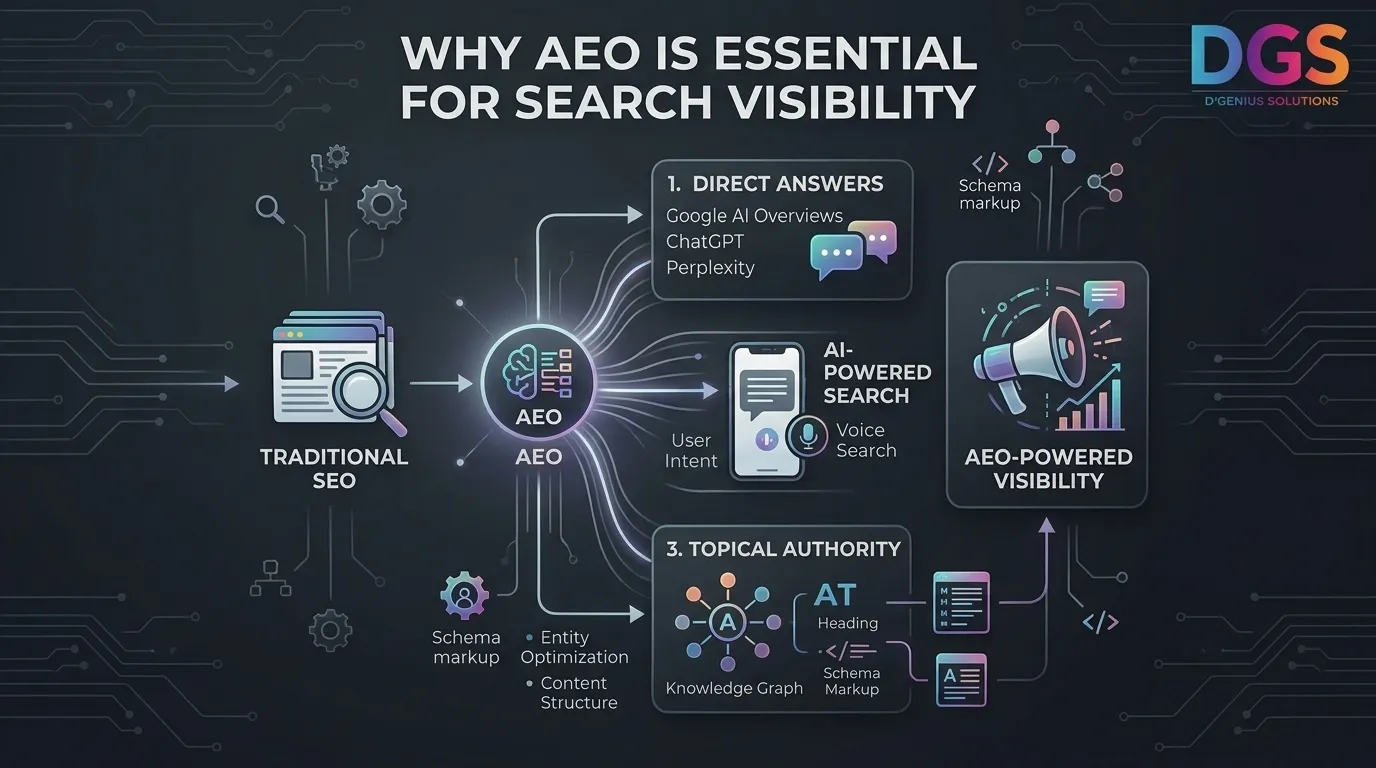
If your team has never discussed how your content shows up inside AI Overviews, ChatGPT, Perplexity, or Google's AI Mode, your strategy is already behind. This is where Generative Engine Optimization and Answer Engine Optimization come in. Both are about making sure AI systems can find, understand, and confidently cite your content, not just that Google can crawl it.
Ranking well and being cited by AI are two different achievements, and increasingly, businesses need both.
3. You're Still Obsessing Over Exact-Match Keywords
Keyword stuffing and exact-match obsession used to work. Now they actively hurt pages, because they read as unnatural to both readers and the AI systems now summarizing content.
Modern search engines and AI models understand topics, entities, and intent far better than they understand individual keyword phrases. Writing for a single exact phrase instead of the broader question a person is actually asking is a habit worth dropping.
Good SEO strategies now build around topics and clusters, answering every related question a real customer might have, instead of repeating one phrase across a page. This also happens to be far more pleasant to read.
4. Your Content Isn't Built to Be Understood at a Glance
AI Overviews and answer engines tend to favor content that gets to the point. That means clear, direct answers near the top, honest headings that match real questions, and short, scannable sections instead of long, wandering paragraphs.
If your blog posts bury the answer three paragraphs deep under a slow introduction, you are making it harder for both readers and AI systems to extract value from your page. That reduces your odds of being cited, summarized, or linked at all.
A quick fix: For any question-based heading, answer it directly in the first sentence or two below it. Save the deeper explanation, context, or examples for after that answer.
5. You Have No Idea How Visible Your Brand Is on AI Platforms
Most teams still measure success by rankings and organic sessions. Very few are tracking whether their brand gets mentioned when someone asks ChatGPT or Perplexity a relevant question in their industry.
This is a real blind spot. AI referral traffic is growing fast, and a large share of it currently comes through a small number of platforms. If a competitor is being recommended by name in AI answers and you are not, that is lost visibility you cannot see in Google Analytics alone.
Start simple: ask AI tools the same questions your customers would ask, and note whether your brand, products, or services come up. Do this monthly and track the pattern over time.
6. Your Technical SEO Hasn't Been Reviewed in a While
Technical fundamentals have not gone away; they have just gotten a new audience. AI crawlers need clean, crawlable, well-structured pages just as much as traditional search engines do, sometimes more, since they are trying to extract clear facts rather than just index a page.
If your site has slow load times, broken internal links, missing or inconsistent structured data, or pages that are hard to crawl, you are limiting your visibility everywhere, not just in classic search results.
Worth checking this quarter: page speed on mobile, structured data accuracy against what's actually visible on the page, and whether your most important pages are easy to reach through internal links.
7. Your Content Lacks Real Expertise and Trust Signals
Google's guidance has leaned on experience, expertise, authority, and trust for years, and this matters even more now that AI systems are deciding which sources to cite as reliable. Thin content without a named author, without real experience behind it, and without credible sourcing is easy for both readers and algorithms to discount.
This shows up most sharply in sensitive categories like health and finance, where AI systems are especially cautious about which sources they trust. But it matters for every industry. A byline, a clear author background, original data, and honest sourcing all help establish that a human with real knowledge stands behind the page.
If your content reads like it could have been written by anyone about anything, it is time for a rewrite.
8. You Don't Have a First-Party Data Strategy
As zero-click search grows, the data you own becomes more valuable than the data you rent from a search engine. Email lists, customer surveys, product usage data, and community insights all give you something AI-generated summaries cannot: original information nobody else has.
Original research and first-party data also happen to be exactly the kind of content AI systems like to cite, because it is unique rather than a rehash of what is already published elsewhere.
If your content strategy is built entirely around summarizing what already ranks well for others, you are creating content that is easy to replace. Original data is not.
9. You Treat Every Search Platform the Same Way
Google is still the largest player, but it is no longer the only one that matters. Voice assistants, AI chat tools, and even social platforms are now genuine discovery channels, and each behaves differently.
A strategy that only optimizes for classic Google rankings misses where a growing share of searches, questions, and comparisons are actually happening. This does not mean abandoning Google. It means recognizing that visibility now spans multiple surfaces, and each one has its own habits worth understanding.
10. Your Reporting Still Only Talks About Rankings and Clicks
This might be the most common sign of all, and the easiest one to fix. If your monthly SEO report is still just a list of keyword positions and session counts, it is telling an incomplete story to whoever is reading it.
A ranking with falling click-through, a page with rising AI citations but flat sessions, or a smaller but higher-converting audience are all outcomes that old-style reporting cannot explain. Leadership teams that only see traffic numbers may assume SEO is failing, when the reality is that the metric itself needs updating.
Good reporting in 2026 pairs traditional numbers with visibility signals: AI Overview appearances, brand mentions across AI platforms, and conversion quality alongside volume.
Conclusion
None of these ten signs mean SEO is dying. They mean the rules for winning have expanded. Rankings still matter. Technical fundamentals still matter. But visibility now lives across AI Overviews, answer engines, and traditional search results all at once, and a strategy built only for 2023 will keep losing ground quietly, one quarter at a time.
The good news is that fixing this does not require starting over. It requires updating how you measure success, how you structure content, and how closely you watch platforms beyond Google itself.
If you're noticing several of these signs in your own numbers, it may be time for a second opinion. Working with a digital marketing agency that already tracks AI visibility, technical health, and content performance together can help you catch these gaps faster than trying to piece it together alone. Whether you handle SEO in-house or bring in outside search engine optimization services, the businesses that adapt their SEO strategies now, rather than later, will be the ones still visible when the next shift in search arrives.


























Sign in to leave a comment.