Running a community pharmacy in the UK is becoming more demanding each year. Rising staff costs, increased regulatory compliance, fluctuating NHS payments, and supply chain pressure all impact profitability. However, smart tax planning is one of the easiest ways to protect your bottom line — and yet many UK pharmacy owners underclaim allowable deductions every year.
Working with specialist Pharmacy Accountants can make a significant difference. They understand the unique financial challenges of the pharmacy sector, ensure you claim every eligible expense, and help you avoid costly tax mistakes.
To help you keep more of your hard-earned money, here is a fully detailed guide to the 12 most important tax deductions every UK pharmacy business should take advantage of.

1. Staff Wages, Payroll Costs & Employer Contributions
Your staff are your Pharmacy backbone — and all related expenses are tax-deductible.
You can claim for:
- Salaries for pharmacists, technicians, dispensers, and counter staff
- Employer National Insurance contributions
- Employer pension contributions (NEST or private pension schemes)
- Locum and temporary holiday cover
- Overtime and bonus payments
- Apprenticeship wages
Tip:
Make sure overtime and locum costs are properly recorded. HMRC may request documentation.
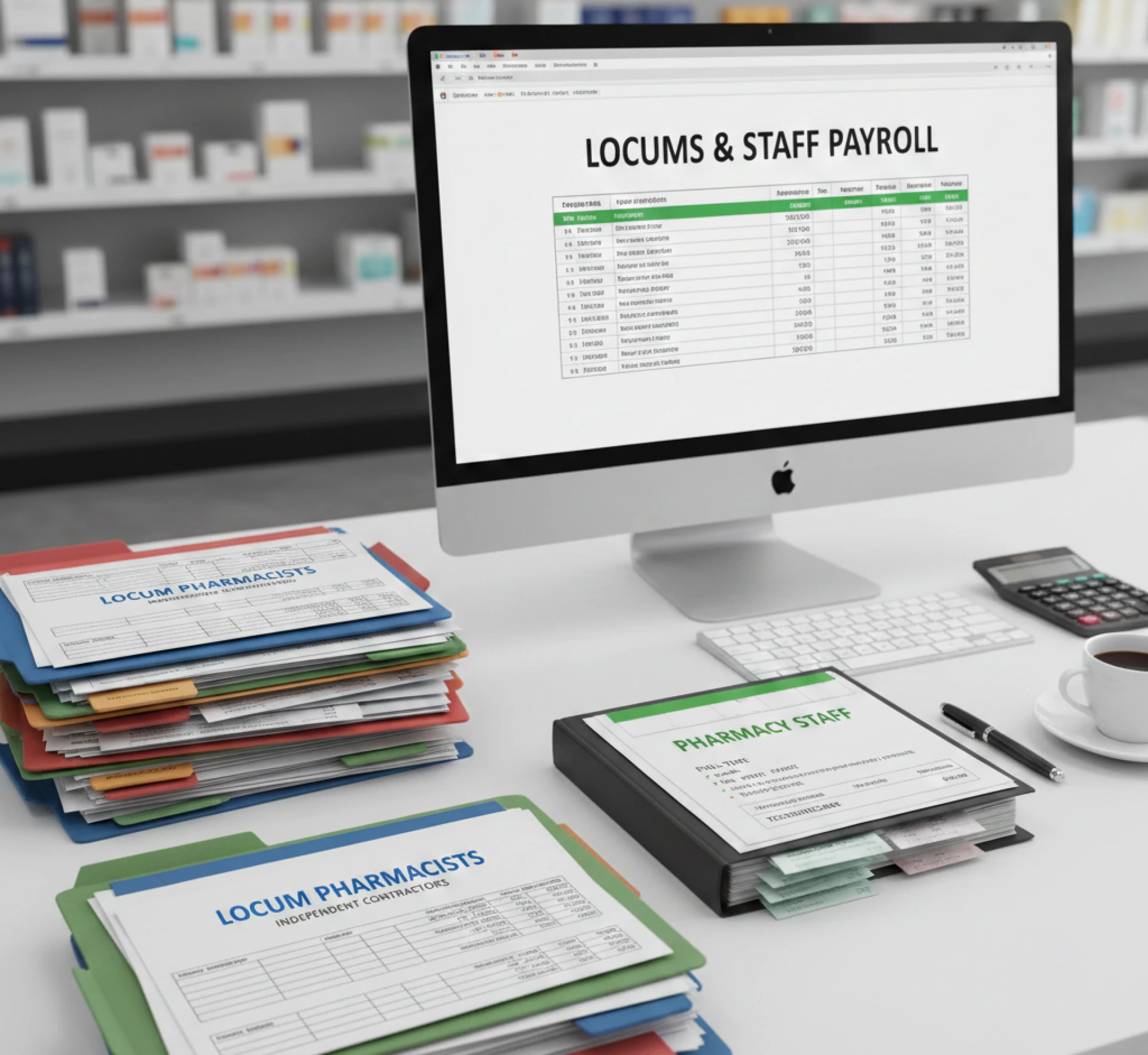
2. Locum Pharmacist Fees (A Major Claim Area)
With staff shortages and high demand for services, locum costs can be high.
You can claim 100% of:
- Hourly locum rates
- Travel allowances, if paid directly
- Agency fees
- Emergency sick-cover locums
Why it matters:
Many pharmacies forget to claim the full cost of locums hired through WhatsApp groups or direct cash payments — always ensure proper invoices.
3. Premises Rent, Property Costs & Business Rates
The physical pharmacy space is one of your largest expenses.
You can claim for:
- Monthly rent
- Business rates
- Service charges
- Repairs and maintenance
- Security systems (CCTV, alarms)
- Cleaning costs
- Waste disposal (including clinical waste)
Important:
Major refurbishments may qualify for Capital Allowances — speak to a pharmacy accountant before planning renovations.
4. Utility Bills & Operational Expenses
Everything used to operate your pharmacy day-to-day counts as an allowable expense.
This includes:
- Electricity (a high cost for fridges & lighting)
- Heating & water
- Broadband & landline
- Mobile phone used for business
- Postage & courier services (medication delivery, returns, etc.)
Tip:
If you work from home on administrative tasks, you can also claim a portion of your home office expenses.

5. Professional Fees — Pharmacy Accountant, Legal & Regulatory
Pharmacy businesses are highly regulated, so professional support is essential—and fully tax-deductible.
Claim for:
- Accountant and bookkeeping fees
- Pharmacy specialists tax advisory services
- Solicitor fees (contract reviews, lease agreements, etc.)
- GPhC inspections support
- Business valuations
- HMRC compliance support
- Subscription to professional associations (NPA, RPS, CCA)
6. Pharmacy Software, Digital Tools & Technology
Every modern UK pharmacy relies heavily on digital tools.
You can claim for:
- PMR systems (Cegedim, Titan, Positive Solutions, PharmacyX, etc.)
- EPS/EPOS software
- Website hosting & maintenance
- Cybersecurity subscription
- Email & cloud storage (Microsoft 365, Google Workspace)
- AI tools & digital services
- Online appointment booking systems
Capital Allowances:
Large hardware purchases such as computers, barcode scanners, servers, and printers qualify for the Annual Investment Allowance (AIA).
7. Medical Equipment & Pharmacy Fixtures
Many pharmacy owners underclaim on equipment because they treat it as a general expense, when it should qualify for capital allowances.
This includes:
- Pharmacy fridges
- Dispensing robots
- Shelving, counters & modular storage
- Consultation room furniture
- Blood pressure machines
- Vaccination equipment
- Signage (digital or traditional)
Benefit:
Most of these can be claimed under AIA for 100% tax relief in the same year.
8. Training, CPD, Courses & Professional Development
Keeping your team qualified and compliant is essential — and HMRC allows deductions for training related to your current business.
You can claim:
- CPD modules
- GPhC registration & renewal
- Mandatory training (flu vaccination, first aid, safeguarding)
- Pharmacy technician courses
- Management & leadership training
- Business and marketing training
- Conference attendance fees
Note:
Training for new skills outside the business scope may not qualify.

9. Marketing, Branding & Advertising Costs
Standing out locally is crucial for independent pharmacies.
You can claim for:
- Google Ads, Facebook Ads, Instagram Ads
- Local leaflet drops
- Newspaper & radio promotions
- Website redesign & SEO
- Social media management
- Logo design & branding work
- Pharmacy signage upgrades
- Loyalty program software
Tip:
Marketing is often underclaimed — keep all digital receipts.
10. Vehicle Costs, Mileage & Delivery Services
Many pharmacies now offer:
- Prescription delivery
- Care home drop-offs
- Travel to supplier meetings
- Community visits for pharmacy services
You may claim:
- Mileage (45p per mile)
- Fuel for business journeys
- Vehicle insurance
- MOT & repairs
- Parking & tolls
Warning:
Private use must be clearly separated to avoid HMRC issues.
11. Insurance Policies & Business Protection
All business insurance premiums are fully deductible.
This includes:
- Professional indemnity
- Public liability
- Employer’s liability
- Business interruption insurance
- Product liability
- Vehicle insurance for delivery cars
- Property & contents insurance
Tip:
You can also claim insurance on pharmacy stock.
12. Bad Debts & Unpaid Invoices
If your pharmacy provides goods or services and the customer fails to pay, you can deduct the amount as a business expense.
Applies to:
- Care homes with unpaid accounts
- NHS chargeable services
- Private prescriptions
- B2B supply invoices
Requirement:
You must prove reasonable attempts were made to collect the debt.
Final Thoughts: Don’t Miss Out on Legitimate Tax Savings
With shrinking NHS margins and rising operational costs, UK pharmacy owners simply cannot afford to miss out on legitimate tax deductions. The key is accurate bookkeeping, understanding HMRC rules, and having a specialist accountant who knows pharmacy inside out.
At PharmaTax, we help pharmacy owners save thousands every year with proactive tax planning tailored specifically for the pharmacy sector.
Need Expert Pharmacy Tax Advice?
PharmaTax specialises exclusively in working with UK pharmacy owners.































Sign in to leave a comment.