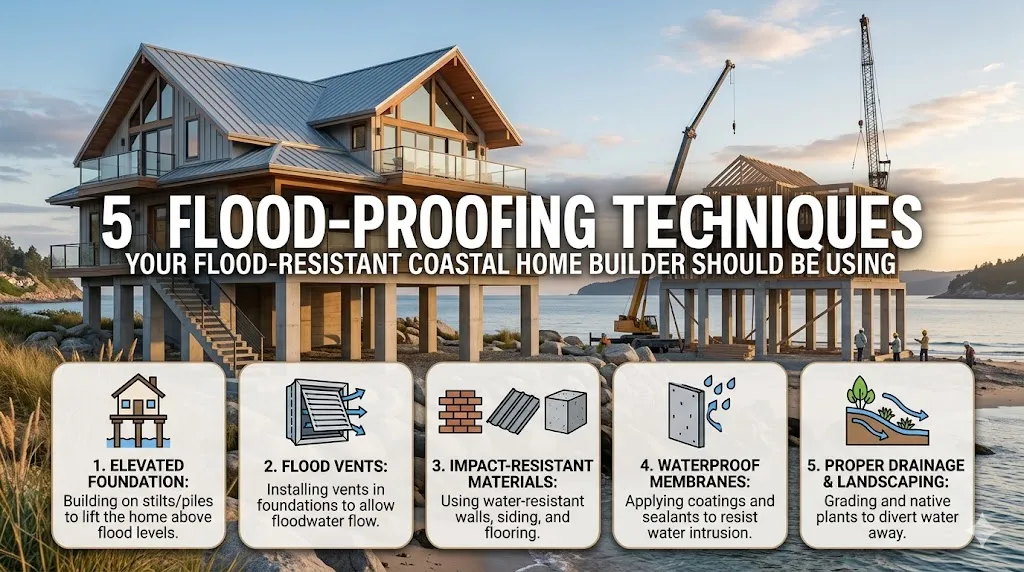

Living near the coast offers breathtaking views and a relaxed lifestyle, but it also comes with unique challenges such as flooding, storm surges, and hurricanes. That's why choosing a flood-resistant coastal home builder is one of the most important decisions you'll make when investing in a coastal property. Modern coastal homes are no longer built with aesthetics alone in mind—they must be designed to withstand extreme weather conditions. Here are five proven flood-proofing techniques that your builder should be incorporating to help protect your home, your family, and your long-term investment.
1. Elevated Home Foundations
Why Elevation Matters
One of the most effective flood-protection strategies is raising the home's foundation above expected flood levels. According to floodplain management experts, elevating a structure can significantly reduce flood damage during severe weather events.
Common Elevation Methods
- Pilings or piers
- Raised concrete foundations
- Stem wall construction
Think of elevation as placing your valuables on a high shelf before a flood arrives—the higher they are, the safer they remain.
2. Flood-Resistant Building Materials
Choosing Materials That Can Handle Water
Not all construction materials perform the same when exposed to floodwaters. A skilled coastal home builder should prioritize materials that resist water absorption and structural deterioration.
Recommended Flood-Resistant Materials
- Reinforced concrete
- Pressure-treated lumber
- Fiber cement siding
- Closed-cell insulation
- Ceramic or porcelain flooring
For example, fiber cement siding withstands moisture far better than traditional wood siding, reducing repair costs after a storm.
3. Proper Site Grading and Drainage Systems
Managing Water Before It Reaches Your Home
Even a well-built home can suffer damage if water is allowed to pool around the foundation. Effective site grading directs water away from the structure.
Key Drainage Features
Strategic Grading
Land should slope away from the home to prevent water accumulation.
Advanced Drainage Systems
- French drains
- Swales
- Stormwater channels
- Sump pump systems
A well-designed drainage system works like a highway for rainwater, guiding it safely away before it becomes a threat.
4. Impact-Resistant Windows and Doors
Protection Beyond Flooding
Flood-resistant homes must also withstand hurricane-force winds and wind-driven rain. Impact-rated windows and doors provide a critical layer of defense.
Benefits of Impact-Rated Openings
- Reduced water intrusion
- Enhanced structural integrity
- Improved energy efficiency
- Greater storm protection
Many impact-resistant systems are tested to endure debris traveling at high speeds during severe coastal storms, helping homeowners avoid costly repairs.
5. Breakaway Walls and Flood Vents
Allowing Water to Flow Safely
A common mistake is trying to completely block floodwaters. In many cases, allowing water to pass through designated areas reduces structural pressure.
How These Features Work
Breakaway Walls
Designed to detach under extreme water pressure without compromising the main structure.
Flood Vents
Allow floodwater to enter and exit enclosed areas, balancing pressure on foundation walls.
Engineers often compare flood vents to pressure-release valves that help prevent catastrophic structural failure during major flooding events.
6. Elevated Utility Systems
Protecting Critical Home Components
Even if floodwaters never enter your living space, damaged utilities can make a home uninhabitable.
Utilities That Should Be Elevated
- Electrical panels
- HVAC equipment
- Water heaters
- Backup generators
Positioning these systems above projected flood levels can save thousands of dollars in replacement costs after a storm.
Conclusion
Building near the coast requires more than beautiful architecture—it demands smart engineering and proven flood-protection strategies. From elevated foundations and flood-resistant materials to advanced drainage systems, impact-rated openings, flood vents, and elevated utilities, these techniques help create homes that are prepared for coastal challenges.
When evaluating a coastal home builder, ensure these flood-proofing methods are part of their standard building approach. Companies like Seasafe Homes understand that long-term resilience is just as important as design and comfort. If you're planning to build or buy a coastal property, speak with an experienced builder today and make flood resistance a top priority for your future home.

























Sign in to leave a comment.