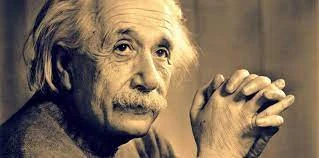

''I've done my part, it's time to go. I will do it gracefully." Albert Einstein thus said goodbye to the world by refusing to prolong the surgical ordeal to which he was subjected. He was seventy-six years old and had abdominal pain that had plagued him for a decade. His last words, that April 1955, are of an incomparable modesty regarding the magnitude of his contributions to current science, set fifty years ago, in a decisive 1905 for the history of physics. As Jorge Wagensberg wrote in our pages, “that year the two fundamental theories that today comprise any corner of reality, relativity and quantum, took off”. But despite his giant stature as an intellectual, Einstein left without a fuss, with an almost furtive cremation. Although his brain remained, and this is not a literary license: it was stolen by the pathologist who did the autopsy.
The most famous scientist of the 20th century, author of the theory of relativity, Nobel Prize in Physics in 1921, died 65 years ago today.
With physics as his starting point, Einstein is known for developing the theory of relativity in 1905 and what is surely the most popular equation in history: E=mc2, the equivalence between mass and energy. His discoveries have left their mark on very diverse fields and his predictions continue to be confirmed today.
Thus, last Thursday, April 16, 2020, the journal Astronomy & Astrophysics published that, for the first time, astronomers had managed to observe a star that orbits the supermassive black hole in the center of our galaxy, the Milky Way. The star is "dancing" to the rhythm predicted in the general theory of relativity.
ALBERT WAS NOT A NERD
Albert Einstein was born into a humble Jewish family. He was reserved and introverted and did not start speaking until he was three years old. He was not a good student either. However, from an early age he was interested in music, especially the violin, and in science.
POLITICS
On August 2, 1939, he writes a letter to President Roosevelt, warning him that Nazi Germany may be developing a nuclear weapon and suggesting that the United States should get ahead of it. A convinced pacifist, Einstein always considered that having urged President Roosevelt to finance nuclear research (the Manhattan Project) was one of the mistakes of his life, even knowing that it was necessary to win the race against Germany.
In the last years of his life, Einstein promoted the Russell-Einstein Manifesto. In it he urged the scientific community to unite against nuclear weapons.
His status as a popular icon led to his being offered the presidency of Israel, an honor he emotionally declined.
THE SPY WHO LOVED HIM
Einstein combined numerous achievements in his field with a voracious sexual appetite, which prevented him from remaining faithful in marriage to his two wives (Mileva Mariç and Elsa Einstein). He had relationships with an extensive list of women, among which Margarita Konenkova stands out, identified as a Soviet agent, with whom he had a romantic relationship.
DEATH
Death surprised Einstein on April 18, 1955 in Princeton at the age of 76. An internal hemorrhage caused by the rupture of an aneurysm of the abdominal aorta would be the cause. The physicist would bequeath his corpse to science.
BRAIN ROBBERY
The pathologist in charge of performing the autopsy, Thomas Harvey, extracted Einstein's brain, donated to science by the scientist by mutual agreement with his son Albert. But Harvey kept it without permission in order to study it and discover where the incredible intelligence of the German physicist came from.
In 1999, the Lancet magazine published the article 'The exceptional brain of Albert Einstein', by the neuroscientist Sandra Witelson. In it, it was determined that Einstein's parietal lobes had an atypical morphology.
0









Sign in to leave a comment.