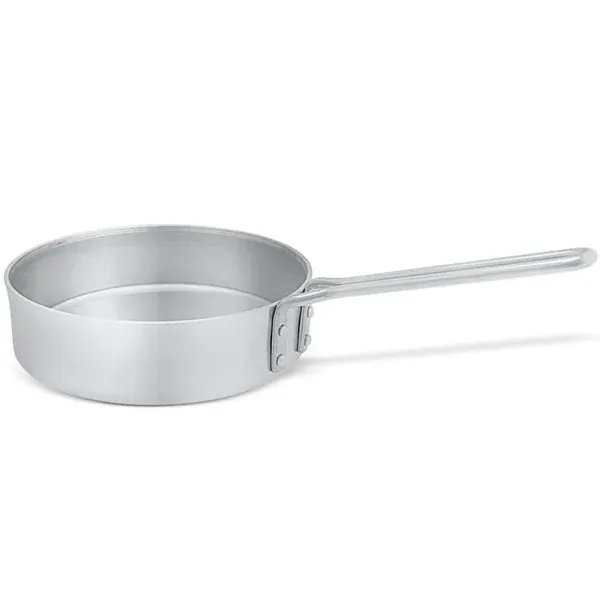

High-volume kitchens depend on cookware that performs consistently through continuous production cycles. During peak service hours, cookware affects heat distribution, cooking speed, workflow efficiency, and long-term operating costs. Poor cookware selection often leads to warped pans, uneven cooking surfaces, slower recovery times, and increased equipment replacement.
Selecting the right commercial pots and pans requires more than comparing price points. Commercial kitchens must evaluate material performance, vessel construction, maintenance requirements, and compatibility with production before investing in cookware systems.
1. Assess Material Science for Commercial Pots and Pans
Cookware material directly influences heat transfer, responsiveness, and durability during commercial service. Aluminum remains widely used across restaurants, bakeries, and food production facilities because it transfers heat faster and more evenly than many stainless steel alternatives. Faster thermal responsiveness supports better temperature control during high-output cooking periods.
Stainless steel offers durability and non-reactive cooking surfaces, which are important during acidic sauce preparation and reduction. Acidic ingredients, such as tomato-based sauces, can react with certain cookware surfaces during prolonged cooking, affecting flavour consistency and equipment longevity.
Material weight also affects kitchen workflow. Heavy cookware increases strain during long shifts where staff repeatedly lift, rotate, and transport cookware between stations. Commercial kitchens often balance heat performance with handling efficiency when selecting cookware for demanding production environments.
Aluminum Versus Stainless Steel Specifications
Aluminum cookware supports rapid heat conductivity and quick recovery during continuous burner use. Stainless steel provides strong resistance to staining and chemical reactions while maintaining structural durability.
Many commercial kitchens use aluminum cookware for a wide range of heat-management applications while reserving stainless steel for highly acidic cooking tasks. Crown Cookware manufactures cookware from virgin food-grade aluminum with no coating, supporting reliable heat distribution across restaurants, bakeries, and food production operations.
2. Match Restaurant Cooking Pots to Menu Volume
Cookware shape and capacity should align directly with menu production demands. Deep stock pots support boiling and batch soup preparation, while wider braziers improve evaporation and control of reduction during sauce production.
Large-scale kitchens also need cookware that supports efficient movement during peak service periods. Oversized vessels may slow the heating response, while undersized cookware can overload kitchen staff during busy production cycles.
Proper gauge selection becomes especially important in high-heat environments. Thin cookware often loses structural stability faster under repeated thermal expansion and cooling cycles. Heavy-duty construction helps cookware maintain flat cooking surfaces and predictable heat transfer throughout sustained commercial use.
Gauge and Depth Selection Criteria
Commercial searing stations often feature wider cooking surfaces, allowing staff to prepare multiple portions simultaneously without overcrowding the pan. Depth selection also affects evaporation rates, stirring efficiency, and handling safety during high-volume cooking.
Restaurants, bakeries, and food production facilities should evaluate cookware alongside racks, prep stations, and wash flow requirements to improve overall kitchen organization.
Explore the Crown Cookware catalogue to review commercial cookware, bakery racks, pizza pans, cake pans, and round pans designed for demanding production environments.
3. Evaluate Maintenance Needs for Commercial Pots and Pans
Maintenance requirements directly influence cookware lifespan and operational efficiency. Commercial kitchens expose cookware to repeated washing, high heat, aggressive handling, and continuous loading throughout the day.
Daily cleaning protocols should protect cookware surfaces while supporting fast turnaround between service periods. Some cookware performs well in high-temperature dishwasher cycles, while other specialized pans may require handwashing to preserve their finish and structural integrity.
Carbon steel cookware often requires regular seasoning to maintain natural nonstick properties and surface protection. Aluminum cookware instead depends on proper cleaning, drying, and handling practices to support long-term durability.
Seasoning and Care Protocols
Commercial kitchens increasingly prioritize cookware that simplifies maintenance routines without sacrificing durability. Proper storage, controlled cooling practices, and careful stacking help reduce impact damage and warping across busy production environments.
Cookware longevity often depends as much on daily operational practices as on material quality itself.
4. Verify NSF Compliance for Commercial Cooking Pots and Pans
NSF-compliant cookware helps kitchens maintain sanitation standards and streamline health inspection processes. Food-grade materials, smooth surfaces, and sanitary construction reduce the risk of contamination during food preparation.
Commercial kitchens should prioritize cookware with reinforced handle construction, smooth welds, and durable contact surfaces designed for repeated cleaning cycles. Seamless construction also improves cleaning efficiency by reducing areas where food residue can accumulate.
Food Grade Certification Requirements
Double-welded handles provide stronger structural support during heavy lifting applications, particularly in high-volume kitchens where cookware moves constantly between cooking, staging, and washing stations.
Commercial buyers increasingly prioritize certified cookware because sanitary design standards support smoother inspections and more consistent operational compliance.
5. Select the Best Commercial Pots and Pans for Your Kitchen
Successful cookware procurement balances upfront investment with long-term operational value. Durable cookware reduces replacement frequency, improves workflow consistency, and supports more predictable kitchen performance over time.
Professional kitchens increasingly prioritize Canadian-manufactured cookware because operators value dependable production quality, durable food-grade materials, and reliable supply timelines.
Final Procurement Decision Framework
The best commercial cooking pots and pans support both durability and workflow efficiency across continuous commercial use. Crown Cookware manufactures virgin food-grade aluminum cookware, bakery racks, pizza pans, cake pans, and round pans designed for restaurants, bakeries, and food production facilities.
Contact the Crown Cookware procurement team today to build a cookware system designed for high-volume kitchen performance and long-term operational reliability.



























Sign in to leave a comment.