

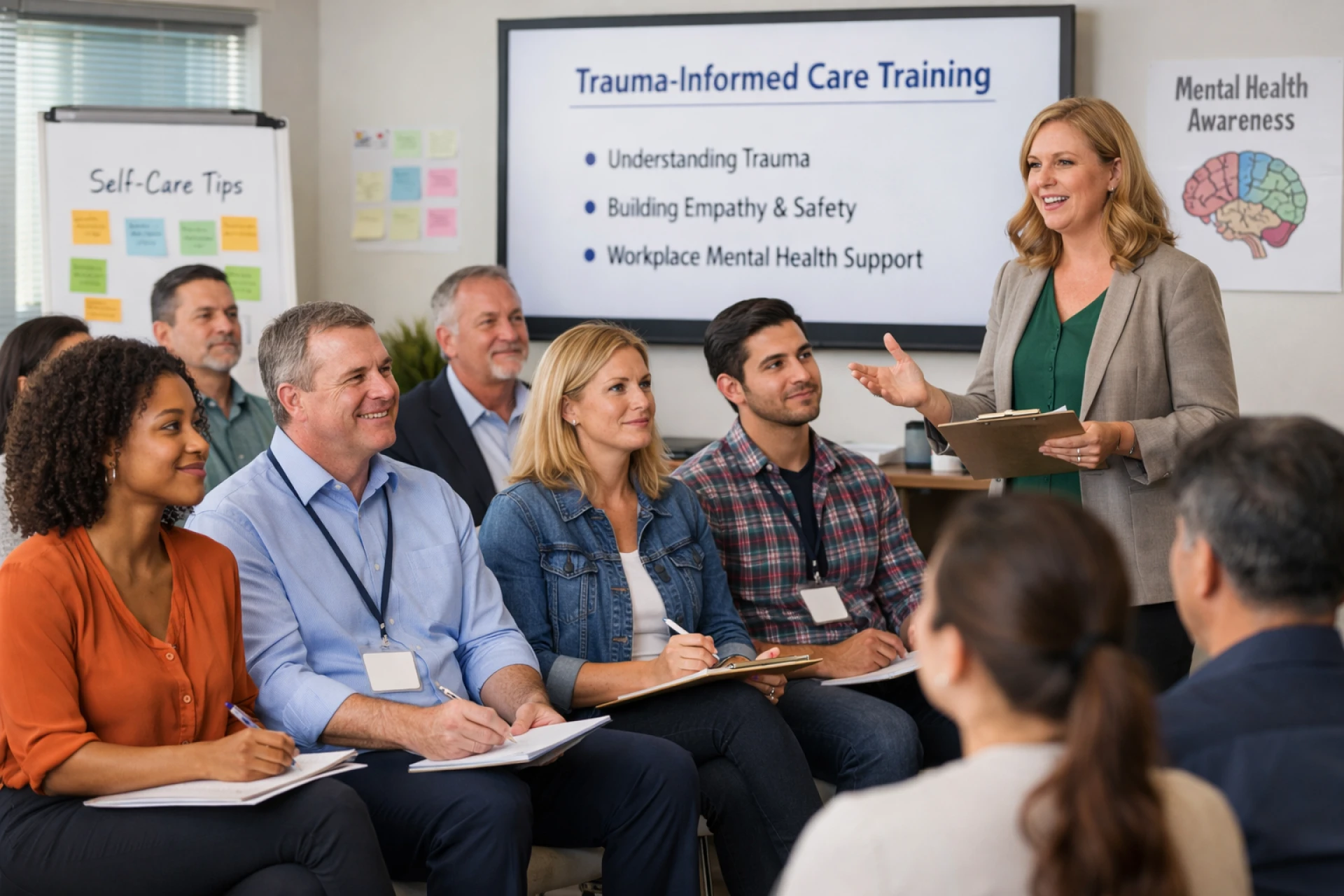
Oklahoma City professionals working in healthcare, education, and social services encounter trauma's effects every single day. Whether it shows up as a child's behavioral outburst, an employee's declining performance, or a patient's resistance to treatment, trauma shapes the way people interact with the systems designed to help them. Investing in trauma informed care training okc gives teams the knowledge they need to recognize these patterns and respond with skill instead of guesswork.
Below are five training modules that OKC teams across industries should prioritize. Each one addresses a specific gap in professional development and builds toward a more trauma responsive culture within any organization.
Module 1: Foundations of Trauma Informed Care Training OKC Professionals Need
Every effective training program starts with the basics. A foundational module covers what trauma is, how it affects the brain and body, and why traditional approaches often fall short for people carrying unresolved experiences.
This type of module typically introduces the four Rs of a trauma informed approach: Realizing the prevalence of trauma, Recognizing the signs, Responding with appropriate practices, and Resisting re-traumatization. Teams that complete this training walk away with a shared language and framework that changes how they engage with clients, patients, and each other.
Module 2: Adverse Childhood Experiences (ACE) Training
The ACE study remains one of the most significant pieces of research connecting childhood adversity to long-term health and behavioral outcomes. An ACE-focused module helps professionals understand the dose-response relationship between early trauma and chronic disease, mental health challenges, and substance use.
For healthcare providers and social workers in Oklahoma City, this training is particularly valuable. It shifts the conversation from "What's wrong with you?" to "What happened to you?" and provides evidence based strategies for screening and early intervention. Many trauma-informed care training programs now include ACE content as a core component because of how directly it influences practice.
Module 3: Compassion Fatigue and Vicarious Trauma Prevention
Professionals who work closely with trauma survivors are at serious risk for compassion fatigue and vicarious trauma. This module focuses on protecting the people who do the helping.
Participants learn to identify early warning signs of burnout, develop personal resilience plans, and establish organizational practices that support staff wellbeing. Corporate stress management in Oklahoma City workplaces becomes far more effective when teams understand that exposure to others' trauma carries a real psychological cost. Without this training, turnover climbs and the quality of care suffers.
Module 4: Crisis Intervention and Trauma Response
Not every team member needs to be a therapist, but every team member should know how to respond when someone is in crisis. A crisis intervention module teaches de-escalation techniques, safety planning, and the basics of psychological first aid.
Who Benefits Most from Crisis Training
This module is especially relevant for frontline staff in hospitals, schools, and community organizations. Teachers, nurses, case managers, and administrative staff are often the first people to encounter someone in acute distress. Practical, scenario-based training gives them the confidence to act calmly and connect individuals to appropriate loss support counseling or mental health resources in Oklahoma City.
What the Training Covers
Most crisis intervention modules include recognizing escalation patterns, verbal de-escalation strategies, understanding PTSD awareness at a professional development level, and knowing when to refer someone for clinical support. The goal is not to replace clinical expertise but to build a safety net across the entire organization.
Module 5: Trauma Informed Organizational Practices
Individual skill-building matters, but lasting change happens at the systems level. This module helps leadership teams evaluate their policies, physical environments, and communication practices through a trauma informed lens.
Topics include hiring and onboarding practices that reflect trauma awareness, creating psychologically safe meeting structures, and building feedback loops that prevent re-traumatization of both staff and the populations they serve. Organizations in OKC that invest in this kind of structural training see improvements in employee retention, client satisfaction, and overall workplace culture.
How to Choose the Right Trauma Informed Care Training in OKC
With so many options available, selecting the right program matters. Look for training that offers continuing education hours, uses evidence based trauma treatment frameworks, and includes interactive components like role-playing or case studies.
Programs led by licensed professionals with direct clinical experience tend to deliver the most practical value. Check whether a program addresses your specific industry, whether that's behavioral health trauma training, healthcare provider trauma training, or social worker trauma certification. The best modules meet teams where they are and give them tools they can apply immediately.
Building a trauma informed team is not a one-day event. It requires a commitment to ongoing education across multiple domains, from foundational knowledge and ACE awareness to crisis response and organizational change. OKC professionals who pursue this training position themselves and their organizations to deliver better outcomes for the people they serve while also protecting their own wellbeing.
The five modules outlined here represent a strong starting point. Prioritizing even one or two of them can shift an entire team's capacity to recognize, respond to, and ultimately reduce the impact of trauma in everyday professional settings.
Frequently Asked Questions
1. What is trauma informed care training?
Trauma informed care training teaches professionals to recognize how trauma affects behavior and to respond with practices that promote safety and healing rather than re-traumatization.
2. Who should take trauma informed care training in OKC?
Healthcare providers, social workers, educators, and any professional who interacts with individuals who may have experienced trauma should consider this training.
3. How long does trauma informed care certification take?
Most certification programs range from a single-day workshop to multi-week courses depending on the depth of content and continuing education hours offered.
4. Does trauma informed care training help with compassion fatigue?
Yes, many programs include modules on compassion fatigue and vicarious trauma prevention to protect the wellbeing of professionals who work with trauma survivors.
---






















Sign in to leave a comment.