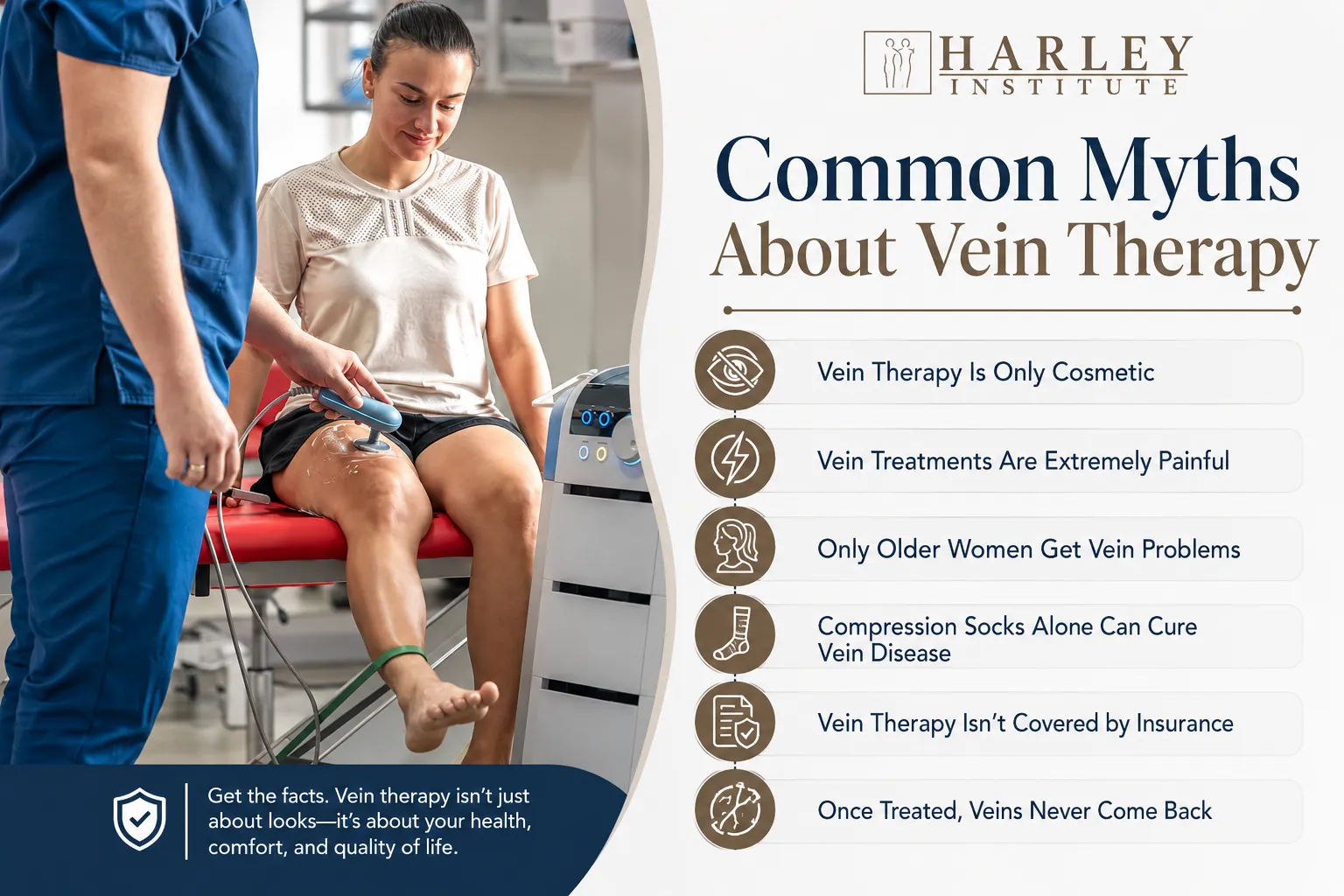

Vein therapy has advanced significantly, replacing outdated, painful procedures with modern treatments that are minimally invasive, quick, and clinically proven. Despite these improvements, many people still avoid treatment because of common myths about pain, cost, effectiveness, recovery time, and who actually needs care. The truth is that today’s vein therapies are designed to be safe, effective, and to help patients manage both cosmetic concerns and symptoms like pain, swelling, and fatigue. Spider veins and varicose veins affect millions of people, yet misinformation continues to create unnecessary hesitation. If you’ve been delaying professional vein therapy in Atlanta based on outdated advice or online misconceptions, it’s time to separate fact from fiction and make informed decisions about your vein health.
Myth 1: Vein Therapy Is Only Cosmetic
This is false. While spider veins can affect appearance, varicose veins and vein disease often signal an underlying circulation problem.
Veins have one-way valves that keep blood flowing toward the heart. When those valves weaken, a condition called venous insufficiency develops, and blood starts pooling in the lower legs. This isn't just about how veins look. It can lead to swelling, aching, leg heaviness, skin discoloration, and in more advanced cases, sores that won't heal properly.
A patient who ignores bulging veins for years because they seem like a cosmetic issue often ends up dealing with restless legs, throbbing pain by the end of the day, or skin changes near the ankle. Left untreated long enough, venous insufficiency can progress to more serious complications. Treating vein disease early isn't vanity; it's preventive care.
Myth 2: Vein Treatments Are Extremely Painful
Older procedures like vein stripping surgery did involve real pain and long recovery times, but that's not how most vein therapy works today.
Modern treatments like sclerotherapy, radiofrequency ablation, and laser therapy are minimally invasive. Sclerotherapy involves injecting a solution directly into the problem vein, causing it to collapse and fade over time. Radiofrequency and laser treatments use heat energy delivered through a thin catheter to close off the faulty vein. Most patients describe mild discomfort at most, similar to a pinch or slight warmth, and local anesthesia is typically used to keep things comfortable.
Recovery is usually fast too. Many patients return to normal activities the same day or within 24 to 48 hours, which is a massive difference from the weeks of downtime old surgical methods required.
Myth 3: Only Older Women Get Vein Problems
Vein disease doesn't discriminate by age or gender nearly as much as people assume.
Genetics play a major role in who develops vein issues, and family history matters more than age in many cases. Pregnancy, prolonged standing or sitting for work, obesity, and even certain athletic activities can all contribute to vein problems showing up much earlier than people expect. Men develop varicose veins too, though they're often less likely to seek treatment because of the assumption that it's a women's issue.
A 35-year-old warehouse worker who's on his feet for ten-hour shifts can develop the same valve problems as a 60-year-old with a family history of varicose veins. Age is a factor, but it's far from the only one.
Myth 4: Compression Socks Alone Can Cure Vein Disease
Compression socks help manage symptoms, but they don't repair or reverse damaged vein valves.
Compression therapy works by applying gentle pressure to the legs, which helps blood move upward more efficiently and reduces swelling and discomfort. It's genuinely useful, especially for people who stand or sit for long periods, and doctors often recommend it alongside other treatments. But socks don't fix the structural problem inside the vein. Once a valve is damaged, it stays damaged unless the vein itself is treated.
Think of compression socks as symptom management, similar to how a knee brace supports an injury without healing the underlying issue. If you want lasting results, one of the medical procedures mentioned earlier is what actually addresses the root cause.
If you're dealing with ongoing leg swelling or visible veins and want to understand what's actually happening beneath the surface, getting a proper vein evaluation is a good next step before assuming compression alone will solve it.
Myth 5: Vein Therapy Isn't Covered by Insurance
This depends entirely on the reason for treatment, and a lot of people assume the answer is no without ever checking.
When vein treatment is medically necessary, meaning it's addressing symptoms like pain, swelling, skin changes, or documented venous insufficiency, insurance coverage is common. Purely cosmetic procedures for spider veins with no underlying medical issue are less likely to be covered. The key difference comes down to diagnosis. This is exactly why an accurate initial exam matters so much, since it determines whether treatment falls under medical necessity or cosmetic preference.
Diagnostic imaging plays a big role here too. A detailed look at how specialists approach diagnosing vein conditions explains how ultrasound and clinical evaluation guide both the treatment plan and the insurance conversation.
Myth 6: Once Treated, Veins Never Come Back
Treatment closes off or removes problem veins, but it doesn't make someone immune to developing new ones in the future.
Since genetics and lifestyle factors contribute to vein disease, new veins can develop over time even after successful treatment. This isn't a sign that the original treatment failed. It's simply how vein disease works for people who are predisposed to it. Regular movement, maintaining a healthy weight, and follow-up checkups help reduce the chances of new issues, but no treatment offers a permanent guarantee against all future vein problems.
Patients who understand this going in tend to have more realistic expectations and stick with the maintenance habits that keep results looking good for years.
What to Do Next
Vein disease doesn't improve on its own, and waiting usually means dealing with more discomfort and fewer treatment options down the road. If you've been avoiding treatment because of pain concerns, cost worries, or simply believing your symptoms aren't serious enough, it's worth getting an actual evaluation instead of relying on assumptions.
Harley Institute specializes in accurate vein diagnosis and modern, minimally invasive treatment options tailored to each patient's needs. If leg swelling, visible veins, or aching has been bothering you, reach out to Harley Institute and get a clear answer on what's actually going on with your veins.
People Also Ask
What is the most effective treatment for varicose veins?
Radiofrequency ablation and laser therapy are currently among the most effective treatments, offering high success rates with minimal downtime. The right choice depends on vein size, location, and severity, which a proper diagnostic evaluation will determine.
Is vein therapy safe?
Yes, modern vein therapy is considered safe when performed by qualified specialists. Techniques like sclerotherapy and endovenous ablation have strong safety records, low complication rates, and decades of clinical use supporting their effectiveness.
How long does recovery take after vein treatment?
Most patients resume normal activities within 24 to 48 hours. Some mild bruising or soreness may occur, but it typically resolves within a week or two, especially compared to older surgical vein stripping methods.
Can vein disease come back after treatment?
Yes, new veins can develop over time due to genetics or lifestyle factors, even after successful treatment. This isn't treatment failure. Regular checkups and healthy habits help catch and manage new issues early.
At what age should someone consider vein treatment?
There's no fixed age. Treatment is based on symptoms and diagnosis rather than age alone. Some people need treatment in their 30s, while others don't develop noticeable issues until much later in life.



























Sign in to leave a comment.