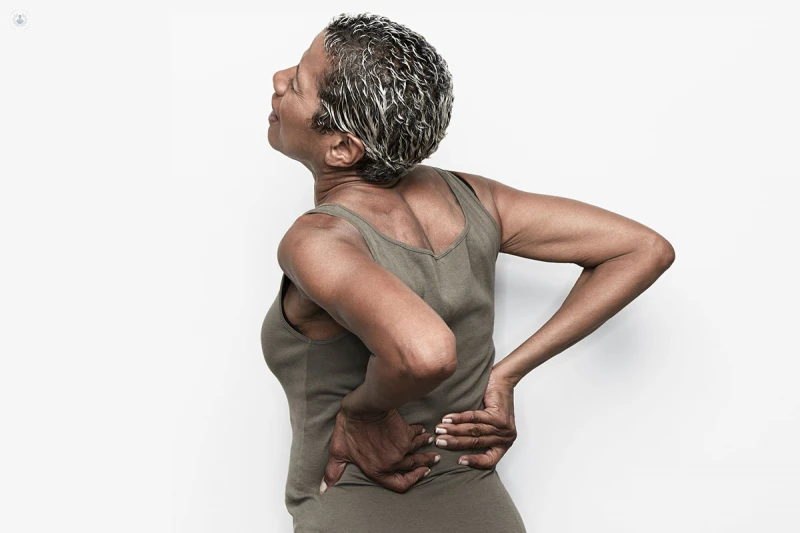

Discs cushion the vertebrae that make up the spine in the back. These discs have a robust outer covering (annulus) encircling the nucleus and are spherical, resembling little pillows. Discs serve as shock absorbers for the spinal bones and are situated between each vertebra in the spinal column. Herniated discs have received more media attention than any other musculoskeletal issue, and almost everyone has a relative or neighbour who has experienced one. At the same time, many myths about the subject have been propagated, and many patients with low back discomfort worry that they have a herniated disc. To distinguish fact from fiction, we've decided to compile the studies on lumbar disc herniations:
Lumbar Herniated Disk
An issue with one of the rubbery cushions (discs) between the vertebrae that make up your spine is referred to as a herniated disc. A herniated disc may cause discomfort, numbness, or weakness in an arm or leg, depending on where it is located. The nucleus pulposus, a gel-like interior of each disc, is shielded by a solid outer ring called the annulus.
Disc degeneration is a process that frequently begins pretty early in life. The fluid that gives the discs their flexibility and sponginess diminishes with time due to age and regular wear and tear. The discs consequently tend to get harder and flatter.
Causes of a Lumbar Herniated Disc
Herniated discs might develop due to a single, severe strain or injury. However, as we age, the ligaments that keep the disc in place start to deteriorate naturally. Relatively minor stress or twisting motion might rupture a disc as this degeneration worsens.
Most people struggle to identify the reason behind their herniated discs. Twisting and turning while lifting large objects can sometimes result in a herniated disc, as can using the back muscles to lift big objects rather than the leg and thigh muscles.
Risk Factors for Lumbar Herniated Disc
Age: Age between 35 and 50 is the most prevalent risk factor. After the age of 80, the illness rarely manifests symptoms.
Gender: Comparing males and women, the risk of lumbar herniated discs is nearly double for men.
Physical Demanding work: Heavy lifting and other physically demanding jobs have been related to a higher risk of lumbar herniated disc development. Pulling, pushing, and twisting activities can increase risk when performed repeatedly.
Weight: The discs in the lower back are put under more strain when a person is overweight.
Genetics: Herniated disc development is predisposed in some people by genetics.
Symptoms of a Lumbar Herniated Disk
Although they can happen in the neck, herniated discs typically occur in the lower back. The location of the disc and whether it is pressing on a nerve will determine the signs and symptoms. One side of the body is typically affected by herniated discs. If a nerve is being compressed, the area of the body where the nerve travels may experience pain, numbness, or weakness. Usually, a low back pain episode or a long history of back pain precedes a herniated disc.
Your shoulder and arm will often hurt the most if you have a herniated disc in your neck. Sharp or searing pain is a standard description of pain. When you cough, sneeze or assume certain positions, this pain may radiate into your arm or leg.Tingling or numbness. Radiating numbness or tingling in the body portion serviced by the injured nerves is a common symptom of a herniated disc.Weakness. Affected nerves tend to weaken the muscles they service. This may impair your balance or make it difficult for you to lift or hold objects.Painful nerves The leg nerve pain, which is frequently described as scorching, intense, electric, radiating, or piercing, is one of the most apparent symptoms.
Diagnose a Lumbar Herniated Disk
Patients with lumbar herniated disc symptoms can anticipate a thorough physical exam and lengthy conversation with the doctor. The following is a list of testing methods. MRI is the imaging method used most frequently for this disease. Before MRI, CT scans and myelograms were more frequently used; however, they are now rarely requested as the initial diagnostic imaging unless there are exceptional circumstances that justify their use.
Treatment for a Lumbar Herniated Disc
Usually, conservative and nonsurgical care is used as the first line of defence against herniated discs. For a few days to many weeks, the patient may be advised by the doctor to keep a low, painless activity level. This aids in reducing inflammation of the spinal nerves. Resting in bed is not recommended.
Application of ice. Try ice or a cold pack to reduce the first inflammation and muscle spasms from a lumbar herniated disc. To relieve pain and inflammation, the doctor may suggest over-the-counter non-steroidal anti-inflammatory drugs (NSAIDs), such as ibuprofen or naproxen.
Physical therapy is crucial for demonstrating specific stretches and exercises for lumbar disc recovery. The patient may learn safer techniques to carry out everyday tasks like lifting and walking due to the training.
Heat treatment. After the first 48 hours, using heat can assist ease excruciating muscle spasms. It can be preferable to have moist heat, like a hot bath. A hot compress, sticky heat wraps, and heating pads are all suitable solutions.
Conclusion
Disc degeneration is a relatively early-onset condition that frequently manifests in adolescent imaging testing. The fluid that gives the discs their flexibility and sponginess diminishes with time due to age and regular wear and tear. The discs consequently tend to get harder and flatter.






Sign in to leave a comment.