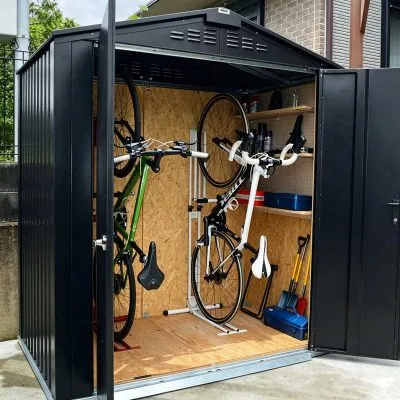

A few months ago, I visited a homeowner who was frustrated with a garden shed he had installed less than twelve months earlier.
The shed itself wasn't damaged. The build quality was perfectly fine. The problem was something much simpler.
He couldn't use it the way he expected.
His lawn mower barely fit through the gap between stored bicycles. Garden tools were stacked in corners. Bags of compost sat in front of shelving units. Every time he needed one item, he had to move three others first.
As we stood there discussing possible solutions, he said something I hear surprisingly often:
"I wish someone had explained what these shed sizes actually feel like before I bought one."
That's the challenge with buying a garden shed.
Most people understand dimensions on paper, but very few can accurately picture how those measurements translate into real-life storage space. A shed that seems spacious in online photos can feel cramped within weeks. On the other hand, choosing an oversized model can leave a garden looking dominated by a structure that never gets fully used.
After helping homeowners plan outdoor spaces for many years, I've found that selecting the right garden shed size has far less to do with measurements and much more to do with how you actually use your garden.
Understanding the practical differences between a 6x4 garden shed, an 8x6 garden shed, and a 10x8 garden shed can save you money, frustration, and the need for an upgrade later.
Why Shed Size Matters More Than Most People Expect
When homeowners start planning outdoor storage, they often focus on immediate needs.
Right now, they may only need somewhere to store a mower, a few gardening tools, and some outdoor accessories.
The issue is that garden storage rarely stays static.
Over time, most households accumulate more outdoor equipment than they initially expect.
Children grow and acquire larger bikes. Gardening becomes a more serious hobby. Outdoor furniture needs winter protection. DIY projects generate tools and supplies. Seasonal decorations need somewhere dry and secure.
The result is simple.
Storage requirements almost always increase.
This is why choosing the correct garden shed size should involve looking ahead rather than focusing solely on current requirements.
A shed that feels slightly larger than necessary today often becomes the perfect size two or three years later.
The Common Mistake People Make When Comparing Garden Shed Sizes
One misconception I frequently encounter is the belief that a few feet make very little difference.
In reality, they make a significant difference.
Many buyers compare a 6x4 garden shed and an 8x6 garden shed and assume the larger option offers only a modest increase in storage capacity.
What they don't realise is that those additional dimensions create substantially more usable floor area.
The difference is not just about fitting more items inside.
It affects how easily you can move around, organise belongings, access equipment, and maintain order over time.
That's why understanding each size category individually is so important.
The 6x4 Garden Shed: Compact and Practical
A 6x4 garden shed is often the first size many homeowners consider.
For smaller gardens, particularly those attached to terraced or semi-detached properties, it offers a practical solution without consuming valuable outdoor space.
From a planning perspective, this size works best when storage is the primary objective.
It provides enough room for everyday essentials such as garden tools, a lawn mower, watering equipment, folding chairs, and smaller outdoor accessories.
Because of its relatively compact footprint, a 6x4 garden shed can fit comfortably alongside fences, near side access paths, or within tighter garden layouts where larger structures would feel intrusive.
For homeowners who only occasionally garden and have limited storage needs, this size often performs very well.
However, there are limitations that buyers should understand before making a decision.
The biggest challenge is flexibility.
Once larger items enter the picture, available space disappears quickly.
A couple of adult bicycles can consume a surprising amount of floor space. Add shelving, storage containers, or seasonal equipment, and movement inside the shed becomes restricted.
This doesn't necessarily make the shed unsuitable.
It simply means that a 6x4 garden shed works best when storage needs remain relatively modest and predictable.
For homeowners who value efficiency and have compact gardens, it remains a sensible choice.
The 8x6 Garden Shed: The Size Most Families End Up Appreciating
If I were advising an average UK household with moderate storage needs, the 8x6 garden shed would often be my starting recommendation.
There is a reason this size consistently remains one of the most popular options available.
It strikes an excellent balance between capacity and garden impact.
An 8x6 shed provides enough space to move beyond simple storage and begin creating an organised system.
Instead of stacking items wherever space is available, homeowners can dedicate specific areas to different categories of equipment.
Garden tools can occupy one section. Bikes can be stored securely along another wall. Shelving can be installed without compromising access.
This level of organisation becomes increasingly valuable over time.
One of the biggest differences homeowners notice after upgrading from a smaller shed is convenience.
Finding equipment becomes easier.
Seasonal items remain accessible.
The shed no longer feels packed to capacity after every gardening session.
For families with children, the additional space is particularly useful.
Bicycles, scooters, sports equipment, outdoor toys, and gardening supplies can all coexist without creating clutter.
An 8x6 garden shed also provides enough room for hobby-related storage.
Whether that's gardening, cycling maintenance, basic woodworking, or DIY projects, the extra space supports a wider range of activities without requiring a dedicated workshop.
For many properties, this size represents the most versatile option available.
The 10x8 Garden Shed: More Than Just Storage
The transition from an 8x6 shed to a 10x8 shed changes the way the space functions entirely.
At this size, you're no longer simply storing belongings.
You're creating a usable outdoor room.
A 10x8 garden shed offers enough floor area to establish distinct zones within the structure.
Storage can occupy one section while a workbench, hobby station, or maintenance area occupies another.
This separation transforms the user experience.
Instead of entering a storage space filled with equipment, you enter a functional workspace where organisation becomes much easier to maintain.
This size is particularly popular among homeowners who have developed serious hobbies or require substantial storage capacity.
Garden enthusiasts often appreciate the room for potting benches, tool storage, seed trays, and seasonal supplies.
Cyclists value the ability to maintain bikes indoors without moving everything else out of the way first.
DIY enthusiasts enjoy having dedicated workspace separate from the house.
Increasingly, large sheds are also being used as practical extensions of the home.
As property prices continue to rise across the UK, homeowners are looking for ways to maximise existing outdoor space rather than moving to larger houses.
A well-planned 10x8 shed can support storage, hobbies, maintenance tasks, and seasonal organisation all within a single structure.
Of course, larger sheds require larger gardens.
Careful positioning becomes essential to ensure the building complements the landscape rather than overwhelming it.
How Garden Shape Influences Shed Selection
Size alone should never determine your choice.
Garden shape often plays an equally important role.
I've seen relatively small gardens successfully accommodate larger sheds because the layout supported the installation.
I've also seen spacious gardens where an oversized shed felt awkward simply because of its placement.
Long narrow gardens often benefit from compact rectangular sheds positioned along boundary lines.
Wider gardens typically offer greater flexibility and can accommodate larger structures without compromising usable outdoor space.
Before selecting any metal garden shed, consider how the structure will interact with pathways, seating areas, planting beds, and access routes.
The best shed feels integrated into the overall garden design rather than added as an afterthought.
Why Metal Garden Sheds Continue Growing in Popularity
Over the past decade, metal garden sheds have become increasingly common throughout the UK.
Several practical reasons explain this shift.
Homeowners today generally want solutions that require less maintenance.
Traditional timber sheds can look attractive, but they often require ongoing treatment, painting, and weather protection.
Modern metal garden sheds appeal to busy households because they demand far less attention.
They also offer excellent durability when properly installed and maintained.
Security is another important factor.
Many homeowners now store expensive bicycles, power tools, garden machinery, and outdoor equipment inside their sheds.
A well-built metal shed often provides greater peace of mind when protecting valuable items.
Combined with improved manufacturing standards and cleaner modern designs, it's easy to understand why demand has increased.
Thinking Beyond Today's Storage Needs
One of the best pieces of advice I can offer when selecting a garden shed is to think beyond your current situation.
Most homeowners underestimate how quickly storage needs evolve.
A shed that feels spacious today may feel completely different after a few years of accumulated equipment and changing hobbies.
When comparing a 6x4 garden shed, an 8x6 garden shed, and a 10x8 garden shed, try to picture your garden not only as it exists now but as it may look several years from now.
Will bicycles become part of daily life?
Will gardening become a larger hobby?
Will outdoor furniture require winter storage?
Will DIY projects expand?
Answering those questions often provides far more useful guidance than measurements alone.
The ideal garden shed isn't necessarily the largest one available.
It's the one that continues meeting your needs long after the excitement of installation has faded.
And in most cases, homeowners who take the time to understand how different shed sizes function in real life end up making a decision they're happy with for many years to come.






















Sign in to leave a comment.