
Navigating the Low and Medium-Voltage Inverter Market: Strategic Trends and Commercial Opportunities
The low and medium-voltage inverter market is entering a phase of accelerated structural change. Valued at approximately 8.21 billion USD in 2025, the market has expanded from 4.77 billion USD in 2020, reflecting a compound annual growth rate of 7.16 percent through the 2026 to 2032 forecast window. This trajectory signals more than steady demand growth; it points to a fundamental reconfiguration of how power conversion equipment is designed, deployed, and monetized across industrial, commercial, and utility-scale environments. For executives and investors, the central question is no longer whether the market will grow, but how competitive positions will shift as technological, regulatory, and supply chain dynamics converge.
Several inflection points define the current landscape. First, the boundary between low-voltage and medium-voltage applications is blurring as renewable energy installations scale and grid codes tighten. Second, material constraints are beginning to alter cost structures in ways that favor design innovation over pure volume scaling. Third, regulatory frameworks are increasingly treating inverters not as passive conversion devices but as active grid-support assets, reshaping both product requirements and revenue models. Understanding these shifts is essential for positioning across manufacturing, investment, and procurement decisions.
Market Structure and Emerging Pressures
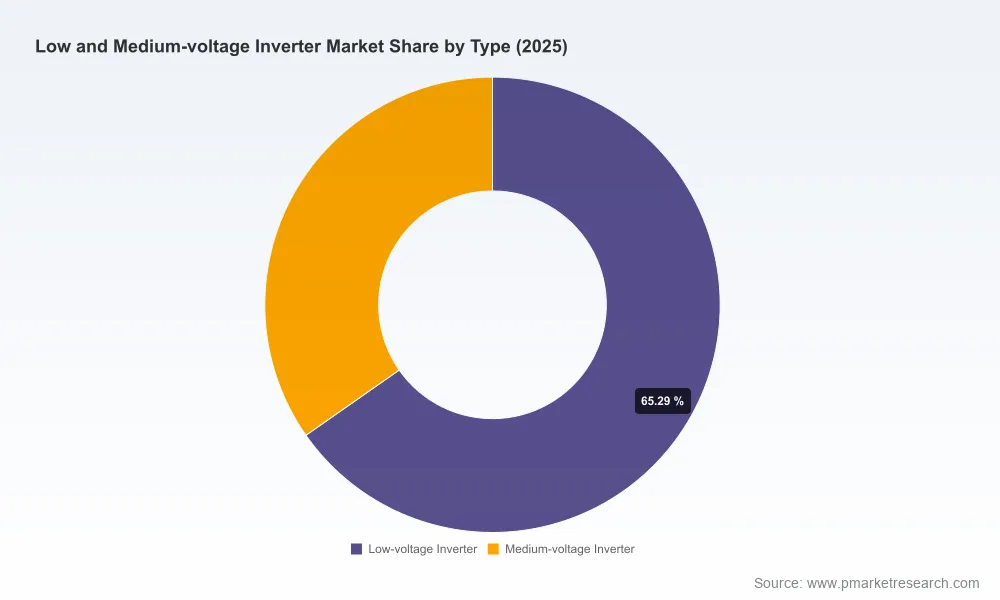
The market's expansion to a projected 13.38 billion USD by 2032 is underpinned by sustained industrial automation demand and the ongoing electrification of commercial facilities. Low-voltage inverters continue to represent the larger share of activity, reflecting their broad applicability in manufacturing, HVAC, and distributed energy systems. Medium-voltage inverters, while smaller in total volume, are gaining strategic importance as utility-scale solar, wind, and storage projects require higher-capacity power conversion with reduced step-up losses.
PW Consulting
This dual-track structure creates distinct pressure points. On the low-voltage side, standardization and price competition are intensifying, particularly as regional grid codes impose stricter compliance requirements for distributed generation. On the medium-voltage side, the challenge is less about cost competition and more about engineering integration, reliability at higher voltages, and alignment with transmission-level grid codes. Companies that treat these segments as interchangeable risk missing the different value propositions, customer expectations, and margin structures that define each.
A second structural challenge lies in supply chain exposure. Inverters rely on copper conductors, power semiconductors, magnetic components, and precision manufacturing. As demand scales, bottlenecks in any of these inputs can compress margins or delay product cycles. The industry is therefore being pushed toward design efficiency, component substitution where feasible, and more resilient sourcing strategies, rather than relying on linear volume growth to drive profitability.
A third pressure point is the shifting role of inverters in grid stability. Modern grid codes increasingly require fault ride-through, reactive power support, and post-fault active power recovery. These requirements transform inverters from cost-center equipment into capability-defining assets. Suppliers that can deliver verifiable grid-support performance, and customers that can integrate those capabilities into their operations, gain a competitive edge in markets where connection approvals and operational resilience are becoming harder to secure.
Key Drivers Reshaping the Market
Technology Innovation and High-Efficiency Power Conversion
Technological advancement is the most direct driver of market evolution. The move toward higher-blocking silicon carbide semiconductors, improved thermal management, and modular power stage architectures is enabling inverters to handle higher voltages, reduce conversion losses, and improve reliability under variable load conditions. A notable example is the commissioning of the PVgoesMV project, which demonstrated medium-voltage photovoltaic power plants using 3 kV string inverters based on high-blocking silicon carbide devices for grid connection. This development illustrates how medium-voltage inverter design is moving beyond traditional transformer-heavy architectures toward more compact, grid-ready solutions.
For commercial and industrial users, these innovations translate into lower energy losses, smaller footprints, and better compatibility with variable renewable generation. For manufacturers, they open opportunities to differentiate through efficiency claims, grid-code compliance, and integration-ready designs rather than competing solely on unit price. The strategic implication is clear: technology leadership is shifting from generic power conversion to application-specific performance, particularly where medium-voltage grid connection and low-voltage distributed resources must coexist.
Policy and Regulatory Tailwinds
Regulatory changes are accelerating both adoption and product differentiation. In several regions, standards and grid codes are redefining what inverters must do once connected to the network. The AS/NZS 4777.1:2024 standard, effective from February 2025, mandates compliance for low-voltage inverters connected to distribution networks, increasing the importance of certified, grid-compliant designs in relevant markets. At the same time, grid operators are raising performance expectations for larger installations. Updates to grid connection requirements now increasingly require low-voltage ride-through and post-fault active power recovery for demand connections above 30 MW, signaling that medium-voltage and larger low-voltage systems must be engineered for resilience, not just conversion efficiency.
In North America, the adoption of IEEE Std 2800 by WECC introduces reactive power capability requirements of ±0.95 power factor for inverter-based resources connected to medium-voltage systems. This type of requirement directly shapes product design and integration services, favoring suppliers that can provide verified performance documentation and support grid-interconnection processes. In Japan, the opening of the demand-supply adjustment market to low-voltage resources in fiscal 2026 creates a new monetization path for small and medium-scale battery storage paired with inverters. Together, these regulatory shifts expand the addressable use cases for inverters while raising the bar for compliance, documentation, and service capability.
Demand-Side Transformation Across Industrial and Commercial Sectors
Demand is being reshaped by three overlapping forces: industrial efficiency mandates, commercial decarbonization goals, and the growing need for controllable loads. In industrial environments, frequency converters and AC drives remain essential for optimizing motor systems, pumps, compressors, and material handling equipment. Installations such as the deployment of low-voltage inverters and PWM converters for water supply pumps at major exhibition sites demonstrate how precise flow and pressure control is becoming a standard expectation in mission-critical infrastructure. These applications are no longer limited to energy savings; they are increasingly tied to operational stability and system uptime.
On the commercial side, distributed solar, building electrification, and behind-the-meter storage are expanding the role of inverters as part of broader energy management systems. As facility operators seek to reduce exposure to volatile electricity prices and improve resilience, inverters are being evaluated alongside controls, storage, and monitoring platforms. This creates an opportunity for suppliers that can position inverters as integrated nodes within smarter energy systems rather than standalone hardware.
A particularly important demand-side shift is the rising value of grid-interactive behavior. Customers are increasingly interested in equipment that can respond to dynamic grid conditions, participate in local balancing mechanisms where allowed, and support curtailment reduction. This trend favors products and partnerships that combine hardware performance with software controls and market-access enablement.
Supply Chain Realities and Cost Structure Evolution
Cost dynamics are becoming a strategic variable rather than a background assumption. Copper demand has exceeded global copper production since 2025, directly affecting pricing for copper conductors used in low and medium-voltage inverters. This pressure is compounded by semiconductor availability, manufacturing capacity constraints, and the cost of qualifying new designs for stringent grid codes. As a result, competitive advantage is increasingly determined by design efficiency, material optimization, and supply chain flexibility.
Companies that can reduce copper intensity through winding design, improve power density, or shift toward architectures that lower overall material dependence are better positioned to defend margins. Equally important is the ability to manage lead times and qualification cycles. In a market where regulatory compliance and performance validation can define time-to-revenue, supply chain resilience is part of the product strategy, not just procurement.
Competitive Landscape and Strategic Positioning
The competitive field in this market is broad and geographically diverse, with leading players differentiated by application focus, voltage coverage, and integration capabilities. ABB has concentrated on full-power wind converters and solar inverters spanning medium-voltage and low-voltage applications, with a clear orientation toward renewable energy transition products. Siemens emphasizes medium-voltage drives and power conversion solutions for industrial and renewable applications, leveraging its broader automation and electrification ecosystem. Schneider Electric positions around power management and inverter solutions for low-voltage and medium-voltage systems, often linking hardware to broader energy management and digital services.
Danfoss and LENZE focus on industrial frequency converters and motion control systems across low and medium voltages, appealing to customers where drive performance, precision, and process integration matter most. Yaskawa and Hitachi bring strong motion control and medium-voltage power conversion heritage, respectively, with offerings that span industrial automation and renewable applications. Fuji Electric continues to serve industrial and renewable segments through medium-voltage inverters and low-voltage drive series, while Nidec addresses industrial heavy applications with low-voltage drives ranging from small-scale to multi-megawatt capacities. Delta Electronics complements this field with industrial automation inverters and power conversion solutions that fit tightly into controlled environment and machine-level applications.
On the utility and large-scale renewable side, GE Vernova has advanced medium-voltage power conversion and solar power station solutions designed for grid-scale deployment. Its recent launch of a 1.5 kV solar power station platform with medium-voltage transformer and switchgear reflects the direction of travel toward integrated, utility-ready systems. In parallel, ABB's acquisition of Gamesa Electric's power electronics division illustrates how established players are consolidating capabilities to re-enter or strengthen positions in solar inverter markets while reinforcing complementary wind converter offerings.
A second tier of increasingly influential suppliers includes INVT, Inovance Technology, Hiconics, and STEP Electric Corporation. These companies serve industrial automation and renewable energy applications with low and medium-voltage inverters, and their presence underscores a broader trend: competitive intensity is rising not only through established multinationals but also through regional and specialist players that combine cost agility with targeted application expertise.
Differentiation Strategies in a Consolidating Field
Leading companies are differentiating along several lines. One is application depth: suppliers that can speak to specific industrial processes, renewable plant architectures, or commercial energy management needs tend to command stronger customer relationships than those competing on generic specification alone. Another is voltage-span capability: organizations that can address both low-voltage distributed applications and medium-voltage grid-connected systems are better positioned to capture multi-layer projects and deliver consistent engineering support across installation sizes.
A third differentiator is integration and compliance readiness. As grid codes tighten and interconnection processes become more demanding, the ability to provide verified performance, documentation, and field support is becoming a commercial advantage. This is especially true where medium-voltage systems must meet reactive power and ride-through requirements, or where low-voltage resources are being evaluated for new market participation. Finally, some players are differentiating through strategic consolidation, acquiring or partnering to fill gaps in solar, wind, or power electronics capabilities rather than building every competency organically.
The market is likely to see continued consolidation among players seeking broader voltage coverage, renewable integration, and regional scale. At the same time, specialization will remain valuable in industrial automation, niche drive applications, and price-sensitive commercial segments. New entrants and expanding regional suppliers are expected to pressure incumbents in select segments, particularly where rapid localization, flexible customization, and aggressive pricing intersect. The net effect is a landscape that rewards both scale and specificity, depending on the target customer and application.
LV and MV Switchgear Market
Future Trends and Commercial Opportunities
Medium-Voltage Inverter Adoption Will Move From Niche to Mainstream in Select Markets
Over the next three to five years, medium-voltage inverters are likely to play a larger role in utility-scale renewable projects, large industrial campuses, and aggregated distributed resources. The driver is not only capacity scaling but also the desire to reduce transformation losses, simplify plant architecture, and meet higher grid-performance expectations. The commercial opportunity lies in integrated solutions that combine inverter technology with transformer, switchgear, and grid-interconnection support, as well as in services that help developers and operators navigate approval processes and compliance documentation.
Low-Voltage Resources Will Gain New Monetization Pathways
Policy openings for small and medium-scale resources are creating fresh demand for inverters paired with storage and smart controls. Where low-voltage assets can participate in balancing or demand-supply adjustment mechanisms, the inverter becomes a gateway to revenue, not just efficiency. This trend favors suppliers and systems integrators that can support metering, control logic, and market-compliance requirements, and it creates opportunities for flexible product designs that can be adapted to local regulatory frameworks.
Grid-Interactive Inverter Design Will Become a Commercial Default
As grid codes increasingly require active support capabilities, reactive power control, and fault resilience, grid-interactive design will move from a premium feature to a baseline expectation in many markets. The commercial implication is that product roadmaps should prioritize verifiable grid-support performance, interoperability with control platforms, and the ability to document compliance for interconnection. Companies that wait until these requirements become mandatory in every target market risk falling behind on qualification timelines and customer confidence.
Risks and Uncertainties to Monitor
Several uncertainties could shape the pace and direction of growth. Material price volatility, especially in copper and key semiconductors, may pressure margins and complicate long-term pricing strategies. Regulatory divergence across regions could fragment product certification requirements, increasing engineering and compliance costs for multinational portfolios. In addition, rapid changes in grid-code interpretation and interconnection practices may create short-term project delays, even where the long-term trajectory is favorable. Finally, competitive intensity may compress margins in commoditized low-voltage segments, making differentiation through performance, service, and integration increasingly important.
Strategic Actions for Decision Makers
For Manufacturers and Product Leaders
Invest in designs that reduce material intensity and improve power density while maintaining or improving grid-compliance performance. Prioritize medium-voltage integration capabilities where utility-scale and large industrial demand is expanding, and ensure low-voltage portfolios are aligned with the latest distribution-network standards in target regions. Build documentation, testing, and field-support processes that make compliance verifiable, because grid-connection approval is becoming a critical commercial gate. Consider targeted partnerships or acquisitions where complementary solar, wind, or power electronics capabilities can accelerate market access more efficiently than organic build-out alone.
Low And Medium Capacity Gas Generator Market
For Investors and Strategic Partners
Evaluate opportunities based on application positioning, voltage coverage, and the ability to capture value from grid-interactive features rather than unit volume alone. Companies that can serve both industrial automation and renewable integration, or that bridge low-voltage and medium-voltage requirements, may offer stronger downside protection and multiple growth paths. Pay close attention to regulatory-driven demand shifts, especially where low-voltage resources gain access to new market mechanisms or where medium-voltage interconnection requirements raise the value of integrated solutions. Monitor supply chain exposure as part of due diligence, since material constraints and qualification timelines can affect both margin and execution risk.
For Procurement and Operations Leaders
Treat inverter selection as a multi-year operational decision, not a transactional purchase. Evaluate total cost of ownership in terms of efficiency, reliability, maintenance, grid-compatibility, and the ability to support future market participation or resilience goals. In medium-voltage and large low-voltage projects, prioritize suppliers with proven integration support and clear compliance documentation, as these factors can reduce approval risk and downtime. Where storage or demand-response capabilities are part of the roadmap, ensure inverter specifications are compatible with control and market-access requirements from the outset, rather than retrofitting later.
Positioning for the Next Phase of Growth
The low and medium-voltage inverter market is being reshaped by simultaneous advances in power electronics, tightening grid expectations, and new pathways for resource monetization. Growth to a projected 13.38 billion USD by 2032 reflects broad demand, but the more consequential story is the shifting basis of competition. Suppliers and customers alike are moving toward systems that combine efficiency, grid-support performance, material efficiency, and integration readiness. In that environment, businesses that act early on product strategy, compliance capability, and application-specific positioning are better placed to convert market growth into durable advantage.
Detailed segmentation data, regional breakdowns, competitive benchmarks, and scenario-based forecasts can further sharpen these decisions. PW Consulting's in-depth market research report on the low and medium-voltage inverter market provides expanded quantitative coverage and customized guidance for manufacturers, investors, and procurement teams seeking to navigate this evolving landscape with greater precision.
For detailed analysis of this topic, please visit the official page: Low and Medium-voltage Inverter Market
Lacy Lee
Senior Marketing Manager
[email protected]
PW Consulting: www.pmarketresearch.com




























Sign in to leave a comment.