
Klondike Solitaire is often mistaken for a game of pure luck, but experienced players know that consistent wins come from strategy, not chance. While you can’t control the cards you’re dealt, you can control how you respond to them. Advanced players rely on proven Klondike Solitaire rules and tips to win each game with patience, planning, and a clear understanding of how early decisions affect the endgame.
This article breaks down seven advanced Klondike Solitaire strategies professionals use to win more games by maintaining flexibility, avoiding common traps, and making smarter long-term decisions—key elements of any effective Klondike Solitaire winning strategy.
Why Do Advanced Strategies Matter in Klondike Solitaire?
Most Klondike Solitaire games are lost long before the player realizes it. Small, seemingly harmless moves early in the game often restrict options later, leading to dead ends that feel unavoidable. This is why many players search for how to win Klondike Solitaire even after learning the rules.
Advanced strategies help prevent these situations by keeping the board open and adaptable. Strong players focus less on immediate progress and more on preserving future possibilities. This mindset alone dramatically increases win rates, especially in online solitaire games that appear difficult at first glance.
1. Why Is Revealing Hidden Cards the Top Priority?
Hidden cards in the tableau represent unknown information, and unknown information limits decision-making. The more face-down cards remain, the harder it becomes to plan effectively.
How Professionals Evaluate Moves
When multiple moves are available, experienced players choose the one that reveals a face-down card whenever possible. Even if another move appears more productive, uncovering new information usually leads to better opportunities shortly after.
Revealing hidden cards early helps:
- Expand available moves
- Identify blocked suits or ranks
- Prevent late-game surprises
Because of this, advanced players treat card exposure as the foundation of all successful Klondike Solitaire tips to learn how to win solitaire games.
2. When Does Moving Cards to the Foundation Become a Mistake?

Placing cards into the foundation feels like progress, but doing it too early can weaken your position. Once a card is in the foundation, it can no longer assist with rearranging the tableau.
Understanding Foundation Timing
Advanced players delay foundation moves unless those cards no longer contribute to tableau flexibility. Low-ranked cards, in particular, are often more valuable in play than locked away.
Keeping cards available allows players to:
- Build and break sequences as needed
- Free buried cards
- Recover from poor stock draws
Foundations become a priority later, not at the start—an important principle for anyone learning how to win Klondike Solitaire consistently.
3. How Does Balanced Tableau Building Improve Your Chances?
An uneven tableau is one of the fastest ways to lose a Klondike Solitaire game. Overbuilding one column often traps important cards beneath long stacks that can’t be moved.
Experienced players aim to develop the tableau evenly, spreading progress across multiple columns instead of concentrating on one.
Why This Approach Works
Balanced columns make it easier to shift cards between piles and create alternative paths when a move fails. It also increases the chances of uncovering face-down cards without blocking other columns.
This approach supports a stronger long-term Klondike Solitaire winning strategy, even if it doesn’t look impressive early.
4. Why Are Empty Tableau Columns So Valuable?
Empty columns are one of the most powerful tools in Klondike Solitaire, yet they’re often misused. An empty column allows you to place any King or King-led sequence, giving you freedom to reorganize the board.
However, emptying a column without a plan can be just as harmful as never creating one.
Choosing the Right King Matters
Advanced players don’t place the first available King. They evaluate which King will unlock the most value, such as uncovering hidden cards or supporting long, flexible sequences.
A well-used empty column can completely change the direction of a game and is a core element of advanced Klondike Solitaire strategy.
5. How Should the Stock and Waste Pile Be Played Strategically?
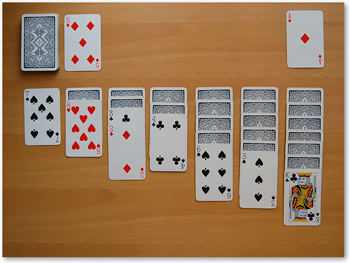
Many players treat the stock and waste pile as automatic actions, but advanced players see them as critical planning tools. Every card drawn affects future possibilities, especially in draw-three variations.
Instead of immediately playing waste cards, experienced players observe the full stock cycle before committing to moves. This allows them to plan sequences and avoid blocking important cards.
Strategic stock awareness helps prevent:
- Playing cards too early
- Missing better placements later
- Wasting valuable stock cycles
Sometimes, patience is the strongest move available when mastering how to win Klondike Solitaire.
6. Why Isn’t Color Alternation Always the Best Choice?
While Klondike rules require alternating colors, choosing which card to place is still a strategic decision. A legal move isn’t automatically a good move.
Advanced players evaluate how a color placement affects future flexibility. They avoid moves that lock sequences into rigid patterns or block access to important cards.
In many cases, waiting for a better color option leads to a stronger board state than making the first available move—an overlooked but powerful Klondike Solitaire winning strategy.
7. How Far Ahead Do Pros Think in Klondike Solitaire?
Forward planning separates casual players from consistent winners. Advanced players rarely move cards impulsively. Instead, they pause to consider how the board will look several moves later.
Before committing, they mentally check:
- What cards will be revealed
- Which columns may become blocked
- Whether flexibility increases or decreases
This habit reduces mistakes and prevents avoidable losses.
Conclusion
Klondike Solitaire will always involve some luck, but strategy determines how much of that luck you can convert into wins. By focusing on hidden cards, delaying foundation moves, balancing the tableau, and thinking ahead, you gain control over the game instead of reacting to it.
These advanced strategies don’t just increase win rates—they make the game more engaging, intentional, and rewarding. Over time, they transform Klondike Solitaire from a guessing game into a skill-based challenge worth mastering.
Sign in to leave a comment.