

When it comes to sudden cardiac arrest, most people think about hospitals and emergency rooms, but the truth is, emergencies don’t wait for medical facilities.
They can happen anywhere.
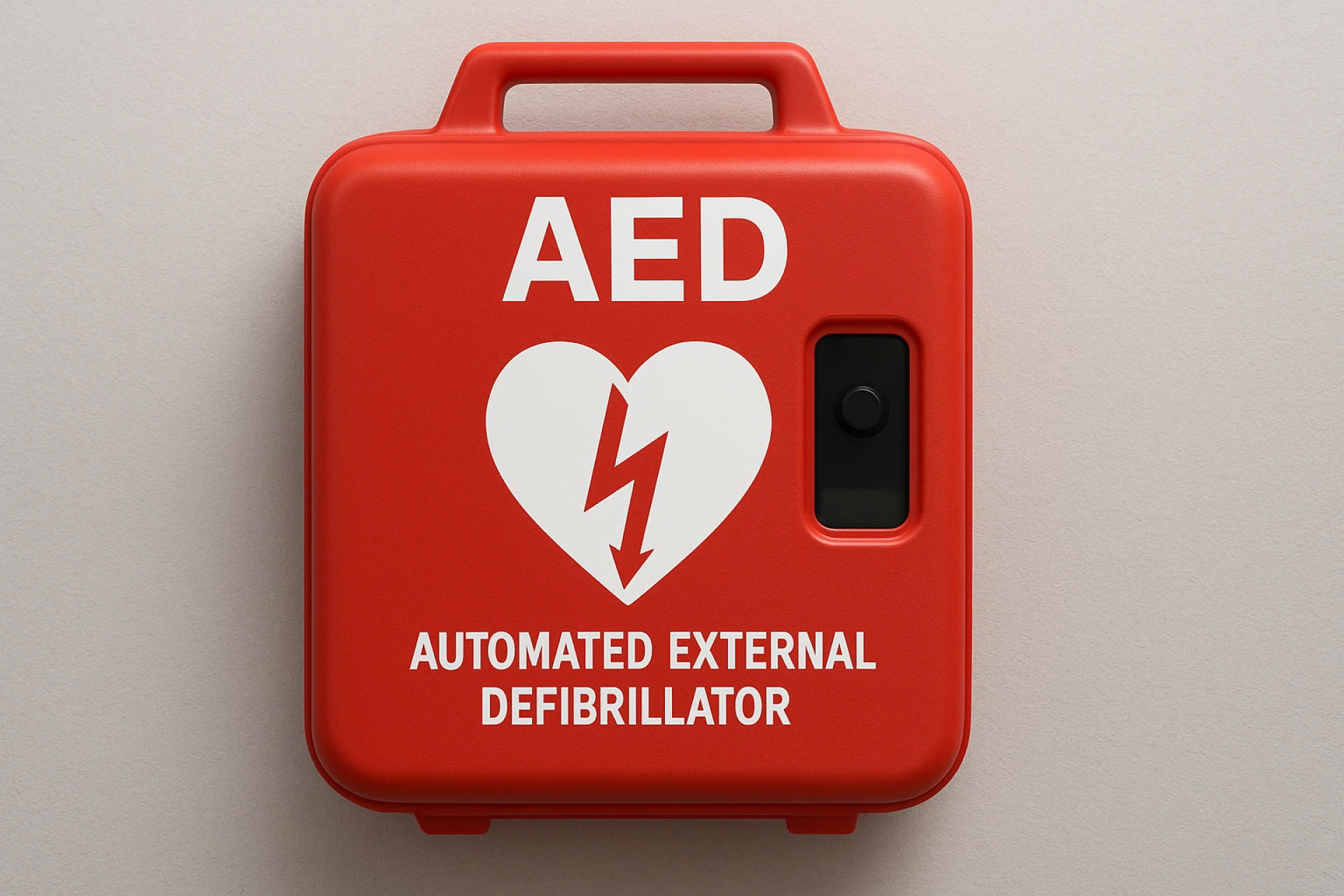
That’s exactly why AEDs (Automated External Defibrillators) are becoming more common in India across offices, schools, gyms, hotels, factories, and even residential communities.
Over the past few years, we’ve noticed a clear shift: organizations are no longer asking “Do we need an AED?” but instead asking “Which AED is affordable, reliable, and easy to use?”
And that’s a very important shift.
Because when it comes to AEDs, affordability should never compromise usability or reliability, especially when lives depend on it.
In this guide, we’ll go through 7 affordable defibrillators in India, focusing on practical use, real,world suitability, and pricing ranges that make sense for small to mid,level organizations.
Top 7 Affordable Defibrillators Price in India
1. M&B AED 7000 External Defibrillator: ₹55,000 to ₹65,000
The M&B AED 7000 is one of the most budget,friendly AED options available in India, making it popular among small offices, clinics, and schools that want basic emergency readiness without heavy investment.
From what we’ve seen in real deployments, this AED is chosen mainly for its simplicity. It is designed for users with no medical background, which is exactly what most public,access environments need.
It typically includes voice prompts and basic shock guidance, helping responders act quickly without confusion.
Key Features:
- Entry,level affordable AED
- Simple voice instructions
- Lightweight and portable
- Suitable for small organizations
- Basic emergency response design
2. Niscomed AED 7000: ₹50,000 to ₹60,000
The Niscomed AED 7000 is another cost,effective option widely used in India’s growing public safety installations.
What makes it appealing is its balance between affordability and usability. It is often installed in schools, training centers, and smaller corporate offices where budget is a key consideration.
We’ve observed that first,time AED buyers often prefer this model because it provides essential functionality without overwhelming complexity.
Key Features:
- Budget,friendly AED system
- Clear audio guidance
- Easy operation for non,medical users
- Compact design
- Suitable for indoor installations
3. BPL AED Phoenix DF 2628: ₹90,000 to ₹1,10,000
BPL is a trusted medical brand in India, and the Phoenix DF 2628 reflects that reputation with a more robust and reliable AED system.
This model is commonly seen in hospitals, industrial facilities, and large corporate environments where durability matters more than ultra,low pricing.
It offers stronger build quality and better operational consistency compared to entry,level AEDs.
Key Features:
- Strong brand reliability (BPL)
- Fully automatic operation
- Clear rescue prompts
- Suitable for high,use environments
- Stable performance design
4. Mediana HeartOn A16 AED: ₹95,000 to ₹1,10,000
The Mediana HeartOn A16 is often chosen by organizations looking for a slightly more advanced entry,level AED with better guidance features.
From practical usage feedback, this model is appreciated for its intuitive interface and smooth user instructions during emergencies.
It is widely used in:
- Offices
- Schools
- Hotels
- Clinics
Key Features:
- Easy,to,follow voice prompts
- Semi,automatic operation
- Pediatric support compatibility
- Reliable emergency performance
- Beginner,friendly design
5. Philips HeartStart HS1 AED: ₹99,000
The Philips HS1 is one of the most recognized public,access AEDs globally, and it is widely used across India as well.
What makes this model stand out is its extreme simplicity. Even someone with zero medical experience can operate it confidently during an emergency.
We’ve seen it commonly installed in corporate offices, gyms, hotels, and residential complexes.
Key Features:
- Step,by,step voice guidance
- Beginner,friendly design
- Compact and portable
- Self,testing system
- Trusted global brand reliability
6. Philips HeartStart FRx AED: ₹1,20,000
The Philips FRx is a step up from HS1 and is designed for more demanding environments like industrial zones, sports facilities, and emergency response setups.
One of its biggest advantages is durability. It is built to handle rough handling and challenging environments where standard AEDs might not perform as reliably.
Key Features:
- Rugged and durable design
- Pediatric compatibility (with key/pads)
- CPR guidance system
- Strong performance in tough environments
- Ideal for industrial and outdoor use
7. Cardiac Science Powerheart AED G3: ₹1,70,000 to ₹1,80,000
The Powerheart G3 is positioned at the higher end of the “affordable category,” but it is still widely considered a value,for,performance AED in India.
It is known for its rescue,ready technology and consistent self,check systems, ensuring the device is always prepared for emergency use.
This model is commonly used in airports, large corporate campuses, and high,footfall public spaces.
Key Features:
- Automatic self,testing
- Strong reliability system
- High durability design
- Clear rescue prompts
- Suitable for public infrastructure
What Makes an AED “Affordable” in India?
From market observations and procurement trends, AED pricing in India generally falls into three categories:
- Basic AEDs: ₹45,000 , ₹90,000
- Mid,range AEDs: ₹90,000 , ₹1,80,000
- Advanced AEDs: ₹1,80,000 and above
Affordable AEDs are usually those that:
- Provide essential life,saving functionality
- Require minimal training
- Have lower maintenance costs
- Are easy to deploy in public spaces
We’ve seen that most organizations don’t actually choose based on lowest price , they choose based on ease of use during emergencies.
Because in a real cardiac arrest situation, confusion is the biggest risk.
Conclusion
Affordable AEDs in India have made it possible for more organizations to take emergency preparedness seriously , and that’s a very positive shift.
Whether it’s a small office choosing a Niscomed AED or a corporate campus installing a Philips or Cardiac Science system, the goal remains the same:
Save time. Save lives. Reduce confusion during emergencies.
And that’s really what matters most.
Because at the end of the day, the best AED is not the cheapest or the most advanced one , it’s the one that is accessible, ready, and easy to use when someone needs it most.



























Sign in to leave a comment.