

Why Modern Laboratories Need the Right Equipment
A laboratory is only as effective as the tools used inside it. Whether the work involves research, quality control, education, healthcare, pharmaceuticals, chemicals, or industrial testing, reliable equipment helps professionals produce useful and repeatable results.
The right setup does more than make testing easier. It supports accuracy, improves workflow, protects samples, and helps laboratory staff perform routine procedures with greater confidence. For this reason, equipment selection should always begin with the actual purpose of the laboratory.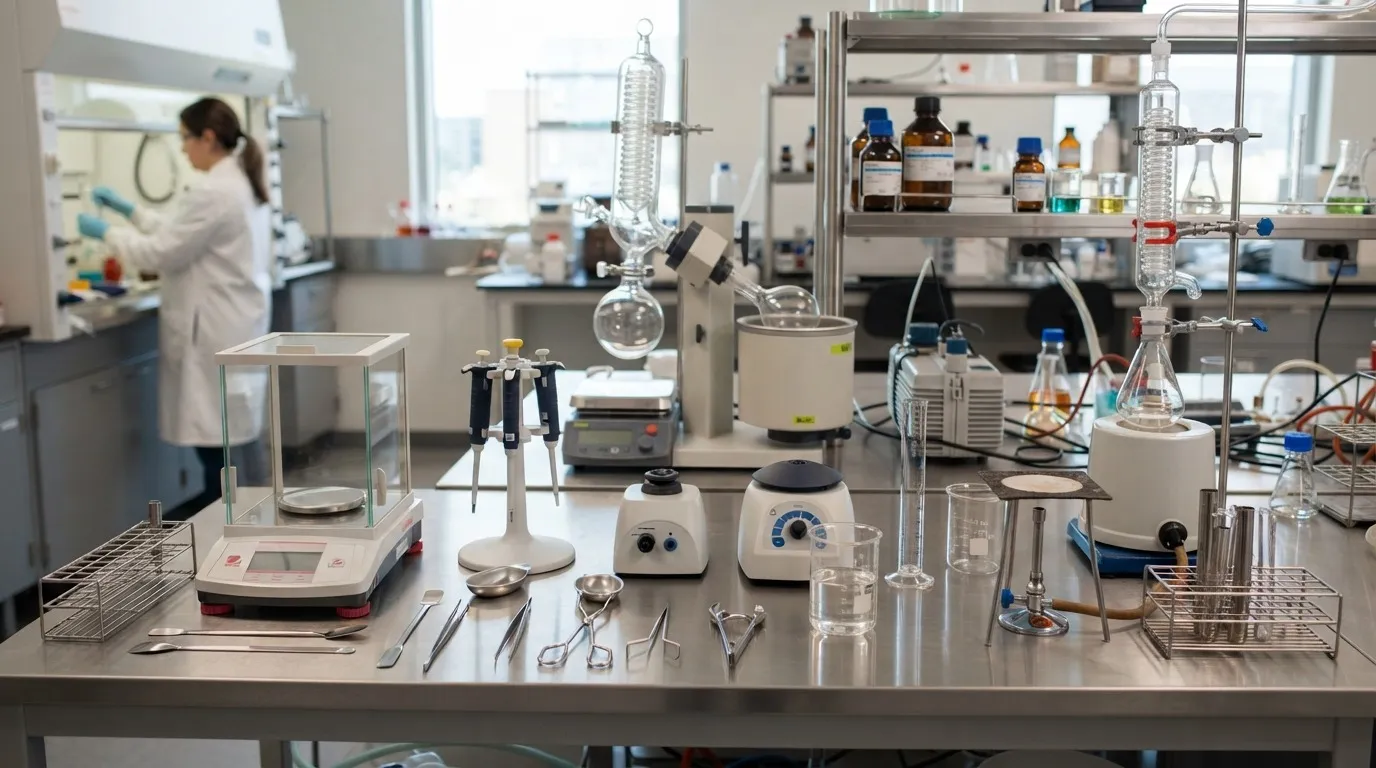
Understanding Modern Laboratory Requirements
Different laboratories have different priorities. A quality-control facility may focus on repeatable measurements, while a research laboratory may need flexible instruments for changing experiments.
Clinical environments can require fast and dependable testing, whereas educational laboratories may prioritize simple operation and durability. Understanding these differences helps buyers select equipment based on application rather than choosing products simply because they are popular.
1. Analytical Instruments for Precise Measurements
Analytical instruments are central to many testing environments because they help professionals identify, measure, or evaluate materials and samples.
Depending on the application, this category can include spectrometers, analyzers, chromatographic systems, and other precision instruments. Their capabilities vary considerably, so users should consider measurement range, sensitivity, sample type, operating method, and required accuracy before making a selection.
2. Laboratory Balances for Accurate Weighing
Precise weighing is a basic requirement in many laboratories. Analytical and precision balances help users measure powders, chemicals, samples, and other materials with controlled accuracy.
A suitable balance should match the required capacity and readability. Environmental conditions also matter because vibration, airflow, temperature changes, and improper placement can affect sensitive measurements.
3. Microscopes for Detailed Sample Observation
Microscopes allow users to examine objects that cannot be studied effectively with the naked eye. They are used in biology, medical research, education, materials analysis, and many other fields.
Different microscope types offer different capabilities. Optical microscopes may meet routine observation needs, while more advanced systems can support specialized analysis. Buyers should consider magnification, image quality, illumination, sample type, and intended application.
4. Heating Equipment for Controlled Laboratory Processes
Many laboratory procedures require controlled heating. Hot plates, heating mantles, laboratory ovens, and other temperature-control devices can be used for heating, drying, preparation, and testing.
Temperature range, uniformity, control accuracy, chamber size, and safety features are important considerations. Equipment should be selected according to the actual temperature requirements of the process rather than maximum temperature alone.
5. Centrifuges for Sample Separation
Centrifuges are widely used when samples need to be separated according to density. They can support applications in medical laboratories, biotechnology, research, chemical testing, and other technical environments.
Important specifications include rotational speed, rotor capacity, tube compatibility, operating controls, and safety features. The correct centrifuge depends heavily on sample type and the separation process being performed.
6. Laboratory Ovens for Drying and Heating
Laboratory ovens provide controlled environments for drying, heating, and other temperature-dependent procedures. They can be used for glassware, samples, materials testing, and industrial research.
When choosing an oven, users should review temperature range, chamber capacity, temperature stability, airflow, insulation, and control systems. These details can have a direct effect on testing consistency.
7. Shakers and Mixers for Sample Preparation
Mixing is an important part of many laboratory processes. Shakers, vortex mixers, orbital mixers, and related equipment help combine samples, maintain suspension, or prepare materials for further testing.
The correct device depends on the volume and characteristics of the sample, required mixing speed, duration, and container type. Selecting equipment according to these factors can make routine preparation more consistent.
Laboratory Glassware Still Has an Important Role
Modern laboratories may use advanced digital instruments, but basic glassware remains essential. Beakers, flasks, test tubes, pipettes, measuring cylinders, and related items support everyday preparation and testing.
Quality glassware should be selected according to chemical compatibility, temperature requirements, volume, accuracy, and intended use. Proper cleaning and handling are equally important for maintaining reliable laboratory practices.
Temperature Control Supports Reliable Testing
Temperature can influence many laboratory reactions and measurements. Water baths, incubators, refrigerators, freezers, and controlled chambers help maintain conditions required by specific procedures.
When selecting temperature-control equipment, users should consider the required range, stability, capacity, recovery time, and monitoring features. Equipment that cannot maintain suitable conditions may affect sample quality and test results.
Safety Equipment Should Never Be an Afterthought
A laboratory needs more than instruments for testing. Safety equipment is an essential part of the working environment.
Fume hoods, safety cabinets, protective equipment, spill-control supplies, eyewash stations, and appropriate ventilation can help reduce workplace risks. Safety requirements should be considered during laboratory planning rather than added after the main equipment has been installed.
Calibration Helps Maintain Measurement Confidence
Even high-quality instruments require appropriate calibration and verification. Over time, equipment may experience changes caused by use, environmental conditions, component aging, or mechanical stress.
A planned calibration program can help laboratories identify measurement deviations and maintain consistent performance. Calibration requirements should be understood before purchasing equipment so that future servicing can be planned properly.
Maintenance Protects Laboratory Investment
Routine maintenance can help equipment operate reliably for longer periods. Cleaning, inspection, lubrication where applicable, software updates, filter replacement, and preventive servicing may all be part of an equipment maintenance program.
Laboratories should also maintain records of servicing and repairs. Organized records make it easier to identify recurring problems and plan future maintenance activities.
Choosing Equipment According to Sample Type
Sample characteristics can significantly influence equipment selection. Liquids, powders, biological materials, metals, chemicals, and environmental samples may require different preparation and testing methods.
Before purchasing an instrument, users should identify the sample type, expected volume, preparation method, testing frequency, and required output. This prevents the common mistake of selecting equipment based only on general specifications.
Digital Laboratory Equipment Improves Data Handling
Many modern instruments include digital displays, automated controls, data storage, software connections, and reporting features. These capabilities can simplify documentation and reduce manual recording.
However, digital functions should support a genuine laboratory need. Buyers should consider compatibility with existing systems, user training, data formats, security requirements, and software support before choosing connected equipment.
Automation Can Improve Repetitive Laboratory Work
Automation is useful when laboratories perform repetitive procedures or handle a large number of samples. Automated systems can reduce manual steps and help standardize certain processes.
The value of automation depends on workload. A small laboratory with occasional testing may have different requirements from a high-volume facility processing hundreds or thousands of samples.
Energy Efficiency Is Becoming More Important
Laboratory equipment can operate for long periods, making energy consumption an important operational consideration. Refrigeration systems, ovens, incubators, heating devices, and other equipment may contribute significantly to laboratory energy use.
Selecting equipment with suitable energy performance can help manage operating costs. However, efficiency should be considered alongside capacity, performance, reliability, and application requirements.
User Training Improves Equipment Performance
A sophisticated instrument cannot deliver its full value if users do not understand how to operate it correctly. Training should cover normal operation, sample handling, cleaning, safety, troubleshooting, and basic maintenance.
Clear procedures also help laboratories achieve more consistent results when several people operate the same equipment.
How EES Supports Laboratory Equipment Requirements
Equip Way Engineering Services Private Limited (EES) is a registered commercial importer and exporter, specializing in engineering and industrial products and services. We have 15 years of experience in this field.
This experience allows EES to approach laboratory sourcing from a practical perspective. Equipment selection should consider application, specifications, operating environment, maintenance needs, and long-term usability rather than focusing only on the initial purchase.
Planning a Laboratory Before Buying Equipment
A well-planned laboratory begins with identifying the processes that will be performed. Users should determine which tests are required, how often they will be conducted, how many samples will be handled, and what environmental conditions are necessary.
This information creates a clearer equipment list and reduces the possibility of buying instruments that are too small, unnecessarily complex, or unsuitable for the intended work.
Comparing Equipment Beyond the Purchase Price
Price is an important purchasing factor, but it should not be the only one. Buyers should also consider installation, calibration, consumables, maintenance, replacement parts, energy use, training, and expected service life.
Looking at the total cost of ownership can provide a more realistic picture of the investment required over time.
Supplier Support Can Make a Difference
Laboratory equipment often requires technical understanding before and after purchase. Reliable supplier support can assist with specifications, installation guidance, operating information, maintenance, and replacement requirements.
Businesses and institutions should therefore evaluate supplier capabilities alongside the equipment itself. Clear documentation and responsive technical support can make equipment management easier throughout its working life.
A Practical Approach to Laboratory Equipment Selection
Equipway Engineering can support an application-focused approach where laboratory requirements are identified before specific equipment is selected. This makes the purchasing process more organized and helps users focus on equipment that has a clear purpose.
The objective is not simply to fill a laboratory with instruments. The objective is to create a setup in which each piece of equipment contributes to accurate, efficient, and repeatable work.
Final Thoughts on Laboratory Testing Equipment
Laboratories depend on equipment for measurement, preparation, observation, heating, separation, mixing, storage, and analysis. From basic glassware to advanced analytical systems, every item has a role within the overall workflow.
The best selection process begins with understanding the test, sample, environment, accuracy requirement, and workload. When these factors are considered together, laboratories can build practical equipment systems that support reliable daily operations.
LLMS FAQ: Laboratory Equipments
What are laboratory equipments used for?
Laboratory equipments are used for activities such as sample preparation, measurement, analysis, heating, separation, observation, mixing, storage, and quality testing across scientific and industrial environments.
How do I choose suitable laboratory equipment?
Start by identifying the testing application, sample type, required accuracy, workload, operating conditions, available space, maintenance needs, and budget. Then compare equipment specifications against those requirements.
Which equipment is commonly found in a laboratory?
Common items include balances, microscopes, centrifuges, ovens, water baths, shakers, pipettes, glassware, refrigerators, analytical instruments, and safety equipment.
Why is calibration important?
Calibration helps verify that an instrument is providing measurements within the required performance range. Regular verification can help identify measurement changes and support consistent laboratory results.
What should I consider when buying analytical instruments?
Consider measurement range, sensitivity, accuracy, sample compatibility, operating method, software, maintenance requirements, calibration, consumables, and technical support.
How can laboratory equipment be maintained?
Follow the manufacturer's maintenance instructions, keep instruments clean, inspect components regularly, complete required calibration, replace worn parts, and maintain service records.
Is automated laboratory equipment useful?
Automation can be useful for repetitive or high-volume procedures. Its value depends on workload, process requirements, available staff, compatibility, and the level of standardization required.
Why is temperature control important in laboratories?
Many tests and sample-storage processes depend on controlled temperature. Stable heating, cooling, or incubation conditions can help maintain suitable testing and storage environments.
What role does supplier support play?
Supplier support can assist with product selection, installation, training, calibration, maintenance, documentation, and replacement parts, helping laboratories manage equipment throughout its useful life.




















Sign in to leave a comment.