
1. Introduction
Choosing the right kurta for wedding events is never a casual decision, even when men pretend it is. A wedding kurta for men sits at the intersection of ritual respect, family expectations, and the simple fact that photographs do not forgive weak styling. At Nawab Parker, we see this daily: men walk in asking for “a good kurta for a wedding,” then realise they actually need a style that fits a specific function, a specific time of day, and a specific role in the family.
Weddings also expose the difference between clothing that merely looks festive and a men's wedding wear kurta that holds structure for hours. The right wedding kurta pajama for men stays composed during rituals, remains comfortable in crowd's heat, and still looks sharp when the reception lights hit. The wrong one looks fine at purchase and fails during the event, which is a costly kind of mistake.
Wedding functions influence kurta styles more than most men admit. A haldi setting demands breathable comfort and clean simplicity. A night reception rewards depth, layering, and richer finishes. A groom needs authority; a guest needs restraint. Yet the most common problem we see is men buying one look for every function, then wondering why it feels underdressed in one place and excessive in another.
What men usually get wrong when buying wedding kurtas is not always taste. The mistake is often structural. They choose fabric without considering the season. They choose color under indoor lighting only. They ignore fit because the mirror looks acceptable, then the outfit collapses in motion. A kurta wedding for men should be evaluated like event wear, because it behaves like event wear.
2. Things to Consider Before Buying a Wedding Kurta
A wedding kurta for men should be selected with a checklist mindset, not with impulse. In our experience, the purchase becomes smooth when five factors are decided early: wedding type, fabric, fit, color, and budget relevance to the function.
Wedding type matters first. A day wedding requires clean tones and fabrics that look premium in sunlight. A night wedding supports deeper colors and structured layering. Traditional settings reward heritage silhouettes, while modern venues allow more contemporary cuts, yet the outfit must still respect the wedding frame. A kurta for men's wedding functions should never look like a party outfit borrowed from a different occasion.
Fabric selection is where comfort becomes strategy. Patna heat and crowd density make breathability non-negotiable for daytime functions. Evening events allow richer textures, but even then the kurta pajama for men for marriage must remain wearable for long hours. Fabric should hold shape, resist extreme wrinkling, and feel stable at the collar and shoulder. This is the difference between looking composed and looking tired.
Fit and body type deserve serious attention. A wedding kurta pajama men's style looks premium when the shoulders sit correctly, the sleeve length is disciplined, and the kurta falls cleanly from chest to hem without clinging. Many men buy a size that feels comfortable but photographs loose, or buy a tight fit that restricts movement and shows strain. A gent's wedding kurta should support movement, not punish it.
Color choices should be made by ceremony logic. Haldi and mehendi tolerate lighter palettes and controlled brightness. Day rituals often suit cream, off-white, pastels, and soft gold. Reception and night functions allow navy, maroon, deep green, charcoal, and even black kurta choices for men when fabric texture is strong. Color is not only preference; it is performance under light.
Budget should be tied to occasion importance. Men often under-invest in the one event where they will be photographed most, and over-invest in a function where comfort should have been the priority. A designer kurta set for wedding can be worth it, but only when the use-case justifies it. A versatile purchase is one that can be worn again beyond weddings, without looking like a one-time costume.
3. Straight Cut Kurta – The Timeless Wedding Essential
A straight cut kurta is the most reliable style in men’s wedding dressing because it suits most body types and carries formality without effort. It is a clean, linear silhouette that falls straight down the body, creating a composed look even with minimal surface work. This is why it remains a staple for anyone buying a wedding kurta pajama who wants low risk and high repeat usability.
The straight cut kurta works across wedding functions, but it performs best in day ceremonies, family rituals, and reception looks when upgraded with layering. For haldi or mehendi, a lighter straight cut kurta in breathable fabric keeps the outfit fresh and comfortable. For reception, the same silhouette becomes sharper when paired with a jacket or richer fabric.
Ideal fabrics depend on season. For daytime heat, cotton and breathable blends hold comfort and keep the look neat. For evening events, silk blends and textured fabrics elevate the straight cut kurta without changing its simplicity. Color choices should follow the function: lighter tones for daytime, deeper tones for night. A wedding kurta pajama for men in straight cut reads premium when the fabric has character and the stitching holds structure at the collar.
Styling should remain disciplined. Bottom wear options include pajama, churidar, or tapered trousers, depending on how formal and modern you want the look. Mojaris and well-finished ethnic footwear complete the outfit cleanly. If you want a stronger wedding presence, add a bandi or Nehru jacket and keep accessories controlled.
4. Anarkali Kurta – Royal & Traditional Appeal
Anarkali kurtas for men carry a regal aesthetic because of their flared silhouette and traditional roots. The cut expands from the chest down, creating movement and volume that looks ceremonial, especially in traditional wedding settings. When executed properly, an Anarkali kurta becomes a statement within the wedding frame, not outside it.
This style is best chosen when the event leans traditional and when you have a role that allows stronger visual presence. Sangeet nights, family ceremonies, and groom-adjacent roles often suit Anarkali styling. It also works well when you want to stand out without switching to a sherwani.
Embroidery and fabric should be selected with restraint because the silhouette already carries drama. Rich fabrics like silk blends, jacquard, and refined brocade directions work well, while heavy shine can look theatrical under lights. Embroidery should enhance the neckline and chest rather than overload the flare.
Body type matters here. Anarkali can look exceptional on taller frames and on men who want a silhouette that adds ceremonial weight. For shorter frames, proportion becomes critical; too much flare can visually shorten the body. Correct length and well-structured shoulders keep the look elegant rather than overwhelming.
5. Angrakha Style Kurta – Regal and Statement-Making
The Angrakha style kurta draws from heritage dressing traditions, known for its wrap-style front and distinctive tie or overlapping panels. The design feels regal because it communicates tradition through construction rather than through loud embellishment. For men seeking a kurta wedding style that looks culturally grounded, Angrakha is a powerful option.
This style suits traditional wedding functions, daytime rituals, and ceremonies where heritage silhouettes feel appropriate. It works particularly well when you want a statement without adopting heavy embroidery. Angrakha design itself creates visual interest through structure and layered lines.
Color palettes should stay refined. Cream, off-white, pastel shades, and deeper jewel tones all work, depending on time of function. Fabric choice should support the wrap structure: fabrics that hold shape and maintain clean lines are preferable. Too soft and the overlap can collapse; too stiff and the outfit can feel restrictive.
Styling must remain controlled. Bottom wear should be clean and tapered, because the upper silhouette already carries complexity. Footwear should stay traditional and polished. Avoid layering that competes with the wrap design unless the layer is extremely subtle.
6. Achkan Style Kurta – Elegant & Groom-Worthy
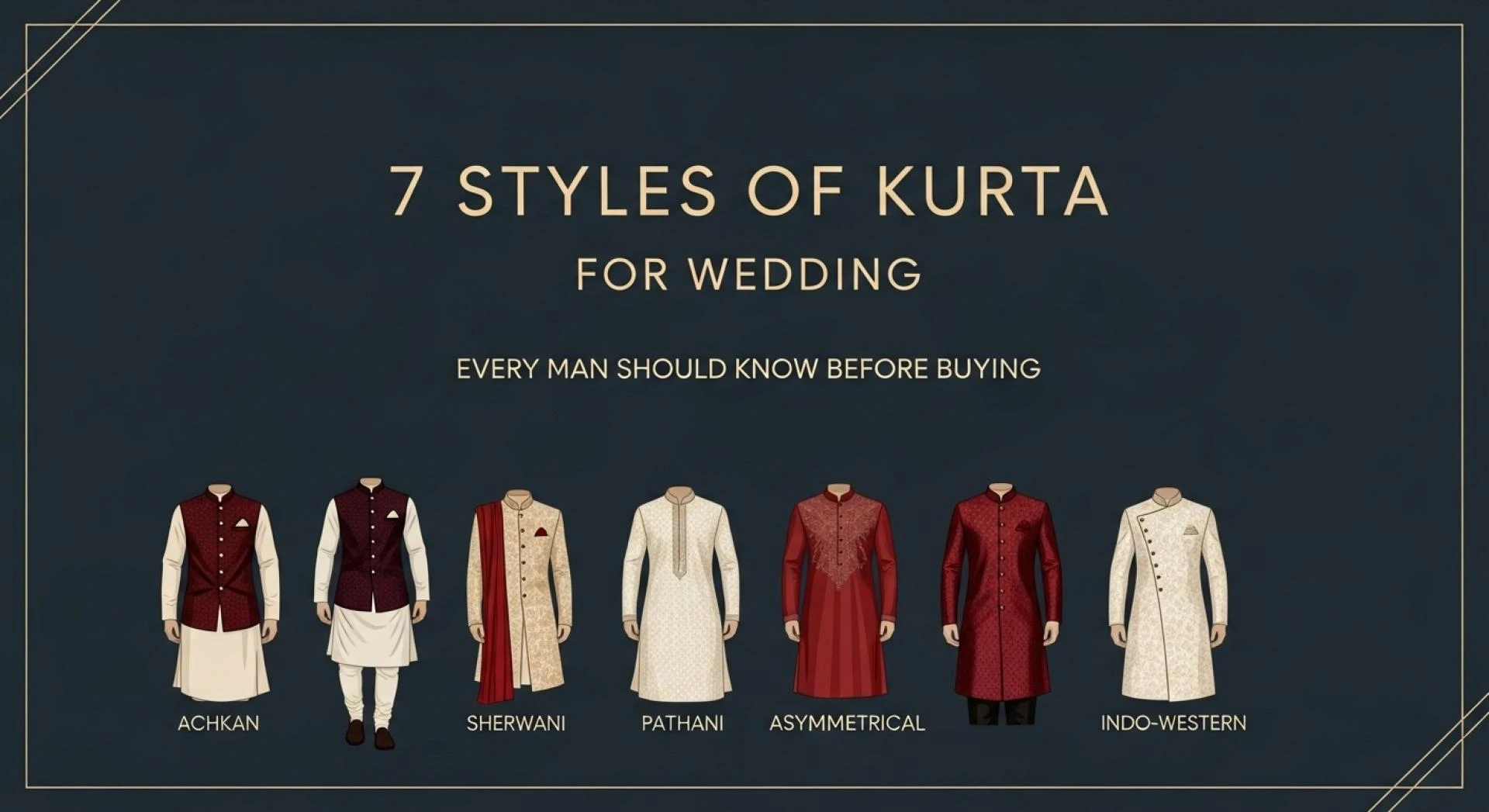
An achkan sits between a kurta and a sherwani in terms of formality. It is longer, more structured, and designed to look ceremonial while staying more wearable than a heavy sherwani. For many men, the achkan becomes the ideal wedding kurta for groom option when they want groom-level presence with better comfort.
The difference between achkan and sherwani is weight and construction emphasis. Sherwanis often carry heavier embroidery and richer foundations. Achkans can be refined, structured, and embellished, yet they usually feel lighter and allow easier movement, which matters during long rituals.
Achkans work well for day weddings, groom ceremonies, and formal evening functions. They also work for close family members when the wedding demands high formality. Fabric selection should be season-aware. Winter allows richer textures. Summer demands lighter foundations with disciplined detailing.
Length should be carefully chosen. Too long can look heavy and reduce movement ease. Too short can look like an indecisive silhouette. Embellishment should stay strategic, with attention at the collar, buttons, and chest rather than across the entire garment.
Accessories should be chosen thoughtfully. A groom can add a stole or ceremonial elements when required, but the achkan already carries authority. Footwear should be premium and traditional, completing the look without distraction.
7. Short Kurta with Jacket – Modern Wedding Look
Short kurta with jacket styling has become popular because it offers flexibility and modern structure. The short kurta creates a cleaner, sharper body line, and the jacket adds formality and depth. For men shopping a kurta for wedding events that looks current and polished, this combination often becomes a strong pick.
Layered kurtas trend because they photograph well. A jacket creates a defined shoulder line, improves posture appearance, and makes the outfit look finished. This is particularly useful in crowded functions where a plain kurta can look visually lost.
Jacket styles should align with the kurta’s fabric and function. Nehru jackets are the most versatile. Embroidered jackets work for night events when the base stays simpler. Silk jackets can add richness, but fabric must be selected carefully to avoid excessive shine.
This look suits mehendi, sangeet, and reception functions. It also works for wedding guests who want a premium appearance without wearing heavy embroidery. Bottom wear pairing should be tapered: trousers, churidar, or a clean pajama. Footwear should stay polished and traditional, because sporty footwear ruins the formality of layering instantly.
8. Pathani Style Kurta – Bold & Masculine Choice
A Pathani kurta is defined by its strong, minimal structure and its masculine visual tone. It typically includes a straight, robust silhouette, a firm collar direction, and a clean, functional feel. For men who want a bold wedding kurta for men option that still stays traditional, Pathani is an excellent choice when styled correctly.
Pathani works best for evening functions, pre-wedding gatherings, and events where you want simplicity with presence. It can also work for day events if the fabric is breathable and the color is kept lighter. The key is to avoid making it look like daily wear.
Color and fabric choices decide whether it reads wedding-ready. Deep tones like black, navy, and charcoal work well at night, while lighter tones can suit daytime functions. Fabric should hold shape and fall cleanly, because Pathani relies on silhouette rather than decoration.
Styling should stay polished. Bottom wear should be tapered and clean. Footwear should be ethnic and refined. Accessories should remain minimal, because Pathani carries its power through simplicity.
9. Designer Embroidered Kurta – For Grand Celebrations
A designer embroidered kurta is chosen when the function demands visible grandeur. This is not an everyday wedding outfit. It is a statement piece for receptions, major ceremonies, and roles where higher formality is expected.
Heavily embellished kurtas should be selected carefully because heavy work can look premium or look excessive depending on placement and fabric choice. Embroidery types like zardozi, resham, and mirror work each create different visual outcomes. Zardozi reads regal and formal. Resham can look refined and versatile. Mirror work can look festive but must be controlled to avoid loudness.
Avoid over-styling by limiting additional statement elements. If the kurta carries heavy embroidery, keep layering minimal or extremely refined. Accessories should stay controlled. Footwear should be premium and traditional. The objective is elegance with authority, not decoration overload.
10. How to Choose the Right Kurta Style for Your Wedding Event
Kurta styles should be mapped to wedding functions. Haldi and mehendi usually suit lighter, breathable silhouettes such as straight cut kurtas or short kurta with jacket combinations. Reception events often support achkans, designer embroidered kurtas, and deeper tones.
Day versus night styling should be treated as a real divide. Day events reward light palettes, subtle texture, and breathable fabrics. Night events reward depth, layering, and richer finishes. A wedding kurta pajama for men that looks correct at noon may look flat at night, and a reception-heavy piece may look excessive in daylight.
Groom versus guest styling should remain clear. The groom can carry heavier detailing, more structure, and ceremonial elements. Guests and family should aim for premium restraint: clean silhouettes, controlled craft, and styling that looks deliberate without competing.
11. Common Mistakes Men Make When Buying Wedding Kurtas
Choosing the wrong fabric for the season is the fastest way to ruin comfort and appearance. Heat and humidity punish heavy fabrics in daytime functions, while winter allows richer textures.
Ignoring fit and length is another frequent mistake. A kurta for wedding must look correct in motion, not only in a mirror. Overlooking comfort creates visible discomfort in photographs, which undermines the entire look.
Poor color coordination also creates weak outcomes. Colors chosen under indoor lighting can fail in daylight. Overly bright shades can look harsh in photos. Deep shades can look flat if fabric texture is poor.
Finally, many men select heavy embroidery and then add heavy accessories and layering on top, creating visual overload. Premium wedding dressing requires hierarchy, not accumulation.
12. Final Buying Tips & Style Advice
Tailored versus ready-made should be decided by time and fit complexity. Ready-made works well when sizing is correct and minor adjustments can be handled quickly. Tailoring becomes valuable when your proportions need precision or when the outfit must look groom-level sharp.
Long-term usability matters. A wedding kurta for men becomes a better investment when it can be worn again for festivals, family functions, and formal gatherings without looking like a wedding-only costume.
Versatile styles include straight cut kurtas in premium fabric, Pathani in refined finishing, and short kurta with jacket combinations that can be re-styled across events. Investing in these styles reduces future shopping pressure.
13. Conclusion
The seven kurta styles every man should understand before buying are straightforward in concept but powerful in outcome: straight cut, Anarkali, Angrakha, achkan, short kurta with jacket, Pathani, and designer embroidered kurta. Each one serves a different function, different role, and different styling ceiling.
A kurta for men wedding functions succeeds when it matches the event, fits correctly, and stays comfortable. The smartest wedding dressing choice is rarely the loudest one. It is the one that looks composed, feels wearable, and holds its authority in real photographs.
Explore Resources:
Shop by Occasion
- Wedding Kurta for Men
- Kurta Set for Rakhi
- Kurta for Navratri
- Kurta for Mehndi
- Kurta for Diwali
- Kurta for Haldi
- Kurta for Puja
- Kurta for Holi
- Kurta for Eid
Shop by Color
- Black Kurta for Men
- White Kurta for Men
- Blue Kurta for Men
- Green Kurta for Men
- Yellow Kurta for Men
- Maroon Kurta for Men
- Pink Kurta for Men
- Purple Kurta for Men
- Red Kurta for Men
Shop by Fabric
Shop by Style















Sign in to leave a comment.