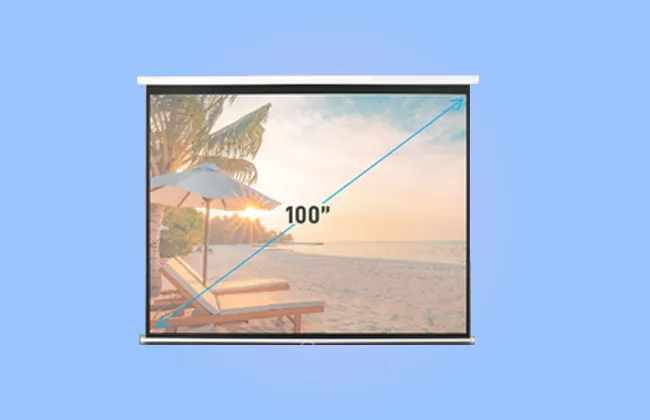

A projector can deliver an impressive viewing experience, but the quality of the screen plays an equally important role in how clear, bright, and detailed the final image looks. Whether you are setting up a home theater, classroom, conference room, office, training center, or entertainment space, choosing the right projection screen can make a noticeable difference.
A pull-down screen is popular because it offers a practical combination of convenience, space efficiency, and affordability. It can be rolled up when not in use and pulled down whenever a presentation, movie, or training session is required. However, not every model provides the same performance. Screen material, size, installation, viewing conditions, and construction quality should all be considered before making a purchase.
1. Check the Screen Size and Aspect Ratio
The first thing to consider is the screen size. A larger screen is not automatically better because the ideal size depends on the room dimensions, projector specifications, seating distance, and viewing angle.
Before purchasing, measure the available wall or ceiling space and determine how far viewers will sit from the screen. You should also check the projector's throw distance and recommended image size. Choosing a screen that is too large for the projector may result in reduced brightness or a less comfortable viewing experience.
Aspect ratio is another important consideration. Common options include 16:9 for movies and modern video content, while 4:3 may be suitable for traditional presentations and certain educational applications. Selecting the aspect ratio based on your primary content helps prevent unnecessary image cropping or unused screen space.
2. Evaluate the Screen Material
Screen material directly affects brightness, contrast, color reproduction, and viewing quality. Different materials are designed for different projection environments, so understanding your room conditions is essential.
If the room has controlled lighting, a standard matte white surface may provide balanced image reproduction and wide viewing angles. Rooms with ambient light may require a screen material designed to improve perceived contrast and image visibility.
When comparing a Pull-Down Projector Screen, don't focus only on the external housing. Ask about the screen fabric, gain characteristics, surface finish, and compatibility with your projector. A good screen material should provide consistent image quality without creating distracting hotspots or color distortion.
3. Consider Manual or Motorized Operation
Pull-down screens are available in different operating mechanisms. Manual models are generally simple to operate and can be a cost-effective choice for classrooms, offices, meeting rooms, and occasional home use.
Motorized models provide additional convenience because the screen can be lowered or retracted using a remote control or integrated control system. They can be particularly useful in dedicated entertainment spaces or professional environments where the screen is used frequently.
Consider how often the screen will be used and whether convenience or budget is the bigger priority. A manually operated screen may be sufficient for occasional presentations, while automated operation can make sense for frequent installations.
4. Inspect Build Quality and Housing
A projection screen needs to remain stable and roll smoothly over repeated use. The quality of the housing, roller mechanism, brackets, and screen surface can therefore affect its lifespan.
Look for a sturdy casing that protects the screen when it is retracted. The roller should operate smoothly without excessive resistance, while the mounting brackets should provide secure installation.
Poor construction can eventually lead to uneven rolling, wrinkles, screen deformation, or difficulty retracting the material. Paying attention to build quality at the beginning can help avoid maintenance problems later.
5. Check Installation Requirements
Before ordering a screen, determine whether it will be installed on a wall, ceiling, or another mounting surface. Not every screen is compatible with every installation method.
Check the dimensions of the housing, mounting points, available clearance, and position of
the projector. The screen should be installed at a suitable height and aligned properly with the projected image.
For larger commercial installations, professional installation may be worthwhile because accurate positioning can improve viewing comfort and prevent alignment issues.
6. Match the Screen with Your Projector
A screen should always be selected alongside the projector rather than independently. Projector brightness, resolution, throw distance, lens characteristics, and image size can all influence screen performance.
For example, a high-resolution projector will benefit from a screen capable of displaying fine details clearly. Similarly, a projector used in a bright conference room may require different screen characteristics than one installed in a dark home theater.
If you are unsure which combination is suitable, discuss your projector specifications and room conditions with a reliable projector screen supplier in India before making a final decision. This can help you avoid purchasing a screen that is incompatible with your existing equipment.
7. Compare Warranty, Support, and Overall Value
Price should not be the only factor when comparing projection screens. A cheaper model may appear attractive initially but could become expensive if the mechanism fails or the screen surface develops problems.
Check the manufacturer's warranty, installation support, replacement availability, and after-sales service. These factors become particularly important for schools, offices, commercial venues, and other installations where equipment needs to remain operational for years.
Also compare the overall specifications rather than simply comparing prices. A slightly more expensive screen with better construction, suitable screen material, reliable operation, and stronger support may offer better long-term value.
Final Thoughts
Choosing the right pull-down projection screen requires more consideration than simply selecting a suitable size. The screen material, aspect ratio, operating mechanism, construction quality, installation method, projector compatibility, and after-sales support can all influence your experience.
Take time to assess the room, projector, viewing requirements, and frequency of use before purchasing. A well-matched screen can improve image presentation while making the entire projection setup more practical and reliable.
Whether you are creating a home entertainment system or equipping a professional presentation space, focusing on these seven factors can help you make a more informed purchase and get better long-term value from your projection equipment.
























Sign in to leave a comment.