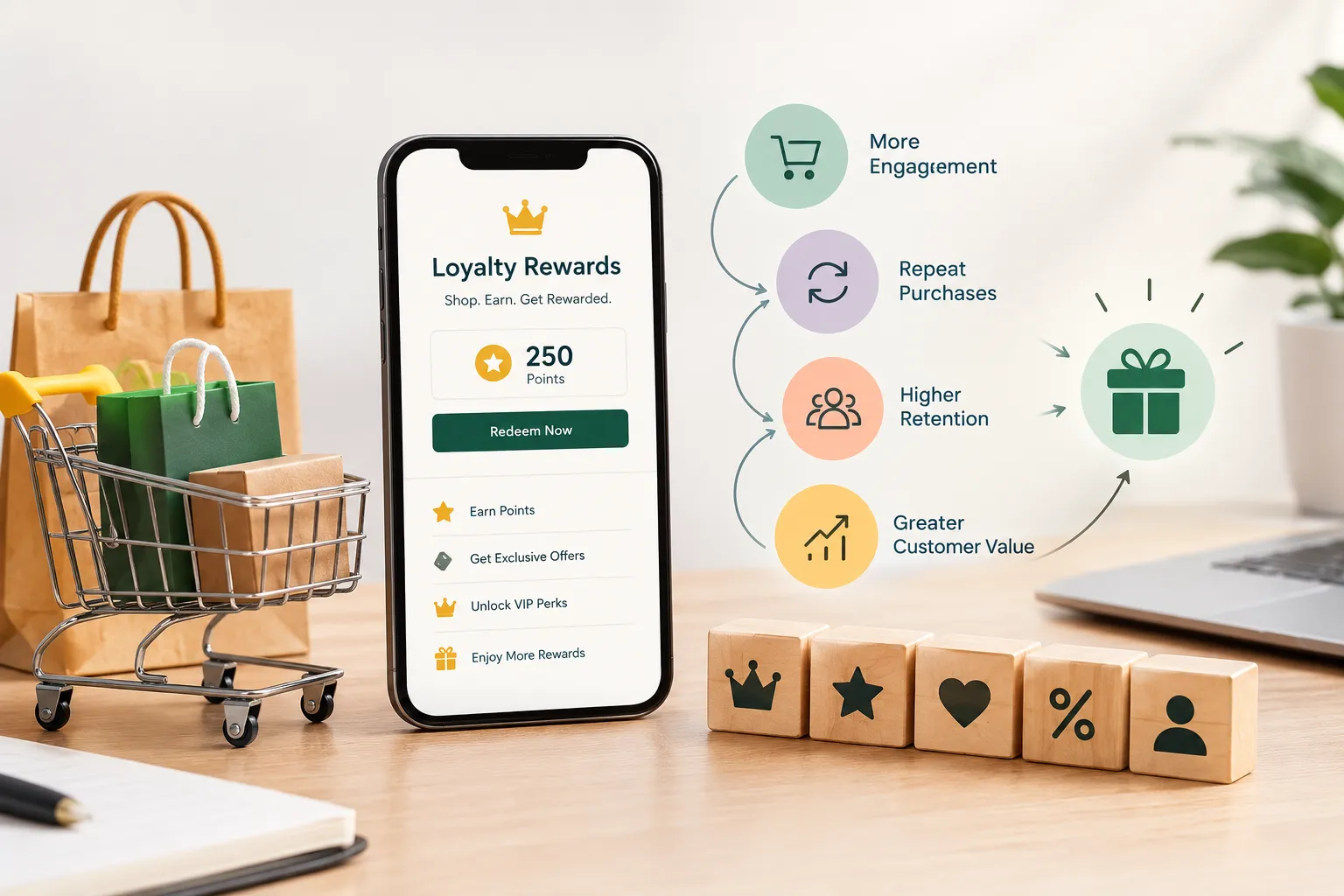

Most loyalty programs don't fail because they lack rewards. They fail because customers don't see enough value to come back.

A points system, discounts, and a rewards page are not enough to create genuine loyalty. The best ecommerce loyalty programs make participation simple, rewards meaningful, and every interaction valuable.
So, what separates a loyalty program customers actually use from one they forget?
Here are seven traits to look for.
1. Clear Value From Day One
Customers should understand the benefit of joining within seconds.
Your program should clearly explain:
- What customers receive for joining
- How they earn rewards
- What their rewards are worth
Avoid complicated earning rules. A simple message such as “Earn 5 points for every $1 spent and redeem 100 points for $10 off” is easier to understand than a long explanation of qualifying purchases.
The goal is simple: make the value exchange obvious.
2. Early and Achievable Rewards
Joining a program doesn't mean customers will use it.
Give new members an early reason to engage through a welcome reward, first-purchase bonus, review incentive, referral reward, or achievable milestone.
Avoid setting the first meaningful reward so far away that customers feel they'll never reach it. Early rewards create momentum and show customers that participation has immediate value.
3. Relevant Personalization
Effective personalization goes beyond using a customer's name.
Use customer behavior and preferences to make rewards more relevant. For example, a skincare customer who regularly purchases moisturizers could receive category-specific rewards, relevant recommendations, or early access to related products.
Different customers value different benefits. Some prefer discounts, while others may value free shipping, exclusive products, VIP access, or gifts.
4. Rewards Beyond Purchases
If customers can only earn rewards by spending money, loyalty becomes purely transactional.
Reward valuable actions such as:
- Writing reviews
- Referring friends
- Creating an account
- Completing a profile
- Sharing user-generated content
- Reaching milestones
This creates a broader engagement loop:
Purchase → Reward → Engagement → Review → Referral → New Customer
5. Frictionless Earning and Redemption
Even a valuable program can fail if it is difficult to use.
Customers should quickly understand:
How many points do I have? What can I redeem? How close am I to my next reward?
Keep earning rules simple, redemption steps short, and rewards visible across the customer journey.
Progress indicators can also encourage action by showing customers exactly how close they are to their next benefit.
6. Value Beyond Discounts
Discounts are useful, but loyalty shouldn't become synonymous with coupons.
Strong programs can offer:
- Early product access
- VIP tiers
- Birthday and milestone rewards
- Exclusive products
- Community participation
- Challenges and achievements
The objective isn't to make the program complicated. It's to give customers more reasons to engage with the brand.
7. Continuous Measurement and Improvement
Launching a loyalty program is only the beginning.
Track metrics such as:
- Repeat purchase rate
- Purchase frequency
- Average order value
- Customer lifetime value
- Reward redemption rate
- Member engagement
- Referral activity
- Revenue from loyalty members
Don't focus only on how many people join. The real question is whether the program is changing customer behavior.
Final Thoughts
The best ecommerce loyalty programs aren't necessarily the ones with the most features. They're the ones that create a clear, valuable exchange between the brand and its customers.
Clear value. Early rewards. Personalization. Multiple ways to engage. Easy redemption. Meaningful benefits. Continuous optimization.
When these elements work together, loyalty becomes more than a points system. It becomes a reason for customers to keep coming back.






















Sign in to leave a comment.