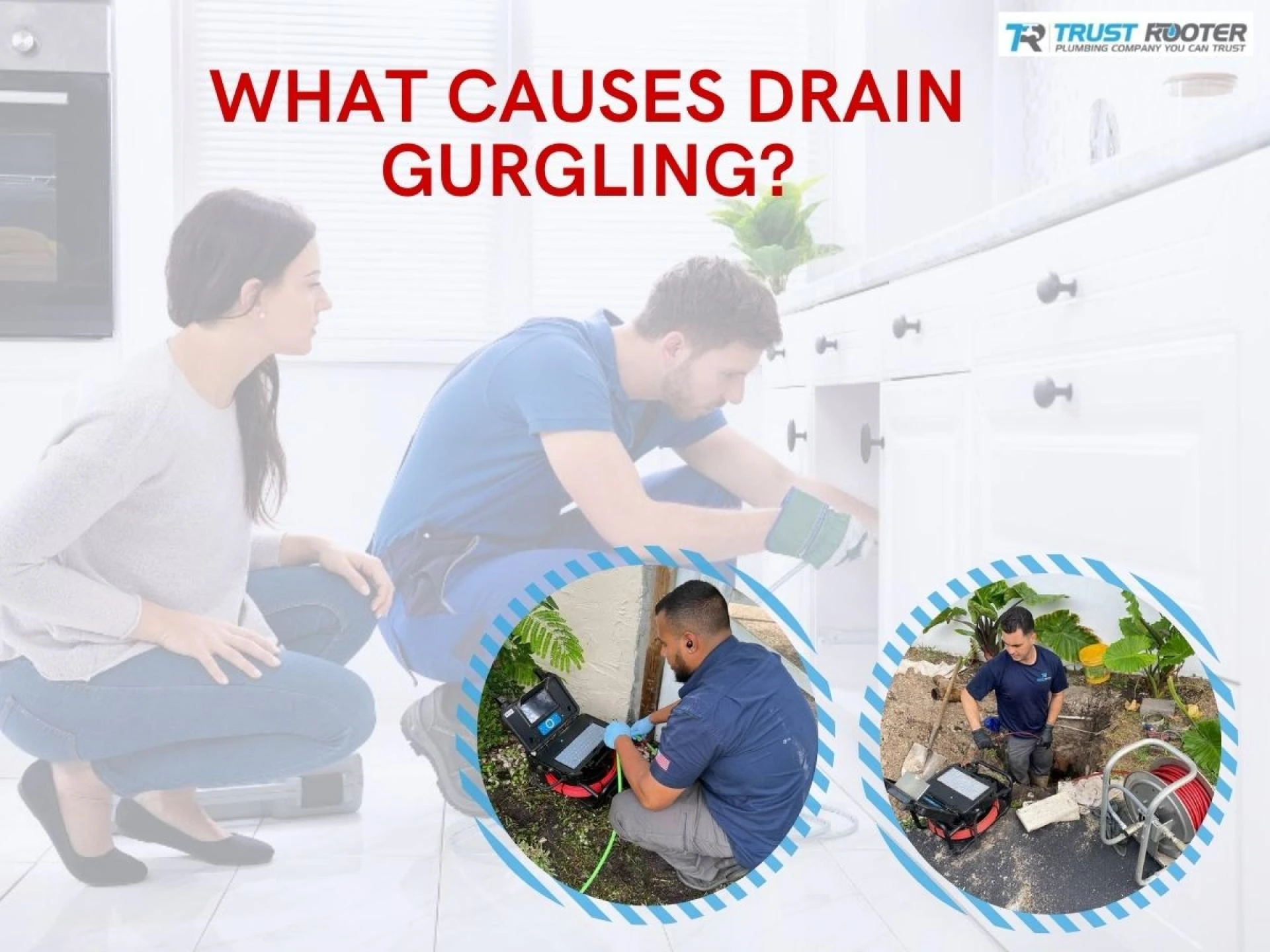
Okay, so you know that weird gurgling sound coming from your drain?
Yeah, that one.
The one that happens right after you flush the toilet or drain the sink — and you just... ignore it and walk away? If you need a trusted plumber in Boynton Beach, or just want to understand what's happening inside your pipes
Here's the thing. That sound is not nothing. Your pipes are literally trying to tell you something. And the longer we ignore it, the worse it gets.
So grab your tea. Let's talk about what's actually going on down there.

1. There's a Partial Clog Somewhere in the Pipe
This is the big one. The most common reason drains gurgle.
When water can't move freely through the pipe, air gets trapped behind it. And as the water squeezes past the blockage? That air bubbles right back up.
That's the gurgle. That's all it is.
Now here's a question worth thinking about — is it just one drain making that sound, or multiple?
Because if it's just one drain, the clog is probably right below that fixture. But if two or three drains are gurgling at the same time? The blockage is deeper in the main line. Bigger problem.
What usually causes these clogs?
- Grease that slowly coats the inside of the pipe
- Hair and soap scum in bathroom drains
- Food bits that sneak past the strainer
- Toothpaste and product buildup over time
2. The Vent Pipe Is Blocked
Okay, this one surprises a lot of people.
Every home's plumbing has vent pipes running up through the roof. Their whole job? Let air into the drainage system so water can flow down smoothly.
When that vent gets blocked — by leaves, a bird nest, or ice in winter — air has nowhere to go. So it gets yanked backward through the water sitting in your drain.
And that creates the gurgling sound.
Signs this might be the issue:
- The gurgling happens right after flushing the toilet
- Multiple drains are making the sound at the same time
- Drains are slow all over the house
- There's a faint sewage smell that comes and goes
Don't climb up on the roof to check this yourself. Seriously. This one needs a licensed plumber with the right gear.
3. Something's Wrong With the Main Sewer Line
This is the one we really don't want to ignore.
The main sewer line carries all the wastewater out of the home. When it starts failing, the gurgling doesn't stay in one spot — it spreads. Usually shows up first in lower drains, like a basement floor drain or a first-floor toilet.
What causes main line problems?
- Tree roots cracking through the pipe
- Old pipes corroding in older homes
- Heavy grease buildup deep in the line
- Things that got flushed that really shouldn't have — wipes, cotton swabs, paper towels
If the gurgling comes with a sewage smell or water backing up in multiple spots — stop using the water and call a plumber right away.
4. The Septic Tank Is Getting Too Full
Not every home is connected to the city sewer. About 21 million U.S. households run on septic systems, according to the EPA.
And when a septic tank gets too full? It can't process waste properly. Gases and air get pushed back through the pipes — and show up as gurgling.
Here's what to watch for:
- Gurgling in the toilet, sink, and tub all at once
- Wet or unusually soft patches in the yard near the drain field
- Toilets flushing slowly throughout the whole house
- Sewage odors inside or outside the home
When was the last time the septic tank got pumped? Worth checking.
5. The P-Trap Has Dried Out
This one is actually a really easy fix — when we catch it in time.
That curved pipe under the sink? That's the P-trap. It holds a small pool of water that acts as a seal between the home and sewer gases below.
If a bathroom or sink goes unused for a few weeks — a guest bathroom, a utility sink, a basement floor drain — that water just evaporates. No seal. Air and gases move right through. Gurgling starts. Sometimes a smell comes with it.
The fix is simple:
- Run the faucet for 30 to 60 seconds to refill the trap
- For floor drains, pour a cup of water in every month
- If the gurgling keeps coming back after that, the issue is deeper
Honestly, this takes less than a minute. If it solves the problem — great. If it doesn't — that's when we call someone in.
6. The Pipes Weren't Installed at the Right Angle
Here's something most people never think about.
Drain pipes need to slope at roughly 1/4 inch drop per foot so gravity can carry the water along. If a pipe is installed too flat — or at the wrong angle — water sits in the pipe instead of moving through it.
That standing water traps air. Every time something drains nearby, that air gets pushed around and creates the gurgling sound.
How do we know if this is the issue?
- The gurgling started right after a renovation or plumbing repair
- Drains are slow even without a clog
- There's an audible sound of water sitting in the pipe after draining
Fixing this means re-routing the pipe — not a DIY situation. A camera inspection can confirm it pretty quickly.
For more on what's causing these sounds, check out this full breakdown on gurgling drain causes and fixes.
7. Hard Water Minerals Are Slowly Clogging the Pipes
This one builds up so slowly that most people don't even connect it to the gurgling.
According to the U.S. Geological Survey, about 85% of American homes have hard water. That means the tap water carries calcium and magnesium minerals — and over time, those minerals deposit on the inside walls of pipes.
The pipe gets narrower. Water flows slower. Air gets trapped more easily. Gurgling starts.
Signs this might be the problem:
- White or yellow crust around faucet openings
- Water pressure that's slowly gotten weaker
- Slow drains that don't really respond to drain cleaners
- Gurgling that's been getting gradually worse over months — not suddenly
A plumber can use hydro-jetting to blast all of that buildup out. And for long-term prevention, a whole-home water softener is a smart move.
Trust Rooter — When It's Time to Call in a Pro
Sometimes we work through all of this and still can't pin it down. Or the issue is clearly beyond a DIY fix.
That's where Trust Rooter comes in.
They serve homeowners across Florida — and if there's a need for a dependable plumber in Southwest Ranches, their team shows up ready with the right tools and zero guesswork.
What they bring to the table:
- Same-day service for urgent plumbing issues
- Camera inspections to see exactly what's going on inside the pipes
- Hydro-jetting for deep, thorough line cleaning
- Septic system diagnostics and repair
- Upfront pricing — no surprise charges at the end
Don't wait for a small gurgling sound to turn into a flooded room or a backed-up sewer. Get it sorted early.
FAQs
Is a gurgling drain always serious? Not always. A dry P-trap is a nothing fix. But a failing sewer line? That's serious. The point is — don't assume it's nothing. Figure out which one it is.
Can this be fixed without calling a plumber? Sometimes, yes. Try boiling water, a plunger, or refilling the P-trap first. But if the gurgling keeps coming back, it's time to bring someone in. Pushing a clog deeper can make things worse.
Why does it only gurgle at night? Water use drops at night, which changes the pressure in the plumbing system. It's also just quieter — so the sound becomes more noticeable. Either way, still worth looking into.
How do we stop this from happening again?
- Keep grease out of the drain
- Use a strainer to catch debris
- Run water in unused drains monthly
- Get a professional drain cleaning once a year
- Have the main sewer line inspected every 2–3 years
Sign in to leave a comment.