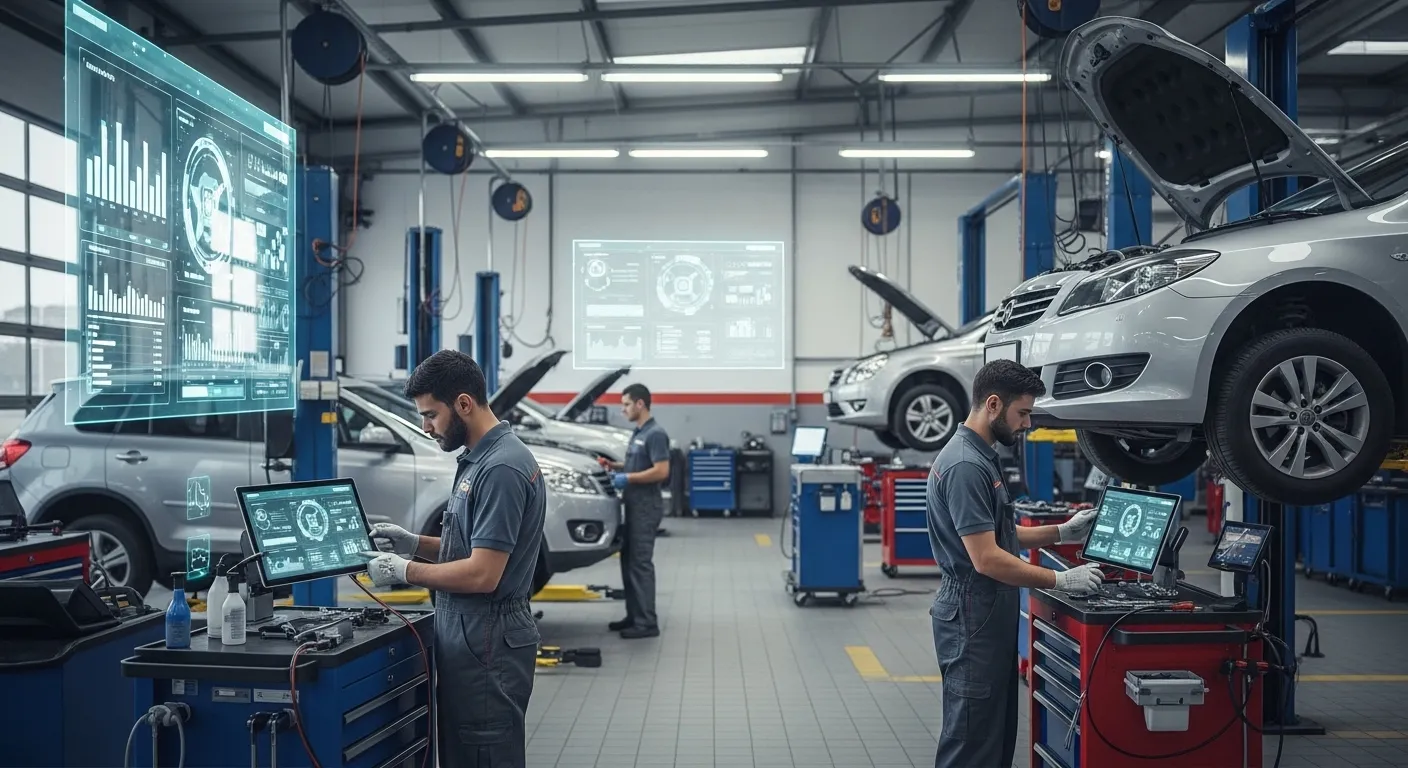

Walk into a busy auto repair shop today and you will still hear the familiar sounds of tools, engines, and diagnostic equipment. But behind the scenes, something new is quietly reshaping how modern workshops operate. Artificial intelligence is becoming one of the most powerful tools in the auto repair industry.
If you manage or own a repair shop, you probably deal with a constant flow of vehicles, customer inquiries, technician coordination, and paperwork. It can feel like a never ending cycle of tasks that must be handled quickly and accurately.
For years, many shops relied on manual processes or basic software systems. While these methods worked in the past, the demands of today's automotive industry require smarter solutions. AI powered tools are helping repair shops simplify operations, reduce errors, and deliver better customer experiences.
In this article, I will walk you through seven ways AI tools are transforming auto repair shop operations and why more workshops are adopting these technologies to stay competitive.
Why AI is becoming important for modern repair shops
The automotive industry has changed dramatically over the past decade. Vehicles now include complex electronic systems, advanced diagnostics, and sophisticated onboard computers. At the same time, customers expect faster service and clearer communication.
Managing all of this manually can quickly become overwhelming.
Artificial intelligence helps repair shops manage information, automate repetitive tasks, and analyze operational data. Instead of relying on guesswork, AI powered systems provide real insights that help shop owners make smarter decisions.
As technology expert Bill Gates once said,
"Automation applied to an efficient operation will magnify the efficiency."
This idea perfectly reflects what AI tools are doing for modern auto repair shops. They enhance human expertise rather than replace it.
AI powered job management improves workflow
One of the biggest challenges in any repair shop is keeping track of multiple repair jobs at the same time. Without a structured system, it becomes difficult to know which vehicles are being inspected, repaired, or waiting for parts.
AI driven repair management platforms organize the entire workflow from the moment a vehicle enters the shop.
Technicians can update repair progress digitally, service advisors can track job status instantly, and shop managers can monitor overall productivity.
Benefits of AI assisted job tracking
AI based systems help workshops manage daily operations more efficiently through features such as
- Real time job status tracking
- Automatic technician job assignments
- Alerts for delayed repairs
- Clear repair progress visibility
With these tools in place, everyone in the workshop stays informed and coordinated.
AI supported diagnostics help technicians work faster
Diagnosing vehicle issues has always required a combination of technical knowledge and experience. However, modern vehicles are becoming more complex every year.
AI tools can analyze diagnostic codes, repair histories, and mechanical patterns to assist technicians in identifying potential problems more quickly.
Instead of spending hours researching possible causes, technicians can receive intelligent suggestions based on real repair data.
How AI assists diagnostic accuracy
AI systems support technicians by
- Analyzing common repair patterns
- Suggesting possible mechanical issues
- Providing access to historical repair data
- Helping technicians troubleshoot complex problems
This assistance speeds up the diagnostic process and improves repair accuracy.
Better communication between shops and customers
Clear communication is one of the most important factors in customer satisfaction. When customers understand what is happening with their vehicle, they feel more confident about the service they are receiving.
AI powered repair platforms allow shops to provide real time updates, digital inspections, and detailed repair explanations.
Customers can receive notifications about repair progress, estimated completion times, and recommended services.
This level of transparency helps build trust and encourages customers to return for future services.
Smarter scheduling and appointment management
Scheduling is another area where AI tools are making a noticeable difference in repair shop operations.
Many shops struggle with overbooking, uneven technician workloads, or unexpected delays. AI driven scheduling systems analyze job complexity, technician availability, and repair bay capacity to create more balanced schedules.
AI helps optimize workshop scheduling
These systems can help your shop
- Prevent appointment overload
- Distribute work evenly among technicians
- Reduce customer waiting times
- Improve repair turnaround times
When scheduling becomes more organized, the entire shop runs more smoothly.
Reducing administrative work and paperwork
Paperwork can consume a surprising amount of time in an auto repair business. Repair orders, estimates, invoices, and service records must all be documented accurately.
AI powered repair management platforms help automate many of these tasks.
Estimates can be generated automatically, invoices can be created instantly after repairs, and service histories can be stored digitally for future reference.
If you want to see how modern platforms streamline these processes, exploring advanced AI tools for auto repair shops can help you understand how intelligent repair management systems simplify daily operations and improve efficiency across the workshop.
Smarter inventory and parts management
Managing spare parts inventory is another challenge many repair shops face.
Keeping too many parts in stock ties up money and storage space. Keeping too few parts can delay repairs and frustrate customers.
AI powered systems analyze repair trends and historical data to predict which parts are most frequently used.
AI improves inventory management through
- Automated parts tracking
- Inventory level alerts
- Usage pattern analysis
- Smarter purchasing recommendations
This helps repair shops maintain the right balance between availability and cost control.
Data insights that help shop owners make better decisions
One of the most powerful advantages of AI tools is the ability to analyze operational data.
Many shop owners make business decisions based on experience or intuition. While experience is valuable, data driven insights provide clearer direction.
AI systems track performance metrics such as technician productivity, repair turnaround time, revenue per job, and customer retention.
Turning repair data into business growth
With access to this information, you can
- Identify the most profitable services
- Improve technician productivity
- Adjust pricing strategies
- Improve customer service processes
These insights allow repair shops to grow strategically rather than relying on trial and error.
Final thoughts
The auto repair industry is evolving quickly, and technology is becoming a key part of how successful workshops operate. Artificial intelligence is helping repair shops become more organized, efficient, and customer focused.
From smarter job management and faster diagnostics to improved scheduling and inventory control, AI tools are transforming the way repair shops handle daily operations.
What makes these technologies powerful is that they do not replace the skills of technicians or the experience of shop owners. Instead, they provide support that allows repair professionals to focus on what they do best repairing vehicles and serving customers.
As the automotive industry continues to advance, the repair shops that embrace AI powered tools today will be better prepared for the challenges and opportunities of tomorrow.





























Sign in to leave a comment.