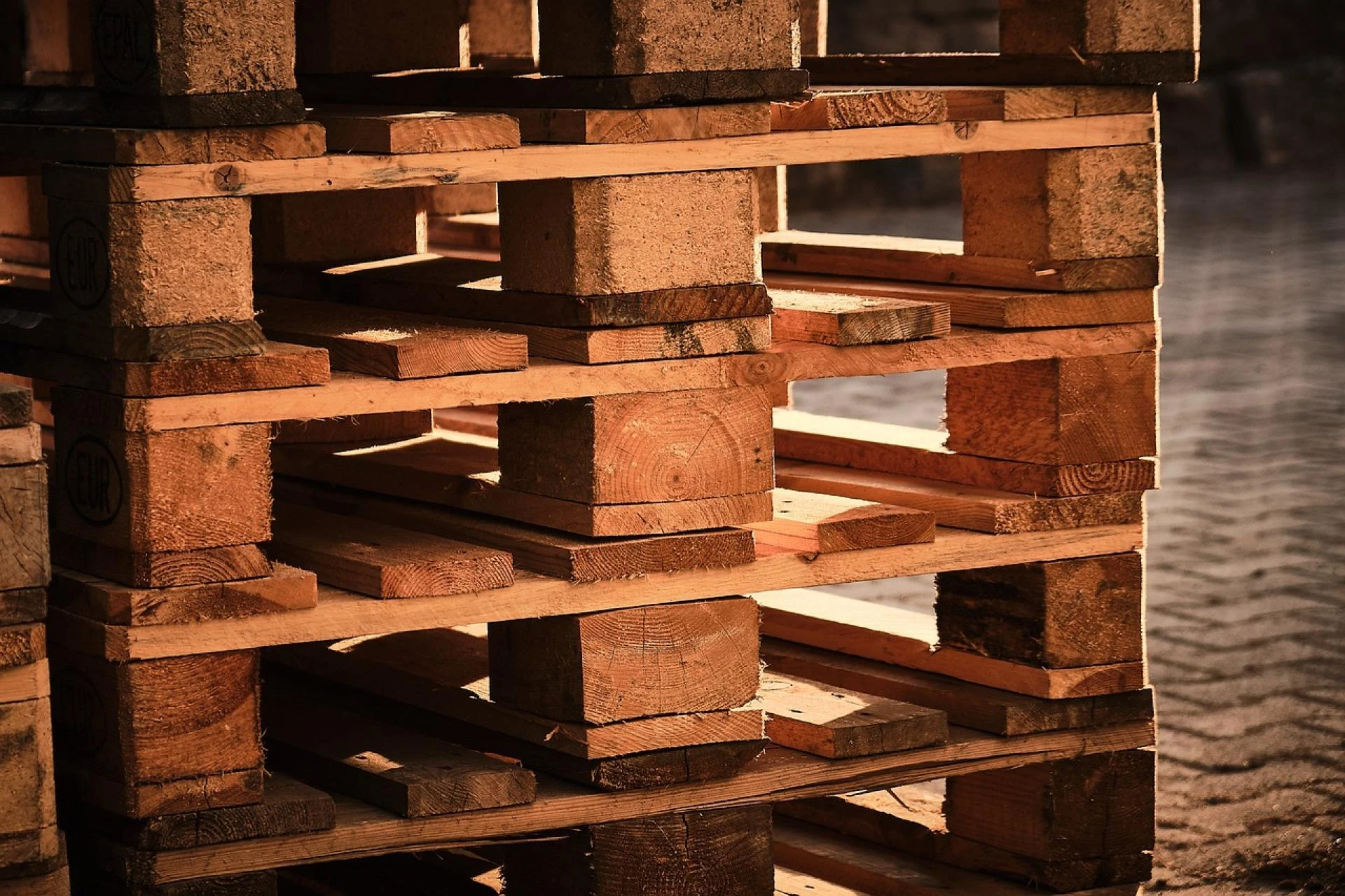

Pallets play a hugely significant role in transportation and supply chains all around the globe. While the type of pallets that first spring to mind may well be wooden, plastic pallets are also available and are increasing in popularity. Any company that ships products will use pallets, leaving them a choice between wooden types, including euro pallets in the UK, or plastic models.
But what are the differences between the two?
Uses
Wooden pallets usually consist of a top and bottom deck board, are held together by runners and are fastened with screws or nails. There are a number of different styles available, and many models have two or four forklift entry points too. The way wooden pallets are constructed means they can hold more weight than their plastic counterparts. As such, they are most often used in warehouses and general manufacturing. They are not, however, suited to transporting more fragile items as fasteners in the wooden pallets can damage goods and cause costly and time-consuming punctures.
Plastic pallets are more frequently used in industries such as pharmaceuticals, chemicals, food and drink, although they cannot hold as much weight as wooden pallets. This is because such industries adhere to strict hygiene standards and plastic pallets are better suited to this. They are safer for these industries to use because they are easier to wash, clean and sanitise and do not run the risk of growing mould or fungus if they absorb water.
Price and lifespan
Wooden pallets are estimated to be around three times cheaper than plastic ones. This is another reason for their popularity in high-volume industries such as warehousing and manufacturing. However, some argue that plastic pallets are a better long-term investment as you are likely to get more use out of them. Wooden pallets tend to have a lifespan of around three to five years, while plastic ones are much longer lasting and have a lifespan of around 10 years.
Durability and safety
The question of durability in relation to wooden and plastic pallets is a difficult one, as much depends on the conditions in which each is used and the care that each is given. Plastic pallets are not susceptible to the effects of water, which makes them more weather-resistant. However, plastic pallets may be more susceptible to temperature extremes than wood is.
Wooden pallets are more likely to withstand higher and lower temperatures but do not react well in water. This means they can be durable and strong, provided that they are kept dry. Wood pallets also have a lower fire safety rating than plastic ones and have to be heat treated in a kiln at a high temperature, to help them resist fungus and biohazards. Plastic pallets do not have this problem.
Repair and reuse, including euro pallets in the UK
Wood, by its nature, breaks easily. However, wooden pallets can be repaired and reused many times over their lifespan, which is not the case with plastic pallets. Being able to repair and reuse wooden pallets gives significant environmental and cost-saving benefits for companies that use them. It helps them to lower their carbon footprint and serves to prevent more trees from being cut down needlessly.
One popular type of wooden pallet is the euro pallet, also known as a four-way pallet. Many companies opt for euro pallets in the UK as they conform to a European standard. This means it can qualify for the European Pallet Pool- a 'pallet for pallet' exchange system. This allows companies to exchange euro pallets in UK with other European companies, confident that they meet a certain standard. This system helps companies save money and is environmentally friendly.
Recycling
Wooden pallets are fully recyclable as they are biodegradable and will therefore break down over time with no ill effect to the earth. Plastic pallets that reach the end of their lifespan can also be melted down and recycled too. Both products boast good green credentials, but the debate continues over which is more environmentally friendly.
There are advantages and disadvantages to both wooden and plastic pallets. Which one a company chooses should be based on the goods being shipped, the required sanitation standards, budget and what plan is in place for recycling them. All of these factors should be considered thoroughly to help make the correct decision.



























Sign in to leave a comment.