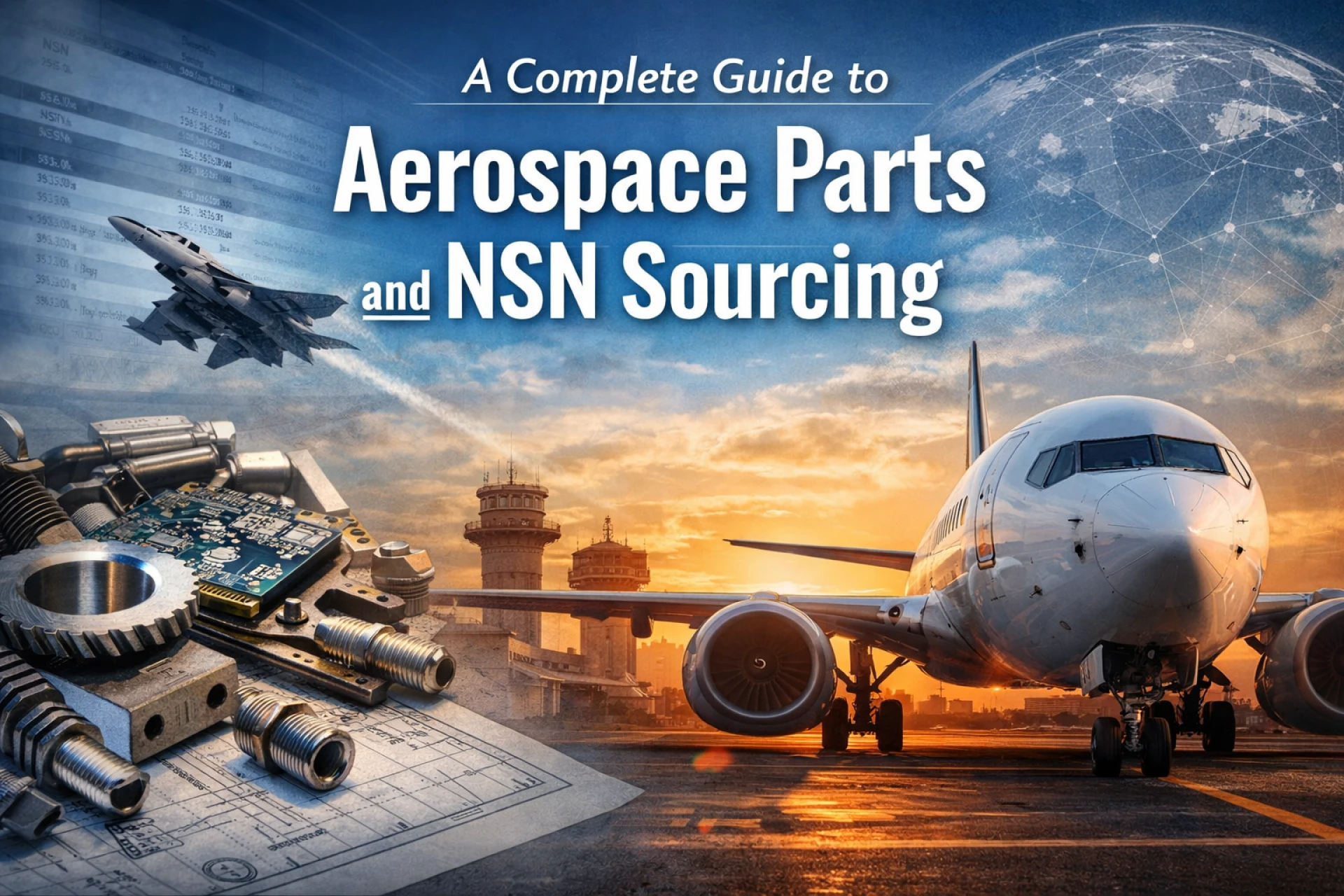
The aerospace industry depends on millions of components, ranging from structural hardware to advanced avionics. Whether an aircraft is military, commercial, or private, every part plays a specific role in safety, performance, and reliability. In aviation, even the smallest nut or sensor matters. Knowing what a part is, where to find it, and how to ensure quality are essential for engineers, procurement specialists, and maintenance teams alike.
One of the best systems used globally to simplify part identification and sourcing is the National Stock Number (NSN) — a standardized code that helps aerospace professionals accurately identify parts without confusion. In this guide, we will explore everything you need to know about NSNs in aerospace, with practical examples, technical insights, and a closer look at where and how to source certified components using specialized catalogs.
What Is a National Stock Number (NSN)?
A National Stock Number is a unique 13-digit code used to identify a specific part or item in government and military logistics systems. This system was developed by NATO to standardize supplies across allied nations, so parts can be shared, stocked, and ordered without ambiguity.
Every NSN includes two major components:
- Federal Supply Classification (FSC): A four-digit code indicating the general type of item.
- National Item Identification Number (NIIN): The unique nine-digit number that precisely identifies the part.
This uniform coding system makes it easier for aviation professionals to track, procure, and verify parts across global suppliers without guessing or comparing multiple numbering systems.
Why NSNs Matter in Aerospace
In aerospace, precision isn’t a luxury — it’s a requirement. Aircraft are complex machines, governed by strict safety standards and rigorous engineering specifications. A wrong part — even if it looks similar — can lead to system failure, costly delays, or safety violations.
That’s where NSNs become invaluable:
- Accuracy: They eliminate ambiguity by offering a globally recognized identifier for every part.
- Traceability: NSNs make it easier to track parts through maintenance, warranty, and lifecycle documentation.
- Compliance: Many aerospace authorities and quality systems (including ISO and FAA standards) require part traceability that NSNs support.
- Inventory Control: NSNs help streamline pipeline management for procurement and logistics.
Because aerospace systems span multiple manufacturers, countries, and regulations, NSNs serve as a universal language that reduces risk and improves coordination across supply chains.
How NSN Classification Works
NSNs are organized into categories based on their functions and applications. The first part of the NSN — the Federal Supply Classification Group (FSCG) — indicates what general type of item it is, and the second part distinguishes the exact item itself.
For example, important aerospace categories include:
- 1510: Fixed Wing Aircraft
- 1520: Rotary Wing Aircraft
- 1560: Airframe Structural Components
- 1620: Landing Gear Components
- 1630: Wheel and Brake Systems
- 1675: Space Vehicle Components
Each of these categories helps aerospace professionals filter thousands of part listings to find exactly the enumeration they need.
Where to Find Certified Aerospace NSN Parts
When you’re sourcing aerospace components, quality and traceability are critical.
One excellent resource is the NSN parts catalog, which groups parts into organized categories based on their characteristics. For example, you can browse specific component categories like electrical hardware and supplies through the “Electrical Hardware and Supplies” NSN parts category on Buy National Stock Numbers.
These categories let you explore parts that meet precise requirements by type rather than guessing through part numbers or descriptions.
The inventory of NSN parts often includes:
- New components
- Used and obsolete parts
- Hard-to-find aerospace supplies
- Specialized hardware
Once you find the right NSN category, you can request quotes, verify documentation, and ensure parts meet industry compliance standards.
Key Aerospace Part Types You Should Know
Aerospace components are incredibly diverse. Here are some common categories you’ll encounter:
Structural and Mechanical Components
Parts type that contribute to the physical framework of the aircraft including brackets, airframe fasteners, and fittings are often classified in primary NSN structural groups. These are critical for maintaining airworthiness and structural integrity.
Electrical and Electronic Components
The aerospace electrical ecosystem runs on components like circuit assemblies, relays, switches, and wire harnesses. These parts must meet stringent quality and environmental standards due to the critical role they play in flight control and systems monitoring.
Propulsion and Engine Parts
Gas turbines, jet engine components, and associated assemblies are another vital category. Proper identification ensures that propulsion systems deliver consistent performance and comply with strict safety requirements.
Landing Gear and Wheel Systems
Landing gear systems bear massive mechanical loads and must operate flawlessly. NSNs help maintenance teams quickly identify exact replacements for brake assemblies, landing gear supports, and associated hardware.
These examples only scratch the surface of the thousands of NSN categories used in aerospace, but they highlight how NSN cataloging simplifies complex part identification.
What Documentation Comes with NSN Parts
When sourcing aerospace NSN parts, it’s not enough to just find the item — you need to verify its quality through documentation. Trusted suppliers usually include:
- Certificate of Conformance (CoC): Verifies the part meets all specifications.
- Traceability Documentation: Shows the part’s manufacturing and inspection history.
- Compliance Reports: Demonstrate adherence to quality standards like AS9120 or ISO 9001.
These documents protect both safety and regulatory compliance in aerospace environments.
Best Practices for Aerospace Procurement
If you’re involved in procurement, here are tips to get the most out of NSN sourcing:
- Maintain an NSN database: Build a catalog of frequently used NSNs to speed up procurement.
- Verify parts before purchasing: Confirm that NSNs match technical specifications exactly.
- Use verified suppliers: Only work with platforms that offer quality and traceability documentation.
- Plan for inventory needs: Anticipate lead times and part demand cycles.
- Track part usage: Monitor how parts are consumed and replaced to optimize stock levels.
These practices keep maintenance cycles predictable and reduce the risks of aircraft downtime.
NSNs and the Future of Aerospace Logistics
As aircraft technology becomes more advanced, the complexity of components rises too. Integrated systems, advanced avionics, and new materials all require precise part identification — making NSNs even more essential.
With digital transformation and better data systems, aerospace logistics increasingly handles NSNs within automated platforms and ERP systems. This enables faster part lookup, improved forecasting, and real-time inventory tracking all while ensuring strict compliance with quality and safety standards.
Conclusion: Harnessing the Power of NSNs
National Stock Numbers are more than codes they’re the backbone of aerospace logistics, quality assurance, and supply chain coordination. They ensure that every part, from structural hardware to electrical modules, can be identified, sourced, and traced with confidence.
By understanding NSN systems and using specialized catalogs, including specific parts categories like electrical hardware and supplies or similar grouping categories aerospace professionals can reduce risk, streamline operations, and ensure mission-ready performance.
Whether you’re managing maintenance, sourcing rare parts, or optimizing inventory systems, NSNs are an indispensable part of aerospace success.










Sign in to leave a comment.