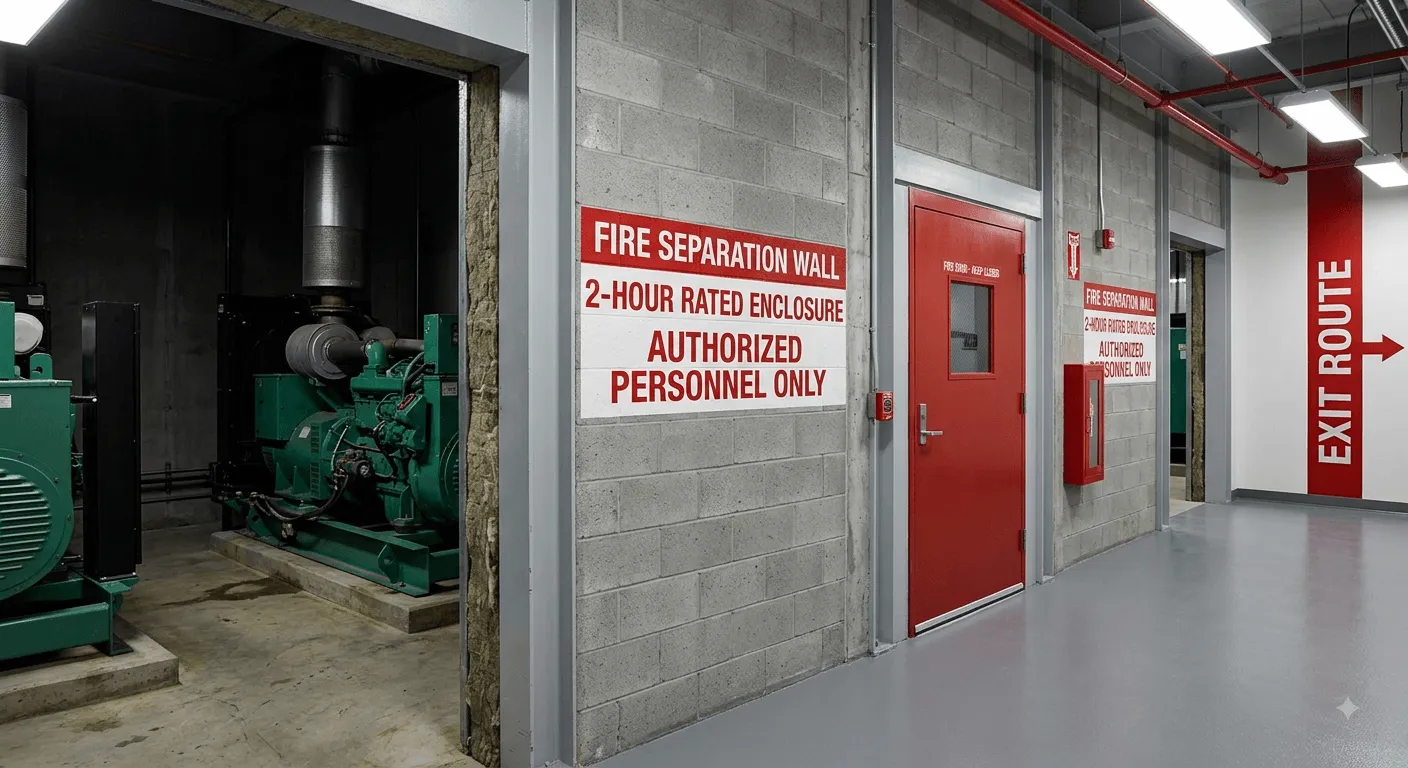

Electrical cables are an essential part of almost every modern building and infrastructure project. They supply power, support communication systems, operate equipment, and keep critical services running. However, cables can become vulnerable when exposed to fire, extreme heat, and smoke. Damage to cable insulation can result in electrical failure and may affect systems that are essential during an emergency.
A fire-rated cable enclosure system provides a protective barrier around cables, helping limit their exposure to fire and high temperatures. These systems can be particularly valuable in industrial facilities, power infrastructure, commercial buildings, transportation projects, data centers, and other environments where cable reliability is important.
What Is a Fire Rated Cable Enclosure System?
A fire rated cable enclosure system is a protective structure designed to surround electrical cables and cable routes. Depending on the application, an enclosure may be constructed using fire-resistant boards, panels, specialist materials, or other tested components.
The primary purpose is to protect cables from external fire exposure for a defined period. This can help maintain the performance of critical circuits and reduce the likelihood of fire spreading along cable routes.
An enclosure system should not be viewed simply as a physical box around cables. Its performance depends on the complete system, including joints, access panels, supports, penetrations, and connections.
Why Is Cable Fire Protection Important?
Electrical cables can extend across large sections of a building. They may pass through walls, ceilings, floors, shafts, tunnels, equipment rooms, and service corridors. These routes can create pathways through which fire and smoke may move.
During a fire, excessive heat can damage cable insulation and other components. If critical cables fail prematurely, important systems may stop operating when they are needed most.
A suitable electrical cable fire protection strategy can help address these risks by creating separation between cables and the surrounding fire environment.
Protection can be especially important for circuits serving:
- Emergency lighting
- Fire detection and alarm systems
- Communication systems
- Security and access-control equipment
- Emergency ventilation systems
- Essential power supplies
- Industrial control systems
- Critical monitoring equipment
How Fire Rated Cable Enclosures Work
The basic principle is to create a fire-resistant barrier around the cable installation. When the surrounding area is exposed to fire, the enclosure helps reduce the amount of heat and flame reaching the cables.
The exact performance depends on the design and tested characteristics of the system. Some systems are designed to provide circuit integrity for a specified duration, while others may primarily focus on preventing fire exposure from affecting adjacent cable routes.
A properly designed enclosure can help:
- Reduce direct flame exposure
- Limit heat transfer to cables
- Protect cable insulation
- Maintain the functionality of selected circuits
- Reduce the possibility of fire spreading through cable routes
- Improve the overall resilience of critical electrical infrastructure
Where Are Fire Rated Cable Enclosures Used?
The need for cable protection varies from project to project. However, fire rated enclosures are commonly considered in locations where cable failure could have significant consequences or where cables are exposed to elevated fire risks.
Potential applications include industrial plants, substations, power distribution facilities, commercial buildings, hospitals, transportation infrastructure, data centers, and utility installations.
They may also be useful around high-risk equipment areas where cables are located close to generators, transformers, switchgear, or other electrical equipment.
High Voltage Cable Fire Protection
High voltage installations require additional attention because of the energy associated with these systems and the potential impact of equipment failure.
High voltage cable fire protection may involve dedicated enclosure systems, barriers, separation measures, or other engineered solutions depending on the installation.
The protection approach should account for cable configuration, voltage level, equipment arrangement, fire hazards, environmental conditions, and the required protection duration.
For example, cables located near high-risk electrical equipment may require greater protection than cables installed in a lower-risk service area.
Important Design Considerations
Selecting an enclosure should be based on the specific installation rather than simply choosing a product based on its fire rating.
1. Cable Configuration
The number, size, spacing, and arrangement of cables can influence the design. Cable trays, ladders, conduits, and individual cable runs may require different approaches.
2. Required Fire Resistance
The required fire-resistance period should be established according to the project's fire strategy, applicable regulations, and the importance of the circuits being protected.
3. Installation Environment
Environmental conditions can affect the durability of an enclosure. Moisture, dust, chemicals, temperature variations, vibration, and mechanical impact should be considered.
4. Access and Maintenance
Electrical systems need regular inspection and maintenance. An enclosure should therefore provide appropriate access while maintaining its intended fire performance.
5. Penetrations and Joints
Small gaps can compromise a fire protection system. Cable entries, joints, corners, supports, and penetrations through fire-rated walls or floors need to be properly addressed.
The Importance of Testing and Certification
A fire-rated cable enclosure should have appropriate test evidence for its intended application. Fire performance can depend on the exact construction, materials, dimensions, installation method, and supporting components.
Project teams should review relevant test classifications, certification, installation instructions, and applicable standards before specifying a system.
It is also important to ensure that the installed system matches the configuration that was tested. Changing materials, dimensions, supports, or installation methods without appropriate engineering review can affect performance.
Integrating Cable Protection Into Fire Safety Design
Cable protection should ideally be considered during the early design stages of a project. Early coordination between electrical engineers, fire safety professionals, architects, and contractors can help identify critical cable routes and high-risk areas.
This can also reduce installation conflicts and avoid expensive modifications later.
A complete fire strategy should consider cable routes alongside fire compartmentation, fire stopping, equipment separation, emergency systems, and other passive fire protection measures.
Protecting Critical Cable Infrastructure
A fire-rated cable enclosure system is an important component of electrical fire safety where cables need protection from fire and high temperatures. When correctly designed and installed, it can help protect critical circuits and reduce the potential impact of a fire on essential electrical infrastructure.
From high voltage installations to commercial buildings and industrial facilities, cable protection should be selected according to the specific risks and requirements of each project.
Effective electrical cable fire protection is ultimately about maintaining the reliability of systems that people and facilities depend on during an emergency. Careful planning, appropriate system selection, proper installation, and ongoing inspection are key to achieving dependable fire protection performance.























Sign in to leave a comment.