

Planning a maiden voyage to the Thar Desert requires a thoughtful balance between centuries-old architectural grandeur and the raw beauty of shifting dunes. Jaisalmer, fondly called the Golden City because of its distinctive yellow sandstone facades, offers an encounter with living history unlike anywhere else in Rajasthan. Having guided countless travelers through the narrow alleys of the fort and out onto the crests of Sam Sand Dunes, our team at Rajwada Desert Camp has structured this authoritative, step-by-step itinerary to make your first trip seamless, comfortable, and unforgettable.
Arrival and Stepping Into the Living Fort
Start your morning inside Sonar Qila, the Jaisalmer Fort. Unlike most forts across India that serve solely as preserved museums, Jaisalmer Fort is a living ecosystem where nearly a quarter of the old city's population still resides. Entering through its massive gates—Akhai Pol, Surya Pol, Ganesh Pol, and Hawa Pol—reveals multi-generational homes, rooftop cafes, spice merchants, and artisans carving camel bone and brass.
To navigate the fort efficiently, visit early in the morning around 8:30 AM before tourist footfall surges and temperatures climb. Allocate at least two hours to explore the Maharaja's Palace (Raj Mahal), which houses an extensive collection of royal textiles, medieval armaments, and elevated vantage points looking out across the desert horizon.
Within the same ramparts stand seven interconnected Jain Temples built between the twelfth and fifteenth centuries. The intricate yellow sandstone filigree, vaulted marble ceilings, and carved representations of Tirthankaras display extraordinary masonry skill. Dress modestly when entering, ensure shoulders and knees are covered, and remove all footwear and leather articles at the perimeter.
Marveling at Golden Havelis and Gadisar Lake
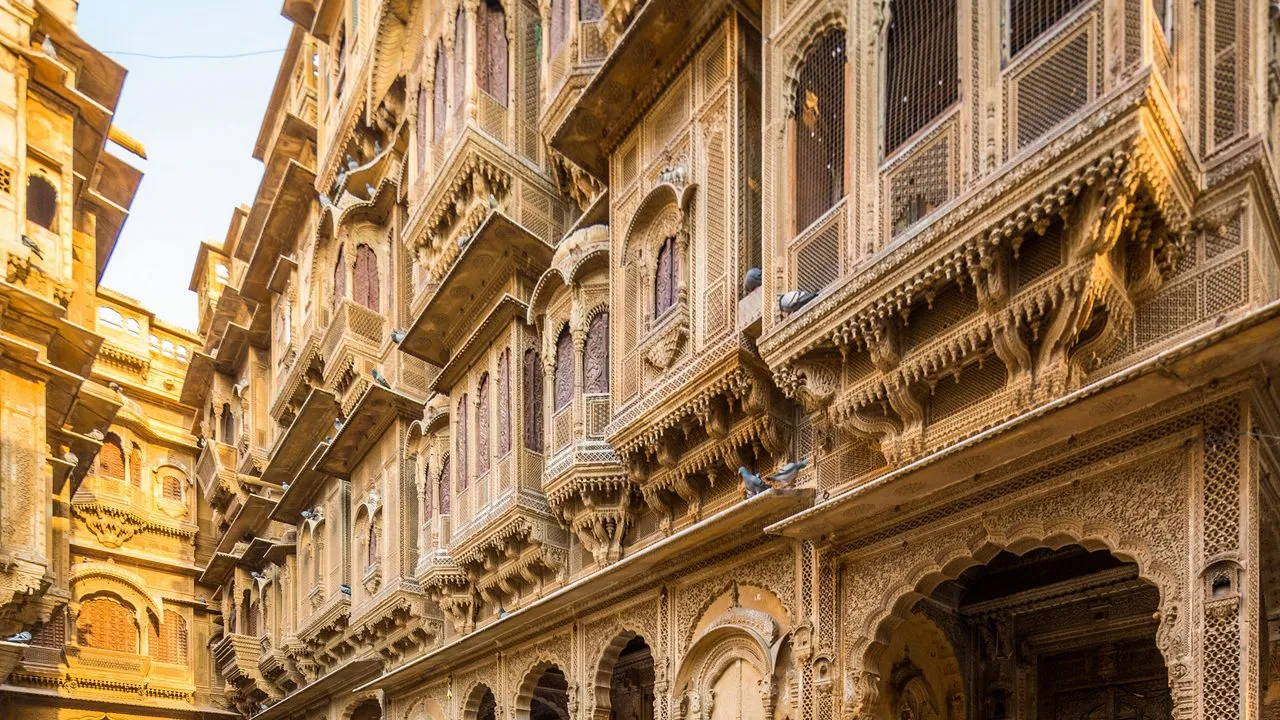
Once you descend the fort hill, enter the labyrinthine lanes of the town to witness private mansions built by wealthy Marwari merchants during the peak of Silk Road trading routes. The foremost among them is Patwon Ki Haveli, a cluster of five individual residences constructed between 1800 and 1860. Each haveli exhibits intricate jharokhas (balconies) carved from stone so finely that the yellow rock mimics delicate wooden lace.
A short walk away lies Salim Singh Ki Haveli, recognizable by its peacock-shaped roof brackets, followed by Nathmal Ki Haveli, an architectural oddity where two master-mason brothers each carved one half of the building simultaneously without matching the designs identically.
In the late afternoon, head south to Gadisar Lake, a historic rainwater harvesting reservoir excavated in the fourteenth century by Maharawal Gadsi Singh. As dusk approaches, hire a rowboat to float past the carved chhatris and shrines rising directly out of the calm water, and capture views of the grand Tilon Ki Pol gateway bathed in setting sunlight.
Heading into the Dunes and Desert Adventures
No Jaisalmer journey is complete without venturing 40 kilometers westward into the open Thar Desert, where rolling sands replace sandstone walls. Spending the night in a luxury camp in jaisalmer bridges the gap between rugged desert wilderness and modern hospitality, offering insulated Swiss tents, private ensuites, and starlit serenity.
The afternoon is the ideal window to experience high-energy Jaisalmer advanture activities, where expert drivers take four-wheel-drive SUVs across steep, shifting ridges during dune bashing, or you take the handlebars on an all-terrain quad bike. For a more tranquil perspective, embark on a camel trek that meanders deep into the undisturbed ripples of the Sam dunes, allowing you to watch the golden light turn into violet dusk away from the crowds.
As night falls, desert camps assemble around crackling campfires. Guests are treated to soulful performances by hereditary Langa and Manganiyar musicians, accompanied by the swirling, energetic footwork of Kalbelia dancers, culminating in an authentic Rajasthani dinner featuring Dal Baati Churma and Ker Sangri.
Ghost Villages, Royal Cenotaphs, and Desert Secrets
Before leaving the Thar region, explore the historical oddities and memorial grounds located on the desert fringes. Dedicate your final morning to visiting Kuldhara, an abandoned village dating back to the thirteenth century. Once inhabited by prosperous Paliwal Brahmins, all eighty-four surrounding villages were abandoned overnight in the early 1800s to escape the tyranny and extortionate taxes of prime minister Salim Singh. Walking among the roofless stone foundations gives a haunting glimpse into desert resilience.
Nearby stands Khaba Fort, another abandoned Paliwal settlement that serves as an open-air museum housing ancient pottery, fossils, and hundreds of peacocks that gather along the fortress walls at dawn.
Conclude your sightseeing circuit at Bada Bagh, a quiet memorial garden north of Jaisalmer that houses yellow stone chhatris constructed in honor of the Bhatti dynasty rulers, starting with Maharawal Jait Singh. The carved cenotaphs sit atop an elevated hillside alongside wind turbines, presenting a photogenic convergence of ancient royal reverence and modern engineering.
Practical Planning Tips from Local Experts
Timing your travel makes a decisive difference in your overall experience:
- Best Travel Season: October through March provides clear skies and pleasant daytime temperatures between 15°C and 28°C, though night temperatures in the dunes can drop below 8°C.
- Footwear: Paved fort paths are steep, polished, and slick from centuries of use, so sturdy, slip-resistant walking shoes are essential.
- Hydration: The arid Thar atmosphere extracts moisture quickly, even during cooler winter months; carry reusable water flasks everywhere.
- Curated Itineraries: Booking a comprehensive 02 Night 03 Days Jaisalmer Couple Package removes logistics friction by seamlessly bundling private city transfers, guided heritage explorations, dune safaris, and luxury glamping.

























Sign in to leave a comment.