Experience the Magic of Marrakech: A First-Timer's Souk Guide

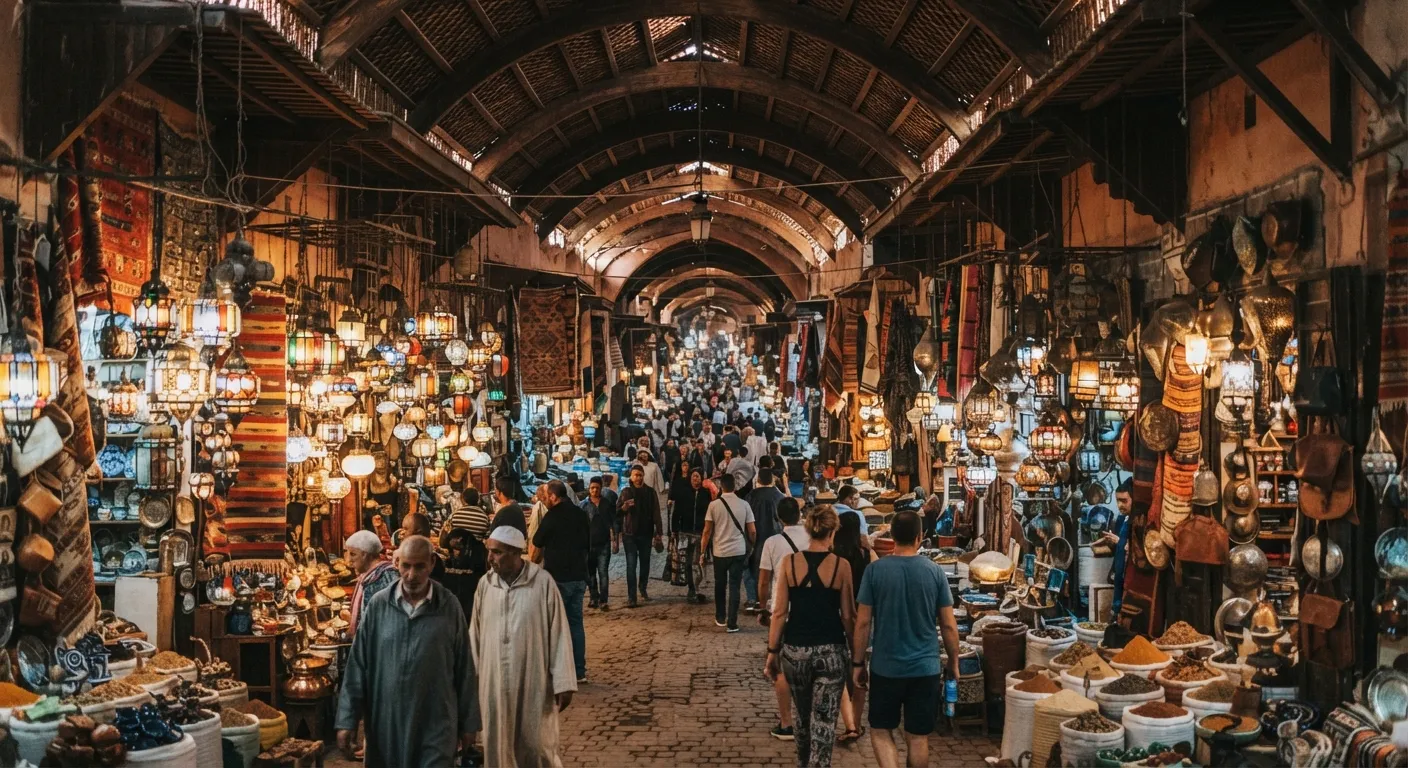
The first ten minutes in the Marrakech medina are loud, bright and a little bewildering. A moped squeezes past a handcart, a shopkeeper calls out that the lanterns are “special price, just for you,” and the lane you came down has already split into three. Nothing is going wrong. This is how a walled city founded in the 11th century behaves when you arrive with a phone and a loose plan.
Below is how the souks are organized, how to stay oriented, how prices work, and when a guide actually earns the fee.
Get the layout in your head first
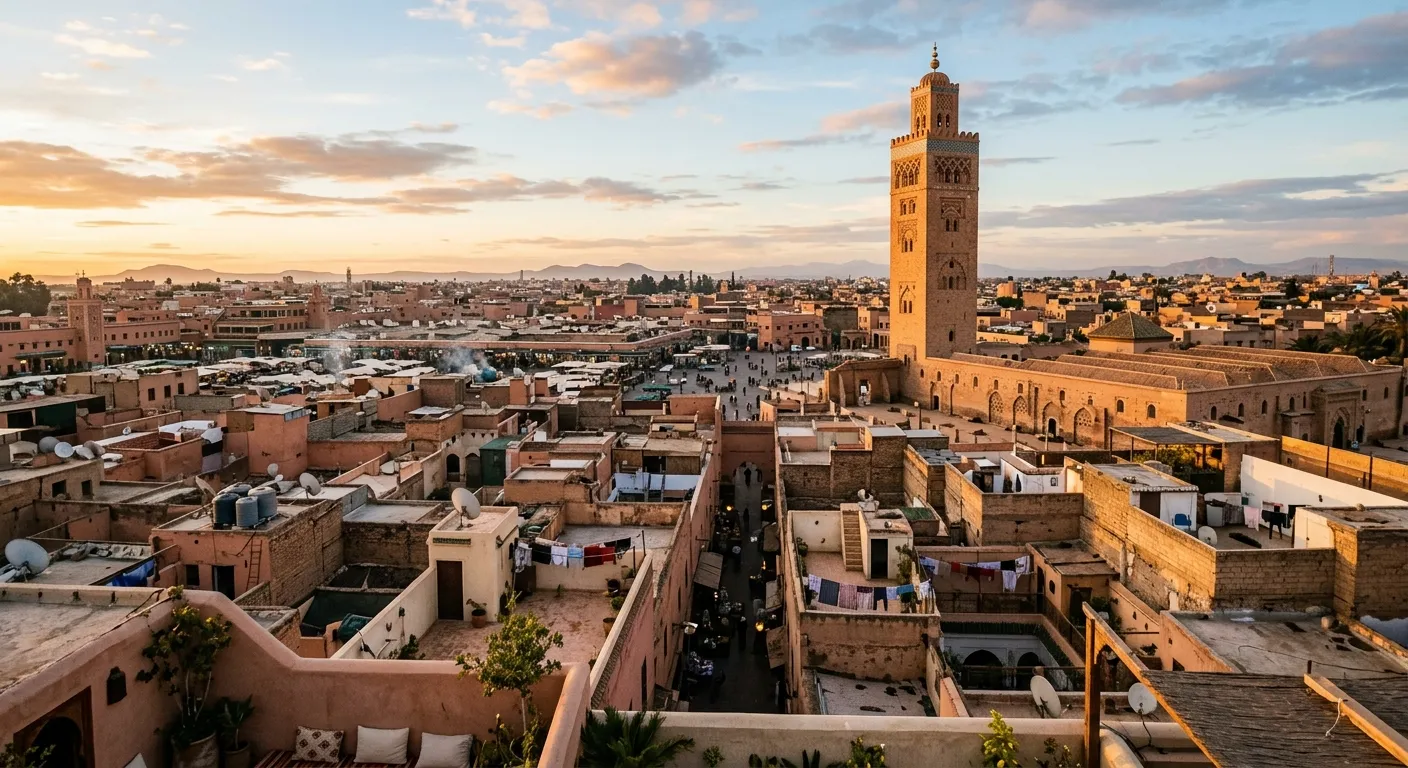
The medina is the old walled city, and UNESCO has listed it as a World Heritage Site since 1985. Almost everything useful sits around Jemaa el-Fnaa, the big square at its center. The souks start just north of it, and the main artery is Souk Semmarine, a covered street that runs away from the square.
Trades tend to cluster, which makes the maze easier to read. Metalworkers hammer lanterns and trays in Souk Haddadine. Slippers, bags and leather goods have their own lanes. Spice sellers and herbalists gather around Rahba Kedima, an older and quieter square than Jemaa el-Fnaa. In the dyers’ lanes, skeins of freshly colored wool hang overhead to dry, and it’s the best five minutes of photography you’ll get. Once you know shoes live in one pocket of the maze and lamps in another, you can walk with a purpose instead of drifting.
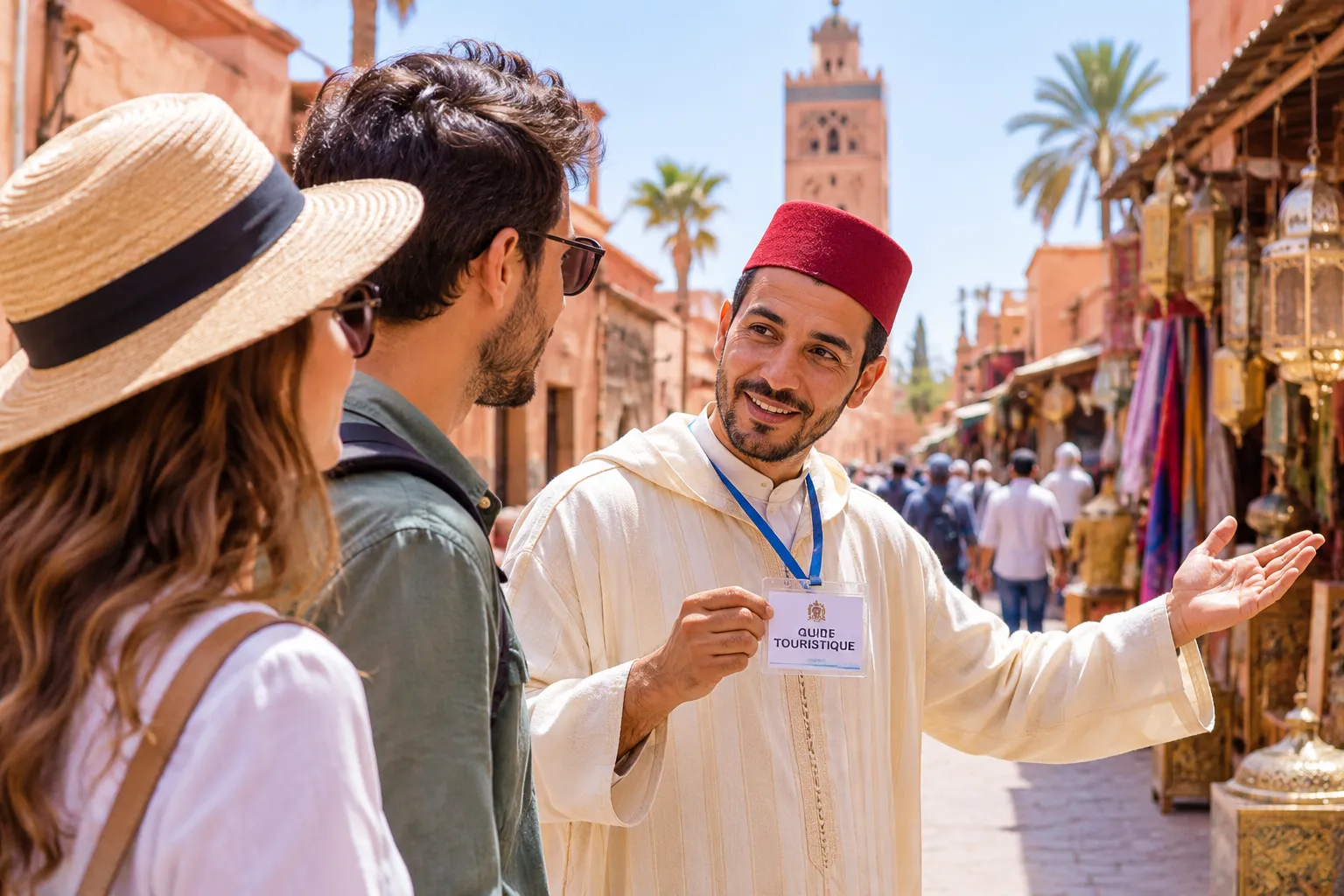
If you’d rather walk it with someone who knows the shortcuts, a private Marrakech city tour led by a licensed guide lets you set the pace and skip whatever doesn’t interest you.
Stay oriented without a perfect map
GPS drifts under the covered lanes, so use your phone to confirm the general direction, not the exact turn. A few habits work better:
- Pick two anchors. Jemaa el-Fnaa is one. The Koutoubia minaret, which shows above the rooftops from many open spots, is the other.
- Photograph your riad’s door and carry its card. If you give up, a shopkeeper can point you or call for help.
- Ask people behind counters for directions, not someone who walks up and offers.
- Be wary of anyone who says the road ahead is closed or that the tanneries are “this way.” That’s a common opening for unofficial guides. A friendly “no, thank you” and a steady pace is enough.
- When you hear “balak!”, step to the side. It means watch out, and a handcart or a motorbike is right behind you.
Timing helps more than any app. Most shops open mid-morning, and the lanes are calm before the crowds and the heat arrive. Early afternoon is the hardest stretch.
How prices and bargaining work
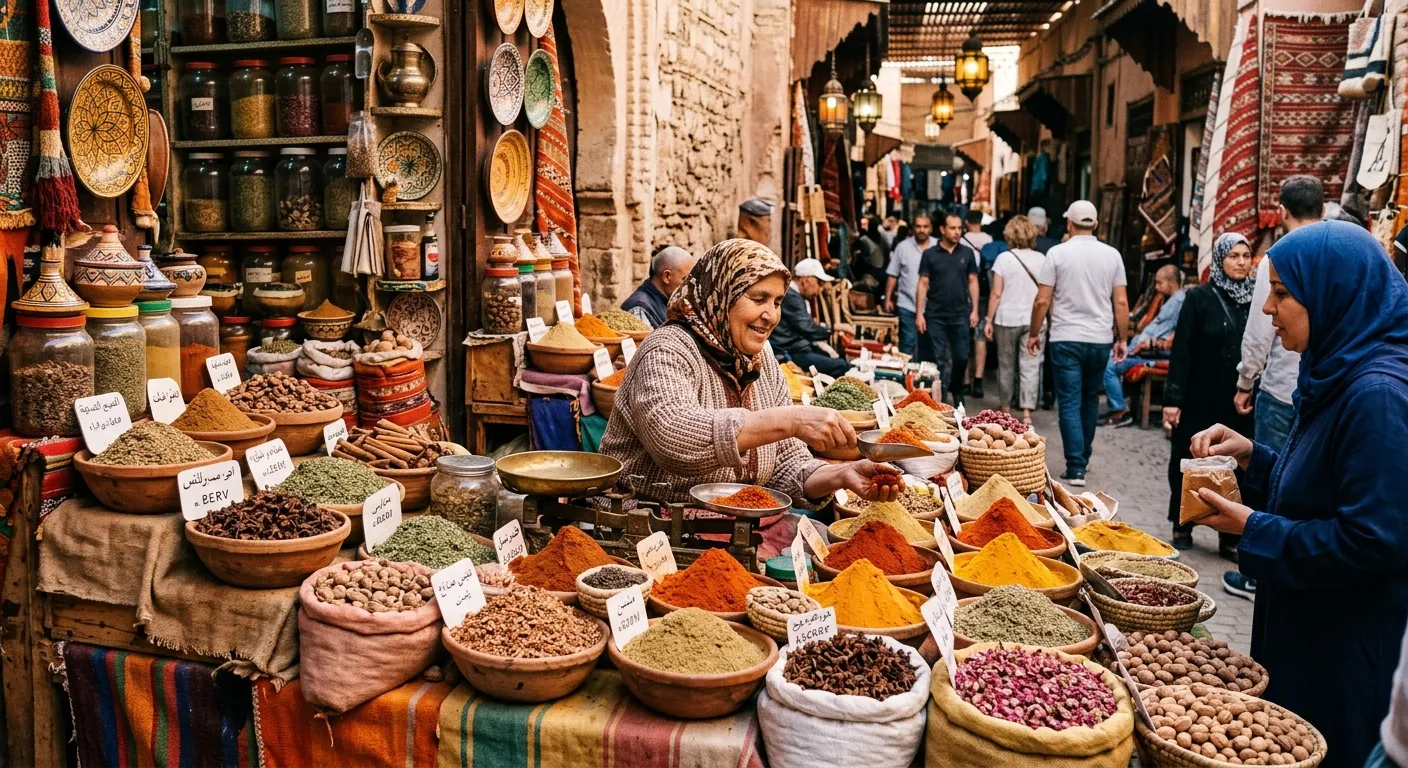
Few items carry a price tag. The first number you hear is the start of a conversation, not a verdict. A common rule of thumb is to counter at around half and settle somewhere in the middle, but the better rule is to decide your own ceiling before you walk in. If the number never gets there, walking away politely is part of the process, and nobody takes offense.
A few practical points:
- Don’t bargain for things you don’t want. Counter-offering signals a real intention to buy.
- Accepting mint tea is hospitality. It doesn’t oblige you to buy anything.
- Check fixed prices at the state-run artisan complex, the Ensemble Artisanal, before you shop. They give you a baseline for rugs, leather and ceramics.
- Carry small notes in dirhams. Large bills are often hard to break in small shops.
- Ask before photographing people, especially artisans at work. Many say yes. Some will ask for a small tip.
Is a guide worth it?
Plenty of people do fine alone for an afternoon, and it’s a reasonable first walk. A guide starts to make sense in a few situations. It’s your first day and you want orientation. Your time is short. You care about a specific craft, like rugs or lamps, where the quality differences aren’t obvious to a beginner. Or you’re traveling with kids or older relatives who tire quickly.
If you do book one, look for a licensed guide, who carries an official ID. Also ask how the route handles shopping stops, since some itineraries are built around commission-paying shops. Companies offering private Medina experiences usually let you say up front which stops you want to skip.
A realistic first morning
Start around 9:30 at the edge of Jemaa el-Fnaa and walk up Souk Semmarine at an easy pace. Detour to Rahba Kedima for spices and herbalists, then continue toward the Ben Youssef Madrasa, a short walk north of the souks.
Stop for tea somewhere with a view of the street. By noon, head back toward the square, before the heat peaks, and eat lunch somewhere quiet.
The souks reward a slow first pass. Walk one loop, get a little lost once, and buy one thing you’d happily carry home. The second afternoon will feel like a different place.




Sign in to leave a comment.