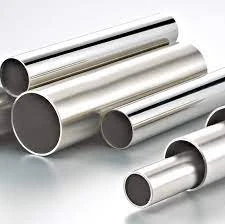

Nickel-iron-chromium is used to make Incoloy 800, 800H, and 800HT pipe, which has good strength and exceptional resistance to oxidation and carburization when exposed to high temperatures. Except for alloy 800H's increased carbon content and alloy 800HT's addition of up to 1.20% aluminium and titanium, these nickel steel pipes are identical. The first of these alloys was Alloy 800 Pipe per ASTM B407, which was later changed to become Incoloy 800H. The goal of this modification was to maximise the stress rupture properties by controlling the carbon content (0.05%–0.10%) and grain size. Incoloy 800HT has additional adjustments made to the combined titanium and aluminium levels (0.85%-1.20%) to ensure the best high-temperature characteristics.
For high-temperature structural applications, the Incoloy 800 Pipes were specifically designed. Due to the nickel concentration, this pipe is extremely resistant to both embrittlement caused by the precipitation of the sigma phase and chloride stress-corrosion cracking. Incoloy Alloy 800 Exhaust Pipe has strong general corrosion resistance. The creep and stress rupture properties of alloys 800H and 800HT are superior in the solution annealed state.
For applications that can endure temperatures of 1100° F, Incoloy 800 is generally employed. When a requirement for resistance to creep and rupture exists, alloys 800H and 800HT are typically employed. With respect to carburization, oxidation, and nitriding atmospheres, the nickel steel alloy has outstanding chemical balance and resistance. With regard to cold forming, 800HT pipework exhibits excellent properties normally found in nickel-chromium alloys and is also weldable using conventional methods.










Sign in to leave a comment.