
Have you ever watched a child’s face light up with understanding? That moment of pure connection is what every educator lives for. But when you're teaching the Quran to a child with special needs, the path to that "aha!" moments can feel uncharted. I remember feeling a mix of excitement and trepidation the first time I was asked to tutor a young boy with autism. The traditional methods I knew so well suddenly seemed inadequate. It was a journey that taught me more about patience, creativity, and the vastness of Allah's mercy than I ever could have imagined.
Teaching the Quran isn't about a one-size-fits-all curriculum. It's about nurturing a connection with Allah, and every single soul, regardless of its challenges, is worthy of that beautiful relationship. The goal isn't to force them into a mold but to gently adapt the mold to fit their unique mind and heart.
Understanding the Foundation
Before we dive into strategies and techniques, we must lay the right foundation. Teaching any child requires knowledge, but teaching a child with special needs requires a specific mindset. It demands immense patience, deep empathy, and an unshakable belief that this child is a complete and whole individual, created by Allah with a unique purpose.
The Prophet Muhammad (peace be upon him) said, “The believers in their mutual kindness, compassion and sympathy are just like one body. When one of the limbs suffers, the whole body responds to it with wakefulness and fever.” (Sahih al-Bukhari). This Hadith is our guiding light. We are one body, and it is our collective responsibility to ensure that every limb, every child, feels included in the Ummah’s spiritual and educational life. Your role is not just that of a teacher, but of a compassionate guide.
Getting to Know Your Unique Learner
You cannot teach a child you do not understand. The term "special needs" encompasses a wide spectrum, from Autism Spectrum Disorder (ASD) and Down Syndrome to ADHD, dyslexia, and physical disabilities. Each child has their own strengths, challenges, and ways of processing the world.
Start by observing. What calms them? What overstimulates them? Are they a visual learner who benefits from pictures, or a kinesthetic learner who needs to move? This initial assessment is crucial, whether you're a parent at home or an educator in dedicated Quran classes for special learners. Never underestimate the power of collaboration; talk to their parents or caregivers. They are the experts on their child and can provide invaluable insights into what works best at home. This collaborative approach isn't just helpful; it's essential. It shows the child that they are surrounded by a team that loves and supports them.
Creating a Sensory-Friendly Learning Environment
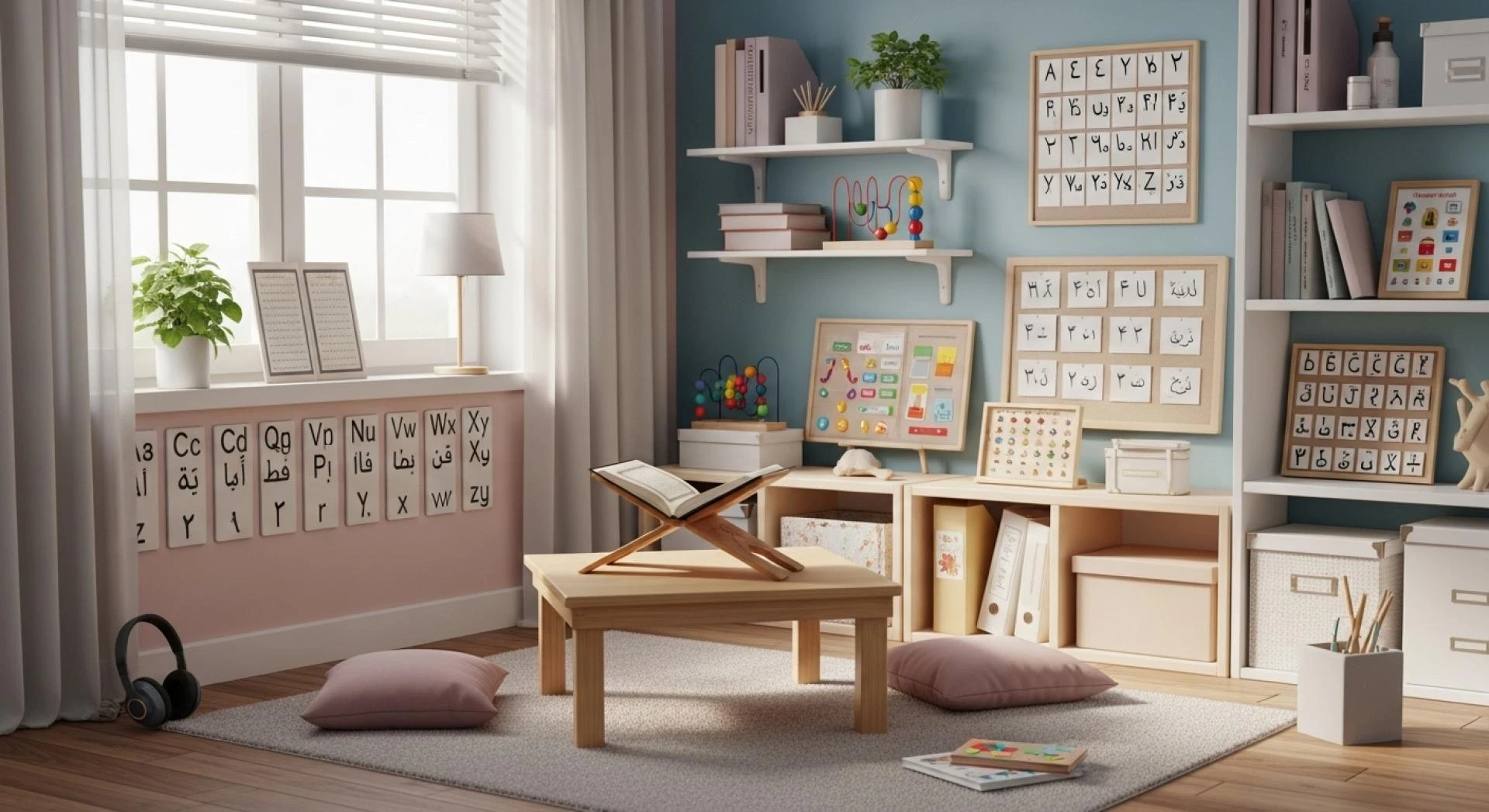
For many children with sensory processing differences, the environment can be a bigger hurdle than the lesson itself. A space that is too loud, too bright, or too cluttered can make learning impossible.
Think about creating a calm, predictable, and safe corner for learning. Use soft lighting instead of harsh fluorescent lights. Have noise-canceling headphones available if sounds are distracting. Allow for movement breaks perhaps a few minutes of stretching or walking after memorizing a short ayah. The physical space should say, "You are safe here, and you can learn here." This foundational step makes all the subsequent teaching possible.
Tailoring Your Teaching Methods: Practical Strategies
Now, let's get practical. How do you translate these principles into actual teaching? Here are some adaptable strategies that have worked wonders in my experience.
Use Visual Supports Extensively
- Utilize picture cards for Arabic letters, prayer positions, and Quranic stories.
- Create visual schedules to outline the lesson flow and reduce anxiety.
- Implement visual timers to help manage time and transition between activities.
Incorporate Multi-Sensory Activities
- Trace Arabic letters in sand or form them with play-doh for tactile learning.
- Sing verses melodically and use audio resources to engage the sense of hearing.
- Turn lessons into movement games, like jumping to the correct letter card.
Keep Instructions Simple and Repetitive
- Break down tasks into very small, manageable steps.
- Use clear, direct language and repeat instructions patiently.
- Consistently practice concepts and celebrate every small effort.
The Power of Technology and Specialized Programs
In our digital age, we have incredible tools at our fingertips. There are numerous apps designed to teach Arabic and the Quran in an interactive, game-based format. These can be highly engaging for children who are drawn to screens.
Furthermore, seeking out specialized Quran classes for special learners can be a game-changer for families. These programs are often designed by experts who understand both Islamic education and special needs pedagogy. They provide a structured, supportive environment where your child is not the exception but the rule. This allows them to learn alongside peers and build a positive Islamic identity. For instance, exploring a dedicated online program can offer a tailored curriculum that meets your child right where they are.
Nurturing the Spirit Beyond Recitation
Our ultimate goal is not just perfect Tajweed. It is to plant the seed of love for Allah and His Quran in the child's heart. Sometimes, this looks less like formal teaching and more like connection.
Tell them stories from the Quran that emphasize Allah's love and mercy. Help them understand that Allah knows their struggles and loves them immensely. Encourage any expression of their connection, whether it's through drawing a picture of Paradise, helping to lay out the prayer mat, or simply saying "Alhamdulillah" when they are happy. The National Institute of Child Health and Human Development emphasizes the importance of adapting educational approaches to support a child's developmental needs, which directly applies to their spiritual development as well.
Your Journey as a Parent or Teacher
This journey will require you to dig deep. You will need to be patient with yourself. There will be days of frustration and days of immense joy. Celebrate every small victory the first time they recognize an Arabic letter, the first time they sit through a whole lesson without distress, the first time they spontaneously make Dua.
Remember, you are not alone. Seek support from other parents and educators. Make Dua for guidance and ease. As Allah says in the Quran, “And We have certainly made the Qur’an easy for remembrance, so is there anyone who will remember?” (Surah Al-Qamar, 54:17). Trust that Allah has made the Quran accessible, and your role is to find the key that unlocks it for this unique child.
Final Thoughts
Adapting Quran teaching for a child with special needs is not a burden; it is a privilege. It is an act of worship that refines your own character and brings you closer to Allah. You are facilitating a relationship between a beloved soul and its Creator. You are ensuring that the message of the Quran reaches every heart, in the way it was always meant to. The path may be different, but the destination, the pleasure of Allah and the love of His words is the same. And that makes every single step worthwhile.









Sign in to leave a comment.