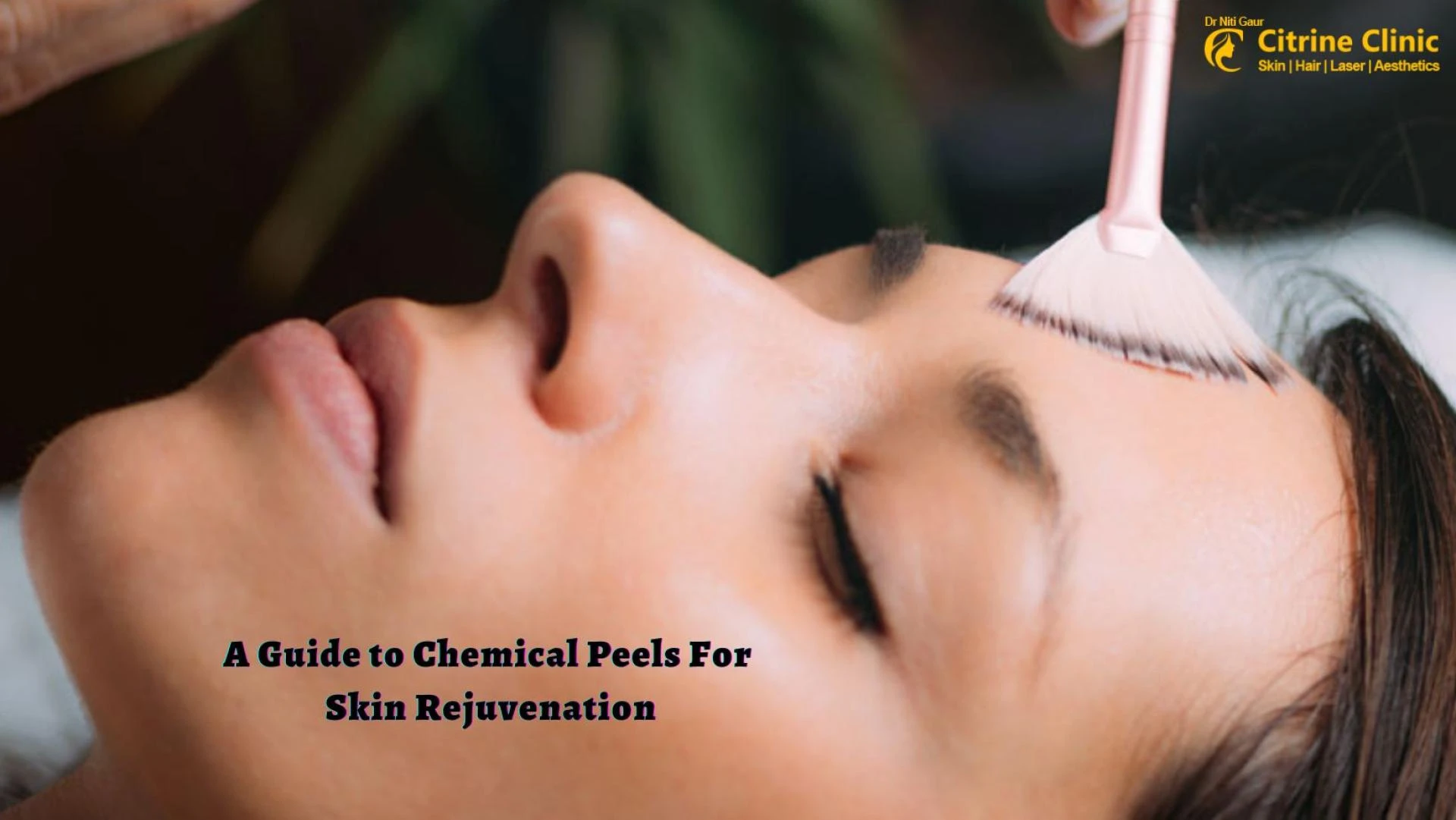

Chemical peels have been used for a while now and they are considered to be extremely effective. They can treat a wide range of issues, including melasma, hyperpigmentation, acne, acne scarring, and other effects of aging.
In this blog, Dr. Niti Gaur, the Best Dermatologist in Gurgaon at Citrine Clinic, discusses chemical peel treatment in detail. Keep reading for more information.
What are Chemical Peels?
Chemical peels are dermatological non-surgical cosmetic procedures that carefully exfoliate the skin using various acid components, including phenol, alpha, and beta hydroxy acids, as well as other natural ingredients. The epidermis and dermis are the two skin layers that are affected by chemical peels. The epidermis is the outer layer and the dermis sits beneath it.
A controlled number of damaged skin cells from the epidermis are normally removed by medical-grade chemical peels, and some stronger peels may also remove a small portion of the dermis. Chemical peels help promote and rebuild healthy collagen in the skin by removing the outermost layer(s) of the skin. The new, revealed skin will have a better tone and texture and appear considerably healthier.
At Citrine Clinic, the skin experts in Delhi use a variety of chemical peels to treat a range of skin issues. These include treating sun damage, hyperpigmentation, and melasma, reversing signs of aging, improving pore size, clearing acne, masking acne & eliminating acne scars, softening fine lines & wrinkles, and stimulating collagen growth and elastin production. Each peel is different and helps to target specific skin problems. Thus, one must get the skin evaluated by a professional prior to the treatment.
What are the Three Different Types of Peels?
Light Chemical Peels: Since only the top layer of the epidermis is removed during a light chemical peel, it is frequently referred to as a superficial peel. This procedure uses moderate chemical exfoliants like lactic, citric, or salicylic acids to clean and reduce pores, treat acne, and balance out skin tone with little to no recovery time. Alpha-hydroxy acid or mild acid is mostly used in this procedure to give the neck, face, chest, or hands a refreshed appearance.
Medium Chemical Peels: Medium chemical peels remove the epidermis as well as the top layer of the dermis. A medium peel minimizes the appearance of wrinkles, acne scars, skin discolorations, and an uneven texture by using more potent or more concentrated chemical exfoliants. Depending on the skin type, this can need proper maintenance with multiple treatments as advised by the dermatologist. Glycolic or trichloroacetic acid is primarily used in this treatment to penetrate.
Deep Chemical Peels: It is a type of chemical peel for removing skin cells from the deepest skin layer and is done to treat wrinkles, shallow scars, aging spots, and freckles. Trichloroacetic acid or phenol is primarily used in this process to penetrate deeper into the skin cells and to observe significant improvement.
If anyone wants to get the benefits of Chemical Peel Treatment in Gurgaon for skin glow and brightening, they can pay a visit to Citrine Clinic today!
What Can One Expect During a Chemical Peel?
Depending on the depth of the chemical peel, one may experience a mild burning sensation during the procedure. The number of layers the esthetician applies will depend on how the skin responds. The deeper the peel, the more one will feel. Shortly after it is neutralized, the burning sensation will subside. The peel will stay on the skin for a few minutes. During the peel, the skin might feel tight and may turn pink or red depending on the depth of the peel. The feeling will be similar to that of sunburn.
Does it Have any Side Effects?
It is completely normal to expect dryness and flaking for a few days to a week depending on the depth of the peel. These side effects can be managed with moisturizers and creams. The hazards and negative effects arise when chemical peels are performed by untrained and unlicensed professionals.
There are chances of infection or scarring from the chemical peel especially if the wrong type of chemical peel is performed for a specific skin tone. Additionally, there is a chance of both persistent hypopigmentation and hyperpigmentation. Therefore, it is important to get the procedure from an experienced dermatologist.
To learn more about the chemical peels procedure, book a consultation with Dr. Niti Gaur, the Best Dermatologist in Gurgaon at Citrine Clinic, and get smoother and healthier skin today! The clinic is dedicated to helping one look and feel the best and strives to offer procedures to help one achieve this. For more information, visit Citrine Clinic!











Sign in to leave a comment.