Not everyone seeking addiction treatment needs to live onsite in a residential facility.
For many individuals, structured support combined with the ability to return home each day offers the right balance between clinical care and real-world responsibility. This is where non-residential treatment programs come in.
If you’ve heard terms like PHP, IOP, or Virtual IOP but aren’t sure what they mean, understanding these levels of care can help you determine the right starting point for recovery.
What Does Non-Residential Treatment Mean?
Non-residential treatment often called outpatient care allows individuals to participate in structured therapy and addiction treatment while continuing to live at home.
These programs are designed for people who:
- Do not require 24-hour medical supervision
- Have completed detox or residential treatment
- Have a stable home environment
- Need accountability and structure without full-time care
Outpatient care exists along a continuum, meaning intensity varies based on individual clinical needs.
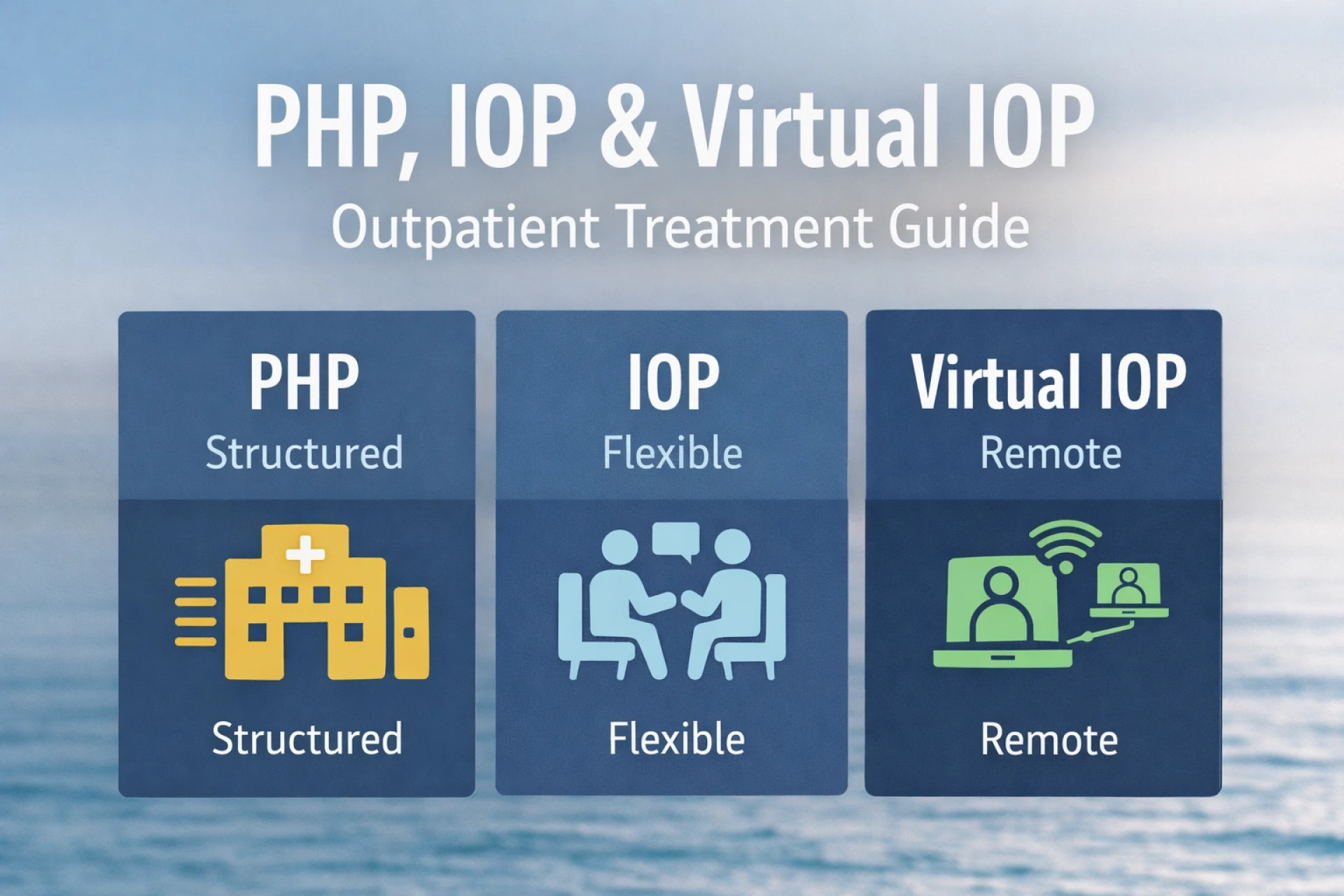
Partial Hospitalization Program (PHP): The Most Structured Outpatient Option
A Partial Hospitalization Program (PHP) is the highest level of outpatient care.
It typically involves attending treatment several hours per day, five to six days per week. While clients return home in the evenings, the daytime structure is intensive.
PHP Often Includes:
- Daily group therapy
- Individual counseling
- Psychiatric evaluations
- Medication management
- Relapse prevention planning
- Skill-building sessions
When PHP May Be Recommended:
- After completing detox or residential treatment
- When strong daily structure is still necessary
- If mental health symptoms require close monitoring
- When relapse risk remains elevated
PHP provides stability while helping individuals gradually re-enter daily life.
Intensive Outpatient Program (IOP): Balanced Structure and Flexibility
An Intensive Outpatient Program (IOP) offers fewer weekly treatment hours than PHP but still maintains meaningful therapeutic engagement.
Clients typically attend therapy three to five days per week for several hours per session.
IOP Focuses On:
- Group therapy and peer support
- Individual counseling
- Emotional regulation skills
- Trigger management
- Ongoing relapse prevention
IOP May Be a Good Fit For:
- Individuals stepping down from PHP
- Those with mild to moderate substance use disorders
- People balancing work, school, or family responsibilities
- Individuals who have built initial stability but still need structure
IOP helps reinforce coping skills while increasing independence.
Virtual IOP: Treatment Delivered Remotely
A Virtual Intensive Outpatient Program provides the same therapeutic structure as traditional IOP but through secure video platforms.
Sessions are conducted online, allowing clients to participate from home.
Virtual IOP Includes:
- Live group therapy sessions
- Individual counseling
- Skills training
- Education about addiction and recovery
- Clinical oversight
Virtual IOP Is Often Ideal For:
- Individuals with reliable internet access
- Those facing transportation barriers
- Professionals or parents needing scheduling flexibility
- Individuals who prefer treatment from home
When delivered with licensed clinicians and clear structure, virtual IOP can be just as effective as in-person outpatient care.
How These Levels Work Together
PHP, IOP, and Virtual IOP are not competing programs, they are part of a progression.
Many individuals move through levels of care as recovery strengthens:
Residential → PHP → IOP → Virtual IOP or Standard Outpatient
This step-down approach allows support to adjust as stability improves.
Benefits of Non-Residential Treatment
Non-residential programs offer several practical and therapeutic advantages:
- Ability to maintain employment or school
- Continued connection with family
- Immediate application of coping skills in daily life
- Lower cost compared to inpatient care
- Gradual transition into independent recovery
For many people, practicing sobriety in real-world environments while receiving structured support strengthens long-term outcomes.
When a Higher Level of Care May Be Needed
Outpatient care may not be appropriate if someone:
- Requires medical detox
- Experiences severe withdrawal symptoms
- Has unstable housing
- Is in acute psychiatric crisis
- Needs 24-hour supervision
In these situations, residential treatment can provide the safety and stabilization required before transitioning to outpatient programs.
The Mainspring Recovery Continuum of Care
At Mainspring Recovery, treatment planning is individualized.
The team provides a full continuum of care from medical detox and residential treatment to Partial Hospitalization (PHP), Intensive Outpatient (IOP), and Virtual IOP levels, ensuring support remains consistent at every stage of recovery.
This integrated system allows clients to:
- Transition safely between levels
- Maintain clinical oversight
- Adjust treatment intensity based on progress
- Receive coordinated care for co-occurring mental health conditions
Recovery is not a single program, it is a process that evolves over time.
Choosing the Right Level of Care
The most effective treatment plan is one that matches both clinical needs and life circumstances.
Some individuals benefit from intensive daily structure. Others thrive with flexibility and accountability.
A professional assessment can determine:
- Current stability
- Relapse risk
- Mental health considerations
- Home environment safety
- Appropriate level of structure
The goal is not simply entering treatment, it’s entering the right level of treatment.
Final Thoughts
Non-residential treatment offers a powerful path to recovery for individuals who need structured care without living onsite.
Whether through PHP, IOP, or Virtual IOP, outpatient programs provide therapy, accountability, and skill development while allowing clients to remain connected to their daily lives.
If you or someone you love is exploring addiction treatment options, Mainspring Recovery can help determine the level of care that aligns with your needs.
Recovery is possible and the right support makes all the difference.



























Sign in to leave a comment.