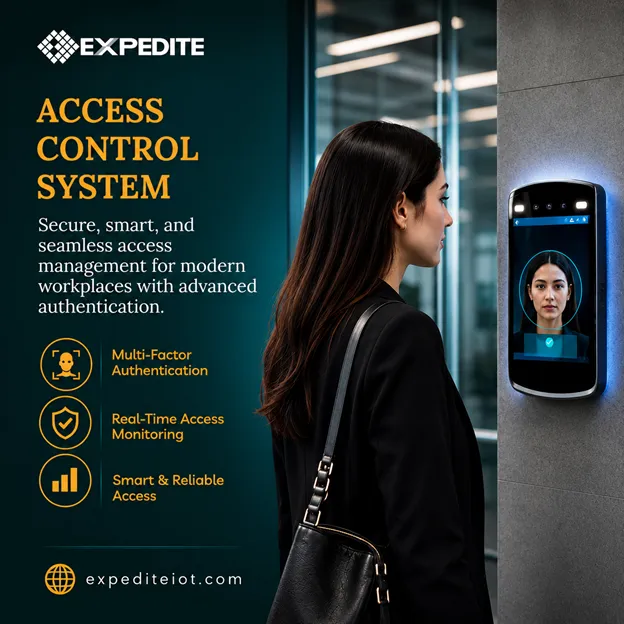

Muscat's growing skyline of corporate towers now houses dozens of independent companies within the same lobby, lift banks, and shared common areas. A dependable Access Control System is what gives each of these tenant’s confidence that only authorized staff and approved visitors can reach their floor, server room, or executive office, without turning the building's ground-floor reception into a daily bottleneck.
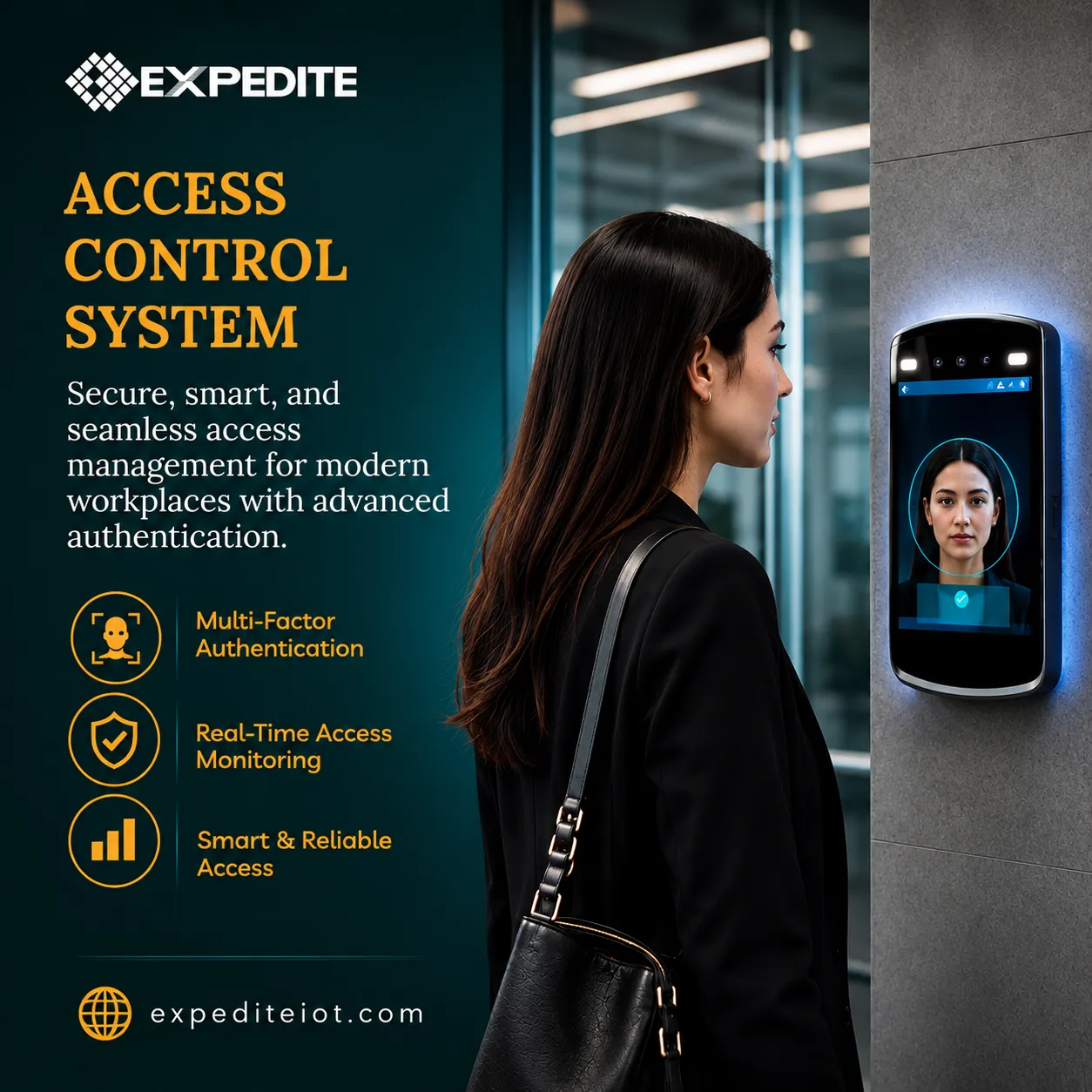
As Oman's business districts continue to attract regional headquarters and multinational tenants into premium office developments, building owners are moving away from single-purpose lock-and-key security toward networked, intelligent systems that manage access across every tenant floor from one centralized platform. For any shared commercial building in the Sultanate, this shift has become a practical expectation rather than an optional upgrade.
Why Oman's Office Towers Need a Dedicated Access Control System
A multi-tenant office tower presents a fundamentally different security challenge than a standalone building. Dozens of companies, each with their own staff, confidentiality requirements, and after-hours schedules, share the same lifts, lobby, and parking structure. A single master key or shared fob system offers no way to separate one tenant's floor from another's, and leaves no record of who entered which space or when.
Digital access systems solve this by assigning every employee, contractor, and visitor a unique, revocable credential tied to a specific set of permissions-floor access, lift call restrictions, and time-of-day rules. If an employee leaves a tenant company or a badge is lost, that credential can be disabled instantly across the entire building without rekeying a single lock, and every access event remains logged for later review.
Core Technologies Behind a Modern Corporate Tower Access Control Solution
A commercial tower's security platform typically layers several complementary technologies rather than relying on one method of verification, since different zones within the same building carry very different risk profiles.
Biometric Access Control System for High-Security Floors
For server rooms, executive suites, and finance departments, a Biometric Access Control System using fingerprint, iris, or facial recognition verifies identity in a way that cannot be shared, borrowed, or duplicated the way a card or PIN can. This is particularly valuable in towers hosting banks, regional headquarters, or government-linked entities, where a single unauthorized entry into a sensitive area could carry serious financial or reputational consequences.
Security Access Control System for Layered, Tenant-Specific Protection
A well-designed Security Access Control System applies different verification levels to different parts of a shared tower - simple card access for general staff corridors, biometric checks for server rooms and executive floors, and dual-factor authentication for particularly sensitive tenant areas. This layered structure lets each tenant configure security proportional to their own risk tolerance without affecting how other companies in the building manage their floors.
Door Access Control for Tenant Suites, Server Rooms, and Shared Facilities
At the individual door level, Door Access Control hardware - electric strikes, magnetic locks, and networked readers - enforces the access policy each tenant sets for their own space. A tenant's server room might remain locked around the clock to all but a handful of IT staff, while their general office entrance stays open to all employees during business hours and locks automatically after a set time each evening.
Mobile Access Control for a Card-Free Employee Experience
Increasingly, corporate tenants in Oman are moving away from physical access cards altogether. Mobile Access Control lets employees unlock approved doors and call lifts directly from a smartphone app using Bluetooth or NFC, reducing the administrative burden of issuing, replacing, and deactivating physical badges - particularly useful for larger tenant companies with frequent staff turnover or hybrid work schedules.
Choosing the Right Access Control Device for a Multi-Tenant Building
Hardware selection should reflect both the traffic volume and risk profile of each entry point across the building. A busy lobby turnstile needs a fast, durable Access Control Device capable of handling thousands of daily reads without failure, while a tenant's server room or records store benefits more from a slower, higher-assurance biometric reader that prioritizes verification accuracy over speed.
Facility managers should also weigh integration capacity when selecting devices - whether a reader can connect to the building's central management platform, feed data into portfolio-wide reporting, and support each tenant's individual access policy - rather than evaluating hardware purely on cost or brand recognition.
Key Benefits of Access Control Solutions for Omani Corporate Towers
Deploying comprehensive Access Control Solutions across a shared office tower delivers benefits that extend well beyond locked doors. Building operators and tenants typically report:
- Real-time visibility into who accessed which floor or suite, and when
- Instant credential revocation when staff roles or tenancy agreements change
- Reduced risk of unauthorized entry into server rooms and executive floors
- Stronger compliance posture through detailed, exportable audit trails per tenant
- Lower long-term costs compared to repeatedly rekeying mechanical locks
- A stronger leasing pitch when marketing available space to security-conscious tenants
The Business Case: Cost and Efficiency Gains for Building Owners
Landlords typically justify an access control investment across several measurable categories: reduced security staffing hours previously spent manually verifying identity at each floor, eliminated costs from rekeying locks after staff turnover, and a stronger leasing position when marketing available space to security-conscious multinational tenants who increasingly expect building-grade access technology as standard.
For property management companies overseeing multiple towers across a portfolio, standardizing on a single access control platform also reduces training overhead for security staff who may rotate between buildings, and enables portfolio-level reporting that would be impossible to compile manually from separate systems at each property.
Access Control System Muscat: Meeting the Capital's Growing Commercial Demands
As Oman's capital and primary business hub, Muscat is home to the country's highest concentration of corporate towers, government ministries, and regional headquarters. An Access Control System Muscat facility can depend on needs to handle dense, multi-floor tenancy structures, high daily footfall through shared lobbies, and integration with visitor management and turnstile hardware increasingly common across the city's premium commercial developments.
For landlords and property management companies operating multiple towers across the wider Sultanate, a scalable Access Control System Oman portfolio can rely on needs to centralize management under a single dashboard, allowing security teams to monitor and adjust access policy across every building without visiting each property individually.
Access Control Use Cases Across Different Types of Commercial Buildings in Oman
Not every commercial property has identical access control needs. Single-tenant corporate headquarters typically want deep integration with their own HR and IT systems, allowing new employee onboarding to automatically provision building access alongside email and payroll setup. Multi-tenant towers, by contrast, need a platform that can serve dozens of independent tenants with different security policies from one shared building infrastructure.
Government ministries and free zone office clusters add a further layer of complexity, often requiring access control to coordinate across multiple buildings on a single campus, shared parking structures, and centralized reporting for the relevant authority alongside each individual tenant's internal requirements.
Typical Deployment Process for a Corporate Tower Access Control System
Rolling out access control across a multi-tenant tower generally involves more coordination than a single-company office, since building management and every individual tenant have a stake in how the system is configured.
1. Building-wide site assessment: mapping every door, lift bank, and shared facility requiring access control.
2. Tenant onboarding: configuring individual floor and suite permissions for each company in the building.
3. Hardware installation: fitting readers, locks, and biometric devices according to each zone's risk profile.
4. Integration: connecting the access control platform with visitor management, turnstiles, and lift dispatch systems.
5. Staff training and rollout: onboarding building security and each tenant's office manager on day-to-day administration.
Because most premium Muscat towers already operate turnstiles and visitor management at the lobby level, integration is typically the most technical phase of the rollout, and the one most likely to determine how smoothly the finished system performs for tenants on a daily basis.
Integrating Access Control with Visitor Management and Turnstile Security
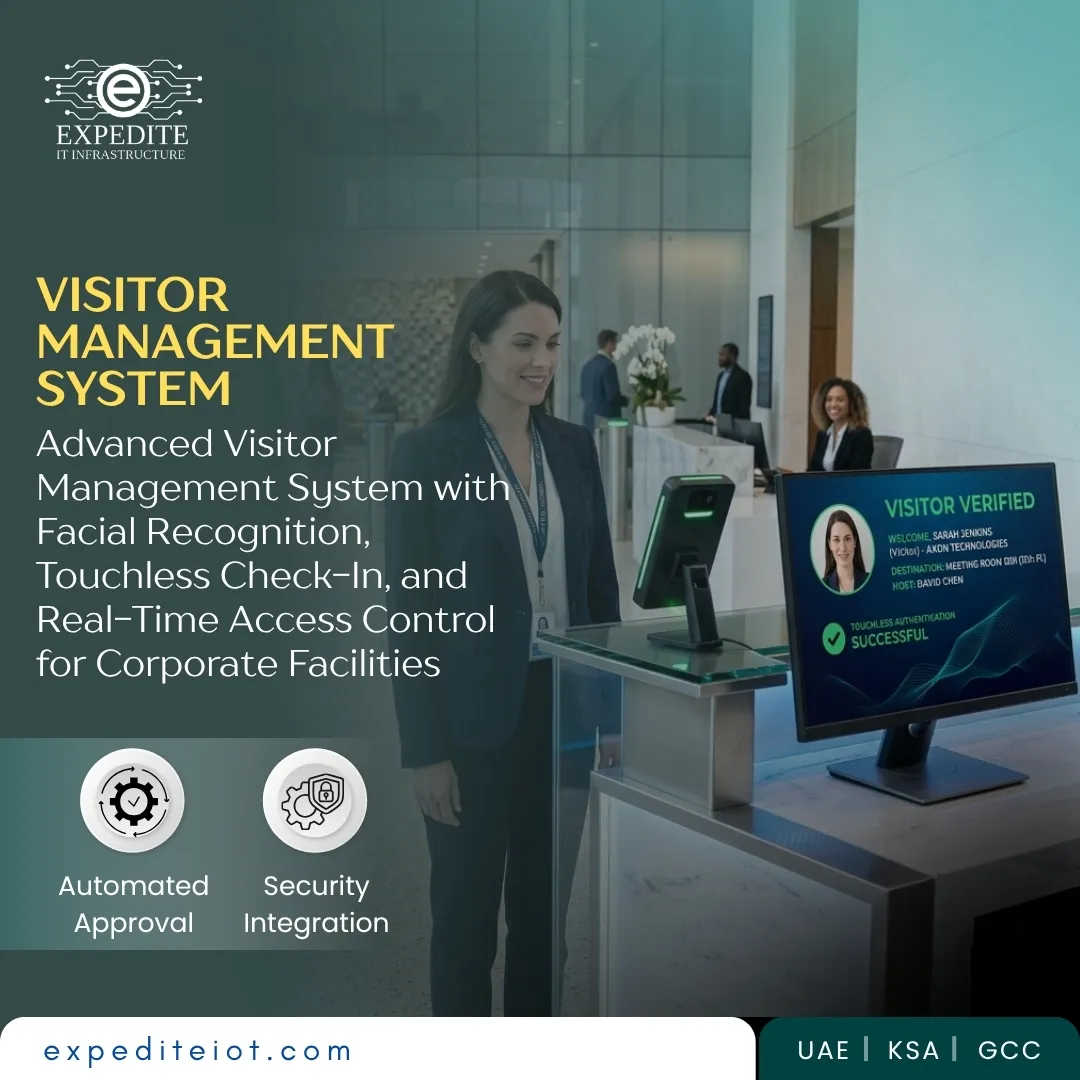
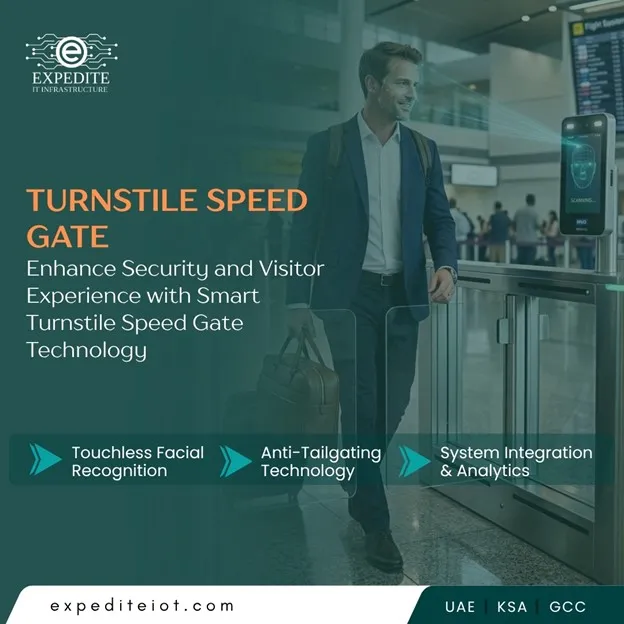
Access control delivers its full value only when connected to the building's broader security ecosystem rather than deployed in isolation. Synchronizing door and lift access with visitor management software ensures a registered guest's temporary credential only opens the specific floor relevant to their meeting, while integration with lobby turnstiles adds a physical layer of crowd and tailgating control at the building's busiest entry point.
This is where Expedite IoT's access control platform stands out for Omani corporate towers - the system is built to integrate biometric readers, visitor management, and turnstile hardware under one centralized dashboard, helping building operators avoid the fragmented, hard-to-manage security stack that often results when these systems are purchased separately from different vendors.
What Building Operators Should Look for in an Access Control Partner
Facilities and security managers evaluating vendors should look for a platform proven in multi-tenant commercial environments specifically, with demonstrated integration experience across common turnstile, visitor management, and lift dispatch brands. Support for per-tenant configuration, portfolio-level reporting for landlords managing several buildings, and responsive local support are all practical differentiators worth confirming during vendor selection.
Because lobby and lift access operates continuously throughout business hours, response time for on-site support during a hardware or software issue is a particularly important factor for any premium building where downtime is highly visible to every tenant and their visitors.
Why Oman's Corporate Towers Trust Expedite IoT for Access Control Deployments
Expedite IoT has deployed biometric and networked access control infrastructure across corporate towers, business parks, and multi-tenant commercial buildings throughout Oman, Saudi Arabia, Qatar, and the UAE, giving the team direct, hands-on experience with the coordination and integration demands unique to shared office environments across the GCC. Every project is supported end-to-end, from initial site survey and tenant onboarding through installation, staff training, and ongoing local maintenance.
For building operators across Muscat and the wider Sultanate evaluating biometric access control solutions for commercial towers, this regional deployment history means fewer integration surprises, faster commissioning, and a support team already familiar with how Oman's premium office towers operate day to day.
Conclusion
Access Control System technology has become essential infrastructure for Oman's multi-tenant office towers. A Biometric Access Control System secures sensitive floors, while layered Security Access Control System design, reliable Door Access Control, and flexible Mobile Access Control work together across every tenant suite. Backed by the right Access Control Device and complete Access Control Solutions, demand for Access Control System Oman and Access Control System Muscat deployments continues to grow across the Sultanate's Grade A commercial market.
FAQs
1. What is an access control system and how does it work in a corporate tower?
It is a digital security platform that verifies identity - via card, PIN, or biometric scan - before unlocking a door or calling a lift, giving each tenant precise, revocable control over who can reach their floor.
2. Why do premium office towers use biometric access control instead of key cards?
Biometric credentials such as fingerprint or facial recognition cannot be shared, lost, or duplicated the way a physical card can, making them better suited to server rooms, executive floors, and other high-security tenant areas.
3. Can access control integrate with a building's visitor management and turnstile systems?
Yes. Integrated systems automatically restrict a visitor's temporary credential to only the floor relevant to their appointment, while turnstiles add a physical layer of control at the main lobby entrance.
4. Is mobile access control secure enough for a multi-tenant office building?
Mobile credentials use encrypted Bluetooth or NFC communication and can be revoked instantly if a phone is lost, making them a secure and convenient alternative to physical badges for tenant employees.
5. How long does it take to install an access control system in an Omani office tower?
Installation timelines depend on the number of tenants and doors involved, but a typical single-building deployment can usually be completed within a couple of weeks once the site survey and tenant onboarding are finished.
Biometric Access Control System




























Sign in to leave a comment.