

Here are just a few ways that B.D. Memorial School recommends guiding your child in his or her creative endeavours:
Turn the wheel of questionsThe natural inclination of children to ask questions comes from their thirst for knowledge and is a crucial stage in their developmental process.
But as a parent of an upper kindergarten child, you don't always have all the answers, and you don't have to. The next time your child asks you how the toaster works, why there are so many traffic lights, or what a turtle eats, urge him to find an answer, first of all, using the knowledge he already has.
Through such interdisciplinary connections, you will arouse his curiosity and involvement even more than by giving him the answers on the tray. Of course, after playing the questions, you can look for the answers together. Which, why not, take us to new questions.
Show him what is possibleThe variety of experiences has a heavy word to say in stimulating children's creativity.
If your child sees as many examples of what has been done in the world as possible, such as pieces of art, architectural jewellery, advances in technology, and cool inventions, and finds out the story behind it, it will be easier for him to understand that the world is in a continuous process of creation. A process to which he can make his contribution, just like anyone else.
It is important, however, not to put those previous accomplishments on an untouchable pedestal, but to ask your child how he would do things differently, what he likes, and what he would add if given the opportunity.
Create a small material repositoryChildren love to explore the world around them with their touch.
If you have a child who has no peace, plays with food, or touches everything when you go to the park or the store, provide him with a special sector of materials with which he can play and create at will. Sure, maybe the creative projects that come out of this will create a little chaos around the house, but hey, out of the chaos we raise creative children.
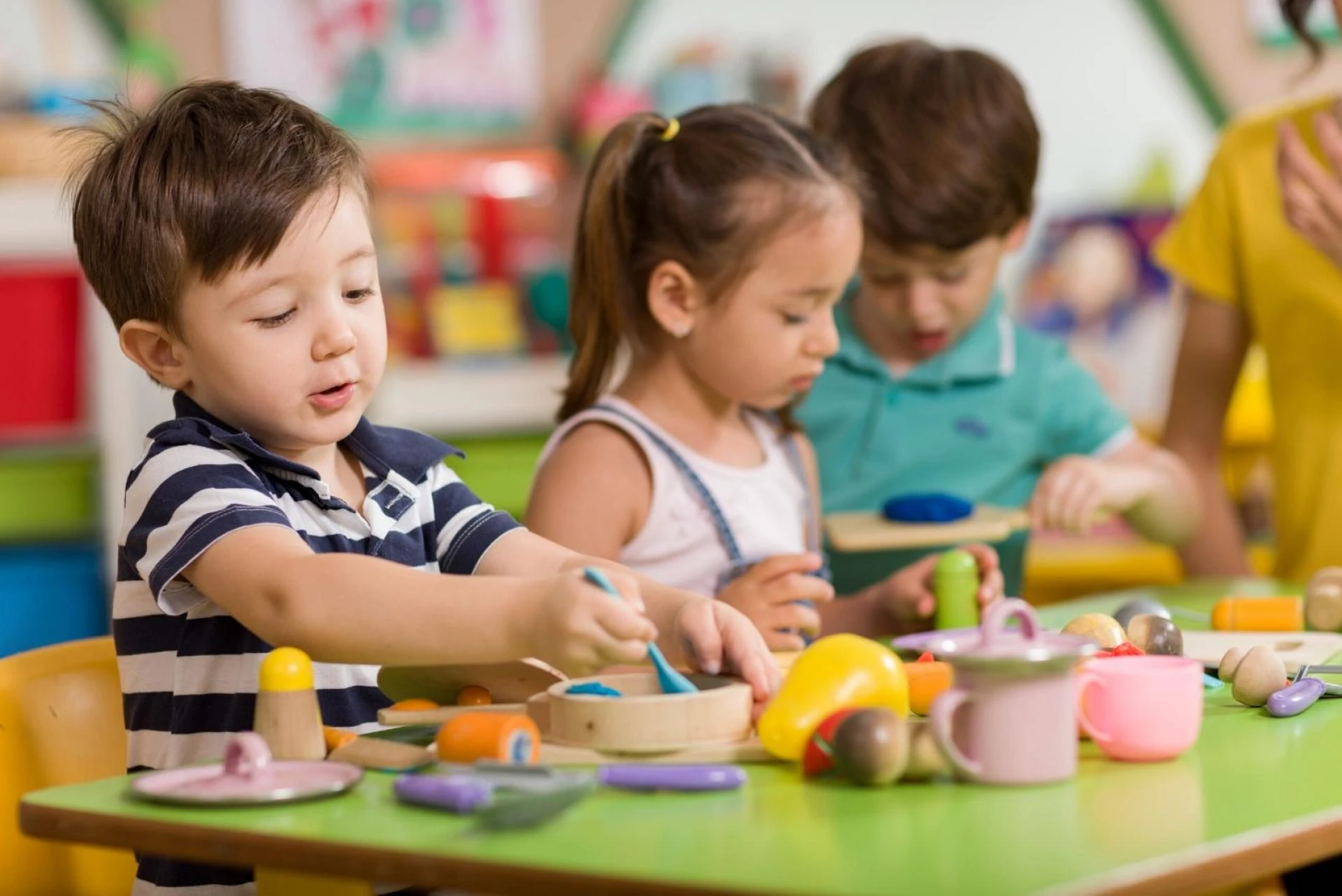
At B.D. Memorial School, one of the best schools near Golf Garden, many materials are used - from the kinetic sand to the plasticine that delights the little ones, to textiles, paints of all kinds or objects only good for building - the various textures and colours will light up images.
Encourage any kind of project, for any kind of intelligence
If your upper kindergarten child prefers to play with LEGO and build whole universes in Minecraft or maybe he likes to write stories, let him follow his curiosity.
Having access to various play opportunities offered by B.D. Memorial School, one of the best schools near Golf Garden, the little one is more likely to find something that he likes and suits his type of intelligence. As well, your child may jump from one preoccupation to another as he evolves, which will help him to open his horizons even more and learn different skills. Rejoice in his joy and encourage him to create whatever it is.
Give him timeWhen he does what he enjoys, a child or teenager (and an adult, in fact) can spend hours working on that project without a trace of boredom.
Through the hours invested in what seems to just play and experimentation, children develop, in fact, their attention and ability to concentrate, the management skills of a head-to-tail project, but also resilience, when the project does not come out as it should and it would have been desired and needs to be rethought and rebuilt.
Try to give him time to go through all these stages, and structure his program in such a way that he has a few hours related to free play and creation, among other types of activities.
Encourage collaborative creativityYoung people like to spend time with other young people of similar age, with whom they can share their concerns.
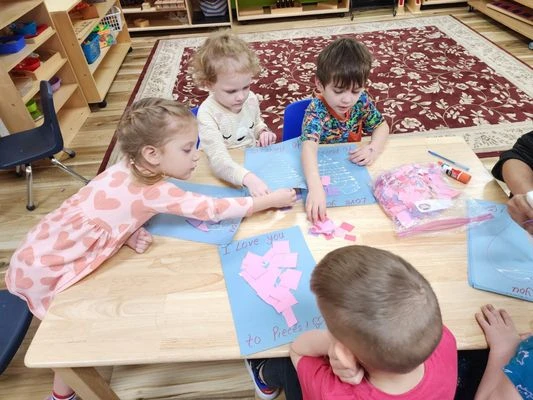
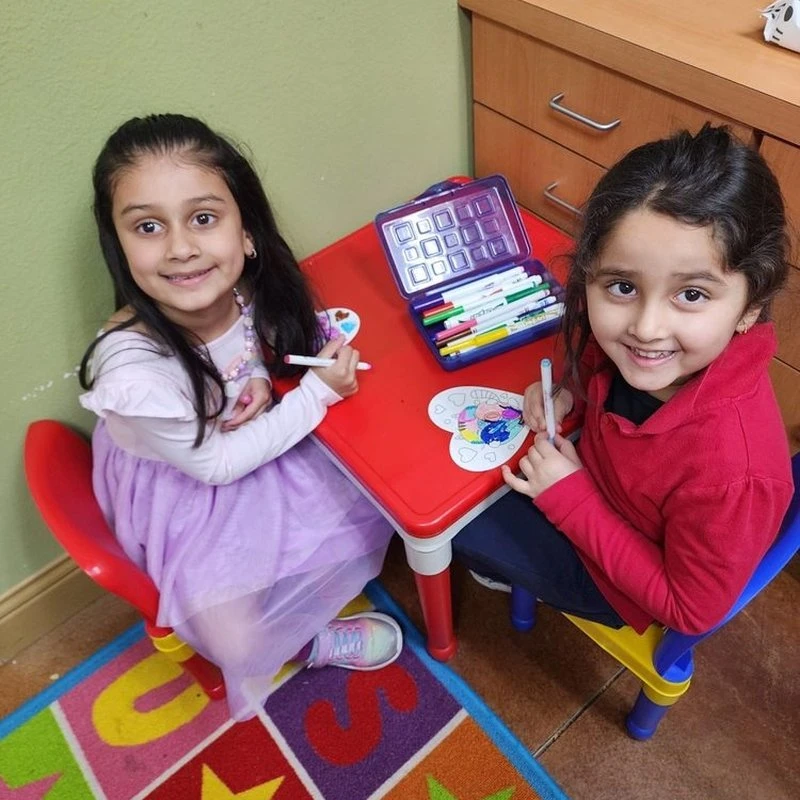
When they choose to play or create something together, children immediately learn from each other and manage to create something more complex than on their own, due to the amount of experience they bring into the equation.
In addition, through collaboration, they get to negotiate with others, express their desires, and better manage their emotions, especially if they have different creative visions that lead to conflict. Also, if the little one invites you to play, do not refuse, but do not direct him, but give him an example of collaboration, treating him as a peer.
Leave room for reflectionWhen the creative moment ends, whether it was a success or a failure in the eyes of the child, the questions are helpful again.
If he is proud of his accomplishment and can't wait to show you the result, don't label him with general and superlative praises like "How beautiful!", "He's the most successful robot I've ever seen!" end the conversation at that point. Rather, highlight details that you found interesting, such as the colour choices for the painted sky or the use of special pieces for the house built. Ask where the idea came from, how he got a certain effect, or how he managed to combine all the elements, guiding him step by step through the reflection process.
If the project did not turn out the way he wanted, ask him at what point he thinks he should have done it differently, how he would do it again, and what went well. In any of these stages, you do not need to give him solutions, but only to help him understand his emotions and the process, with the help of gentle questions.









Sign in to leave a comment.