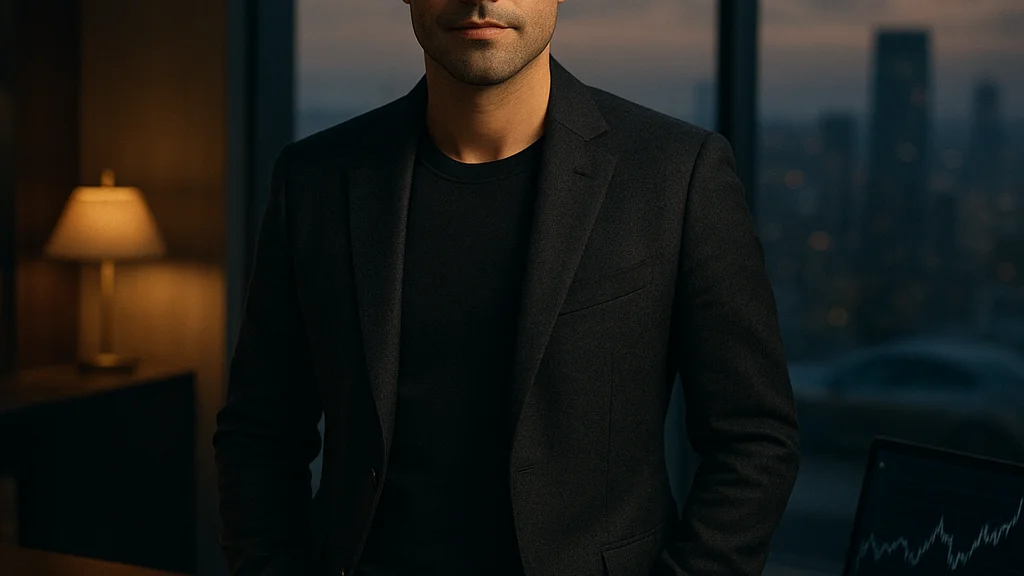

A fortune built in bright light, and a little outside it
Adrian Grenier has always carried a slightly unusual kind of fame. Not the thunderclap variety, not the kind that arrives with tabloid smoke and leaves behind scorched furniture, but something more reflective, like a city seen through rain on train glass. For millions of viewers, he is still Vincent Chase from Entourage, the handsome center of HBO's Hollywood fantasy, a series that ran from 2004 to 2011 and later returned as a feature film in 2015. That role made him globally recognizable, and it remains the main engine behind most public curiosity about Adrian Grenier net worth. Yet if you stop there, you miss the more interesting story, actually, the one that sits behind the camera flash.
Grenier's wealth is not easy to pin down with courtroom precision, because celebrities rarely publish audited personal balance sheets. Public net worth estimates from entertainment finance outlets have varied over time, often clustering in the low-to-mid eight figures, but those figures should be treated as informed approximations rather than certified fact. What can be assessed with more confidence is the architecture of his income: television salary, film work, producing credits, brand partnerships, speaking and media appearances, and a later-life pivot toward entrepreneurship, sustainability, and hospitality. That mix matters. A performer who depends only on episodic acting income often sees earnings rise and fall like heat over asphalt. A performer who turns fame into ownership, advisory roles, and durable business stakes can create something steadier.
There is another layer here as well. Grenier has spent years cultivating an image less tied to pure celebrity consumption and more connected to environmental advocacy, rural living, and mission-driven ventures. That does not erase the commercial side of his career, but it changes the lens. Wealth, in his case, looks less like a single jackpot and more like a mosaic, pieces laid over two decades. Readers who follow broader money stories on WriteUpCafe often approach celebrity finance through the same question explored in pieces about resilience and business durability, including Adrian Vanzyl on Building Resilient Digital Businesses: what lasts after the first wave of attention has passed. For Grenier, that is really the central question.
Adrian Grenier's financial story is less about one blockbuster payday than about converting a signature role into a long tail of relevance, access, and selective ownership.
Before the estimates, the career map matters
Grenier was born in 1976 in Santa Fe, New Mexico, and began building his screen career in the late 1990s. Early film appearances included Drive Me Crazy in 1999 and later The Devil Wears Prada in 2006, where he played Nate Cooper opposite Anne Hathaway. Those projects added visibility, but they did not by themselves place him in the highest earning tier of film actors. The real inflection point was HBO. Premium cable in the 2000s had a particular glamour, expensive and intimate at once, and Entourage became one of the era's most recognizable entertainment brands. Long-running series work is often where an actor's finances begin to transform, because salary can rise season by season while residual, syndication, and downstream licensing exposure strengthen a performer's market value.
Reliable public reporting on exact Entourage salaries for every cast member has never been comprehensive enough to present a single definitive number for Grenier. Trade publications and celebrity finance trackers have circulated estimates over the years, but without a studio-disclosed contract ledger, caution is necessary. What is reasonable to say is that being the lead of an HBO hit for eight seasons would have generated substantial earnings, likely in the millions over the life of the show, and the 2015 Entourage movie extended that revenue stream. The show's cultural afterlife also mattered. Even after a series ends, the lead actor often benefits from ongoing recognition that creates leverage for future work, endorsements, event bookings, and business introductions.
After Entourage, Grenier did not pursue a nonstop blockbuster path in the way some television stars attempt, sometimes unsuccessfully. Instead, his filmography became more eclectic, including acting, producing, and documentary work. He directed the documentary Teenage Paparazzo, which premiered on HBO in 2010, and stayed active in environmental and social-impact spaces. That choice likely moderated the pace of raw acting income compared with stars who chase studio franchises, but it also broadened his identity beyond a single role. In celebrity wealth analysis, that distinction is important. A narrower career can produce larger peaks. A broader one can produce longer shelf life.
His public persona in the late 2010s and early 2020s increasingly emphasized lifestyle, sustainability, and community. That repositioning may not create tabloid headlines, but it can attract a different class of business opportunity, one often tied to private investment, advisory work, hospitality concepts, and founder networks. For observers trying to estimate net worth, those quieter channels are exactly where the picture becomes more layered.
How Adrian Grenier likely makes his money
When people search for Adrian Grenier net worth, they often want a single number. The more useful answer is a revenue stack. Celebrity wealth is rarely one stream poured into one glass. It is usually a shelf of bottles, some nearly empty, some aging well. In Grenier's case, the most plausible income categories can be broken down this way.
- Television earnings: His lead role on Entourage remains the core financial foundation of his public career.
- Film acting: Supporting and lead roles in studio and independent films added income, though likely less consistently than television.
- Producer and director credits: Documentary and media work can generate fees, backend participation, and long-term industry value.
- Brand partnerships and appearances: Recognizable actors often earn through campaigns, panels, festivals, and sponsored collaborations.
- Entrepreneurial ventures: Grenier has spent years around startup and sustainability circles, where equity can matter more than upfront cash.
- Hospitality and lifestyle projects: More recent efforts connected to rural living and hospitality may contribute to asset value over time.
That final category deserves special attention in 2026. Grenier's public life has increasingly intersected with the world of place-based business, especially after his move away from the pure Hollywood circuit. Hospitality ventures can be financially meaningful because they combine brand, real estate, operations, and premium consumer experience. Even when a celebrity is not the sole owner, their name can enhance pricing power, media visibility, and investor confidence. The exact economics depend on debt structure, occupancy, margins, and ownership percentage, none of which are always public. Still, from a net worth perspective, this is where wealth can shift from income to assets.
Entertainment careers also create less obvious value. A person with Grenier's profile can access capital networks, founder communities, and high-level collaborations unavailable to the average entrepreneur. That does not guarantee profitable outcomes, of course. Celebrity-backed ventures fail all the time. But it changes the opportunity set. The difference between a working actor and a celebrity entrepreneur is often not talent, but deal flow.
Industry context helps here. According to SAG-AFTRA's broad compensation frameworks and long-standing reporting by trade outlets such as Variety and The Hollywood Reporter, television compensation can escalate sharply for lead performers on established premium series. Add post-show monetization, and one successful role can underwrite years of experimentation. Grenier appears to have used that cushion not just to keep acting, but to diversify his identity. That makes his wealth harder to estimate from IMDb credits alone.
For actors from prestige television, the paycheck from the hit show is only the first chapter. The more consequential chapter is what they are able to own afterward.
What the public estimates get right, and where they blur
Across celebrity finance databases and entertainment-oriented wealth trackers, Adrian Grenier is commonly estimated to be worth several million dollars, with many public figures historically landing around the $12 million range. Because these sites typically rely on a mix of reported salaries, real estate assumptions, industry norms, and secondary sourcing, that number should be read as a directional estimate, not a notarized truth. Still, the estimate is not implausible. A lead actor on a long-running HBO series, with film work and years of side ventures, could reasonably accumulate wealth in that band, especially if living costs and investment losses remained controlled.
Where these estimates often blur is in three places. First, they may overstate cash liquidity. A celebrity can be "worth" eight figures on paper while having much of that tied up in illiquid assets, private company equity, or property. Second, they may undercount private investments that never become public headlines. Third, they rarely distinguish gross career earnings from retained wealth after taxes, commissions, management fees, legal costs, and lifestyle spending. In entertainment, the distance between what someone earns and what they keep can be wide enough to feel architectural.
- Taxes: High earners in California and federal brackets can surrender a large share of income before it ever becomes wealth.
- Representation fees: Agents, managers, attorneys, and publicists all take slices, directly or indirectly.
- Career maintenance: Travel, grooming, social obligations, and development costs can be substantial.
- Investment volatility: Startup equity may look valuable one season and evaporate the next.
- Real estate carrying costs: Property ownership can build wealth, but financing, upkeep, and taxes can also drain it.
So what is the most responsible conclusion? Based on his career scale, longevity, and visible diversification, it is reasonable to place Grenier in the category of multimillionaire celebrity-entrepreneur rather than ultra-wealthy mogul. He is not generally discussed in the same financial tier as actors who command massive franchise backend deals or own giant production empires. But he also does not fit the pattern of a former TV star whose money story ended with the credits. His financial profile appears steadier, more textured, and probably more asset-based than many casual observers assume.
That is why comparisons matter. Someone whose wealth comes from one giant action franchise can post a larger headline number. Someone like Grenier, whose earnings are spread across acting, producing, advocacy-adjacent ventures, and hospitality, may have a lower public estimate but a more resilient portfolio. There is a useful analogy, oddly enough, in industries far from Hollywood. Durable value often depends on the quality of the underlying structure, a principle that appears in unexpected places, even in manufacturing-focused reading such as Factors That Define High-Quality HDPE Net Manufacturing, where strength comes from composition, not surface shine. Celebrity wealth works like that too.
The sustainability pivot changed the story
One reason Grenier's net worth remains a living topic, rather than a nostalgic one, is that he did not simply age out of a famous role and disappear. He redirected. For years he has been associated with environmental advocacy, conscious consumption, and social-impact conversations. He co-founded the lifestyle platform SHFT with producer Peter Glatzer years ago, a project designed to spotlight sustainability through culture and design rather than through scolding abstraction. While not every mission-driven media brand becomes a financial powerhouse, such platforms can expand a public figure's network into founders, investors, hospitality operators, and purpose-led consumer businesses.
That repositioning has real economic consequences. Celebrities who attach themselves to causes in a superficial way often extract only short-term image value. Celebrities who spend years building credibility in a niche can become useful business partners inside that niche. Grenier's move to Texas and his visible embrace of slower, land-connected living also reshaped his brand. He began to look less like a conventional Hollywood actor and more like a lifestyle founder, the kind of public figure who can participate in eco-tourism, hospitality, regenerative agriculture conversations, and premium wellness-adjacent ventures. In 2026, those categories sit at the intersection of consumer aspiration and investor appetite.
Recent years have also seen him discussed in connection with hospitality projects, including work around Bastrop, Texas. Exact ownership structures are not always fully public in mainstream entertainment coverage, so it would be careless to assign specific valuations without disclosed documents. But the broader point is solid: hospitality can convert celebrity recognition into recurring business value. It can also create appreciating asset exposure if real estate is involved. For a public figure no longer centered on weekly television production, that matters more than another random supporting role.
There is a reputational dividend too. Grenier's image has matured into something calmer, more rooted, less dependent on Hollywood's oxygen. That can reduce overexposure risk. It can also make him attractive to brands looking for credibility with affluent consumers who are tired of loud endorsements. According to reporting trends in Forbes and Fast Company on founder branding and celebrity-backed ventures, the market increasingly rewards authenticity signals, or at least convincing versions of them. Grenier's persona, because it has been consistent for years, fits that logic better than many celebrity pivots do.
Adrian Grenier in 2026: what has changed recently
By June 2026, the Adrian Grenier conversation is less about whether he can still get screen work and more about the shape of his second act. Public attention around him in recent years has focused heavily on family life, his move away from the center of Hollywood, and his deeper involvement in community-oriented and hospitality-adjacent projects. That shift matters for net worth analysis because the market tends to revalue celebrities once they move from labor income to ownership narratives. An actor is paid for time. An owner is paid for structure, and sometimes while sleeping.
The entertainment industry itself has also changed around him. Streaming disrupted the old residual model, compressed mid-budget film opportunities, and made long-term television economics more uneven for many performers. For stars of 2000s cable hits, that means legacy fame is no longer enough by itself. Those who adapted, by producing, investing, launching brands, or building place-based businesses, often preserved financial relevance better than those who waited for the next perfect script. Grenier appears to belong to the adapting group. Even if his annual acting income today is lower than during the peak Entourage era, his broader economic profile may be more stable.
Another recent factor is the premium consumers' appetite for experience-led spending. Hospitality, wellness travel, curated retreats, and rural luxury have remained durable categories despite economic jitters, especially among higher-income travelers. If Grenier's business interests continue to intersect with those sectors, he could benefit from a market that values atmosphere as much as square footage. It is a very modern kind of monetization, one based on mood, curation, and trust. A former television star who now embodies rustic refinement can fit that market surprisingly well.
Still, 2026 also brings caution. Higher interest rates over the past few years have made real estate and hospitality financing more expensive. Operating businesses tied to food, lodging, and events face labor costs, insurance pressures, and demand swings. A celebrity name can open doors, but it cannot protect margins forever. So the current picture is mixed in the most realistic way: Grenier seems well positioned, but not immune to the same economic weather that hits every founder trying to turn identity into enterprise.
How his wealth compares with peers from the same era
Comparison is dangerous in celebrity finance, but useful if handled carefully. Grenier's likely net worth sits below the top echelon of television actors who parlayed hit shows into giant production companies, liquor brands, or major equity exits. He is not in the same money orbit as entertainment figures who own studio-scale intellectual property or command enormous streaming overall deals. Yet among actors best known for one defining 2000s series role, his profile is relatively strong. Longevity, recognizability, and diversification count for a lot.
Consider the broad peer groups. First, there are actors whose fame peaked with a single show and then faded into sporadic convention appearances and minor roles. Second, there are actors who used that fame to become producers, founders, or investors. Grenier appears closer to the second model, even if on a more understated scale than the most aggressive celebrity entrepreneurs. He has also avoided some of the public financial distress that can drag down former stars, such as repeated legal disputes, expensive divorces splashed across tabloids, or highly visible failed vanity projects. Absence of chaos is not glamorous, but it is often profitable.
- Brand durability: Entourage still gives him a recognizable cultural anchor.
- Image coherence: His sustainability and rural-lifestyle positioning feels consistent rather than abrupt.
- Business optionality: Hospitality, media, and advisory opportunities can coexist without canceling each other out.
- Lower overexposure risk: He is visible enough to matter, not so omnipresent that the brand feels exhausted.
That said, quieter celebrity brands can also be harder to monetize at maximum scale. Grenier's public persona is thoughtful, mellow, even a little anti-spectacle. That is appealing, but it does not always generate the huge consumer spikes associated with louder celebrity commerce. He may never produce the kind of headline-grabbing wealth attached to stars who launch mass-market beauty lines or billion-dollar beverage companies. His likely path is narrower and more elegant, a smaller river, perhaps, but one that keeps moving.
Grenier's advantage is not financial flash. It is coherence, the rare ability to make career, lifestyle, and business interests feel like parts of the same song.
What to watch next if you are tracking Adrian Grenier's net worth
The next phase of Adrian Grenier's wealth story will probably not be written by a surprise superhero franchise. It is more likely to emerge through ownership disclosures, hospitality expansion, selective media projects, and the long tail of a brand that has aged into credibility. If he deepens his role in hospitality or land-linked ventures, net worth watchers should pay attention not only to revenue headlines but to the structure beneath them. Is he a spokesperson, a minority investor, a co-founder, a property owner, or a licensing partner? Those distinctions can change the value equation completely.
There is also room for a documentary or nonfiction media resurgence. Grenier has long shown interest in cultural and environmental storytelling, and that lane has become more commercially viable as streamers, niche platforms, and branded-content ecosystems look for recognizable names with authentic subject matter. A well-placed executive producer credit, especially on a project aligned with his established interests, could add both income and strategic relevance. In modern media, authority inside a niche can be monetized repeatedly.
For readers, the practical takeaway is simple. Do not treat celebrity net worth as a static scoreboard. Treat it like a weather report on assets, earnings power, liabilities, and reputation. Grenier's likely wealth, while not publicly confirmed to the dollar, appears to rest on a durable combination of legacy television income, continuing brand value, and a maturing portfolio of business interests. The famous face opened the first door. The quieter work afterward may determine how much stays in the room.
If public estimates continue to place him around the low-eight-figure mark, that would remain broadly believable, though still unverified. If his hospitality and lifestyle ventures scale meaningfully, those estimates could move higher. If economic pressures hit those sectors hard, they could flatten. Either way, Adrian Grenier is no longer just a case study in what one HBO role can earn. He is a study in what happens when a celebrity tries, actually with some discipline, to turn recognition into a life with ballast.
And that may be the most accurate answer to the original question. Adrian Grenier's net worth is not only a number. It is a portrait of how fame settles, how it hardens into assets or drifts away, how some careers burn like magnesium and others keep a low amber glow. His seems to be the second kind, quieter, steadier, and maybe more interesting for it.




























Sign in to leave a comment.