
What is Thermistor?
A thermistor is a type of temperature sensor whose resistance varies with temperature. The term "thermistor" combines "thermal" and "resistor." Typically made from metallic oxides and encased in materials like epoxy or glass, thermistors are classified into two main types:
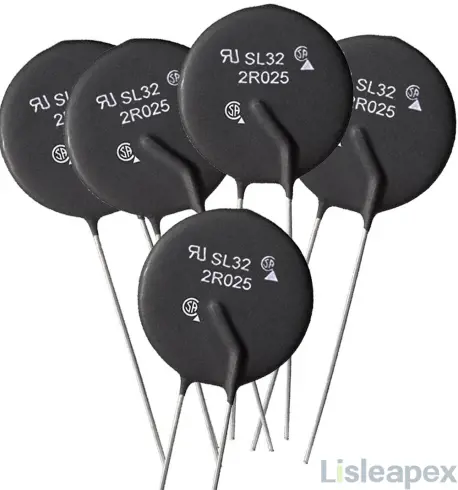
- Negative Temperature Coefficient (NTC) Thermistors: Resistance decreases as temperature increases, making them ideal for precise temperature measurements.
- Positive Temperature Coefficient (PTC) Thermistors: Resistance increases as temperature rises, often used as overcurrent protection devices.
Thermistors offer high precision within a narrow temperature range, generally around ±50ºC of a target temperature. They are commonly used in digital thermometers, automotive temperature sensors, and household appliances. For specialized applications such as laser stabilization and optical devices, thermistors are integrated into the design, like the 10 kΩ thermistor used in laser modules.
Symbol of thermistor

Advantages and Disadvantages of Thermistor
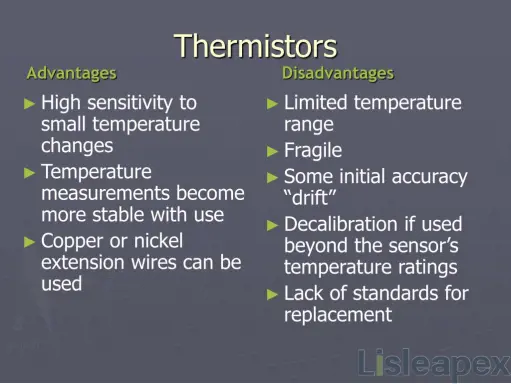
In this part we will detail the advantages and disadvantages of NTC THERMISTORS and PTC THERMISTORS. Let’s move on.
NTC (Negative Temperature Coefficient) Thermistors
Advantages:
High Sensitivity: NTC thermistors exhibit high sensitivity to temperature changes, allowing for precise temperature measurements with a small temperature range.
Wide Temperature Range: They can operate across a broad temperature spectrum, from as low as -55°C to several hundred degrees Celsius, depending on the specific type.
Cost-Effectiveness: NTC thermistors are relatively inexpensive compared to other temperature sensors, making them a cost-effective choice for many applications.
Small Size: Their compact size allows them to be integrated into small electronic devices and systems.
Fast Response Time: They provide quick responses to temperature changes, which is crucial for real-time monitoring and control.
Disadvantages:
Nonlinear Characteristics: The resistance-temperature relationship is nonlinear, which can complicate the calibration and measurement processes.
Limited Precision: Achieving high precision over a wide temperature range can be challenging due to their nonlinear behavior.
Self-Heating Effect: Internal heat generated by the thermistor during operation can affect its measurement accuracy, especially in low-power circuits.
Stability Issues: NTC thermistors may exhibit variations in resistance and stability over time, requiring periodic calibration or replacement.
PTC (Positive Temperature Coefficient) Thermistors
Advantages:
Self-Limiting Current: PTC thermistors increase in resistance with temperature, which makes them useful as resettable fuses in overcurrent protection applications.
Wide Temperature Range: They can operate over a wide temperature range, from cryogenic temperatures to several hundred degrees Celsius, depending on the type.
Small Size: Their compact form factor allows for integration into small devices and systems.
Fast Response Time: PTC thermistors respond quickly to temperature changes, which is beneficial for real-time temperature monitoring.
Disadvantages:
Nonlinear Characteristics: The resistance-temperature relationship is nonlinear, which may require additional circuitry for accurate measurement and control.
Limited Precision: PTC thermistors may have limitations in achieving high precision, especially at temperatures far from their base resistance.
Self-Healing Behavior: While their ability to reset after overheating is advantageous, it can lead to inconsistent performance if not properly managed.
Environmental Sensitivity: PTC thermistors may be sensitive to environmental factors such as humidity and pressure, which can impact their performance.





























Sign in to leave a comment.