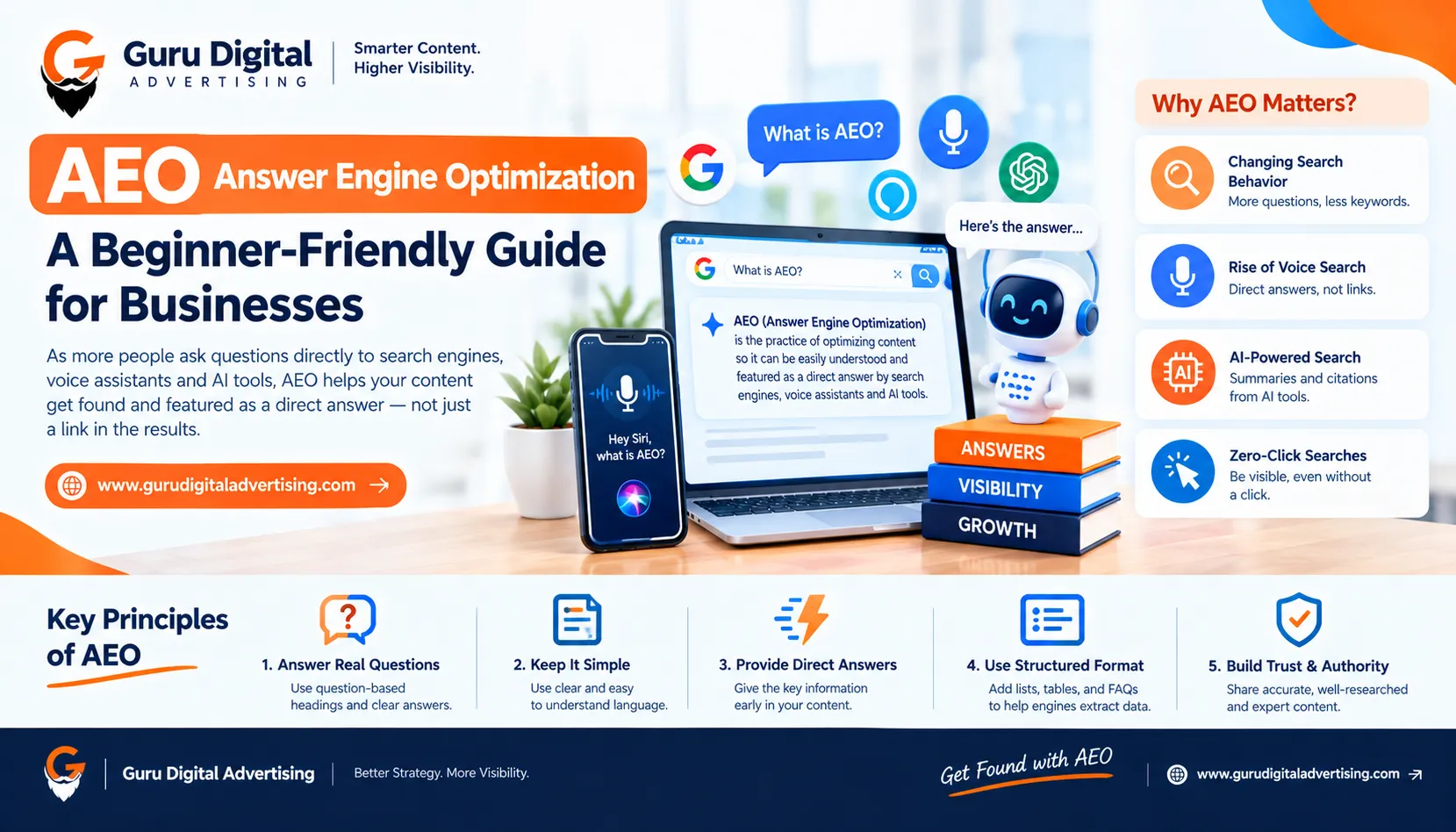

If you have started hearing the term AEO answer engine optimization and are not entirely sure what it means, you are not alone. As search behavior shifts — with more people asking questions directly to AI assistants, voice search tools, and search engines that show direct answers instead of just links — a new discipline has emerged alongside traditional SEO. This blog breaks down what AEO actually is, why it matters, and how businesses can start thinking about it.
What Is Answer Engine Optimization?
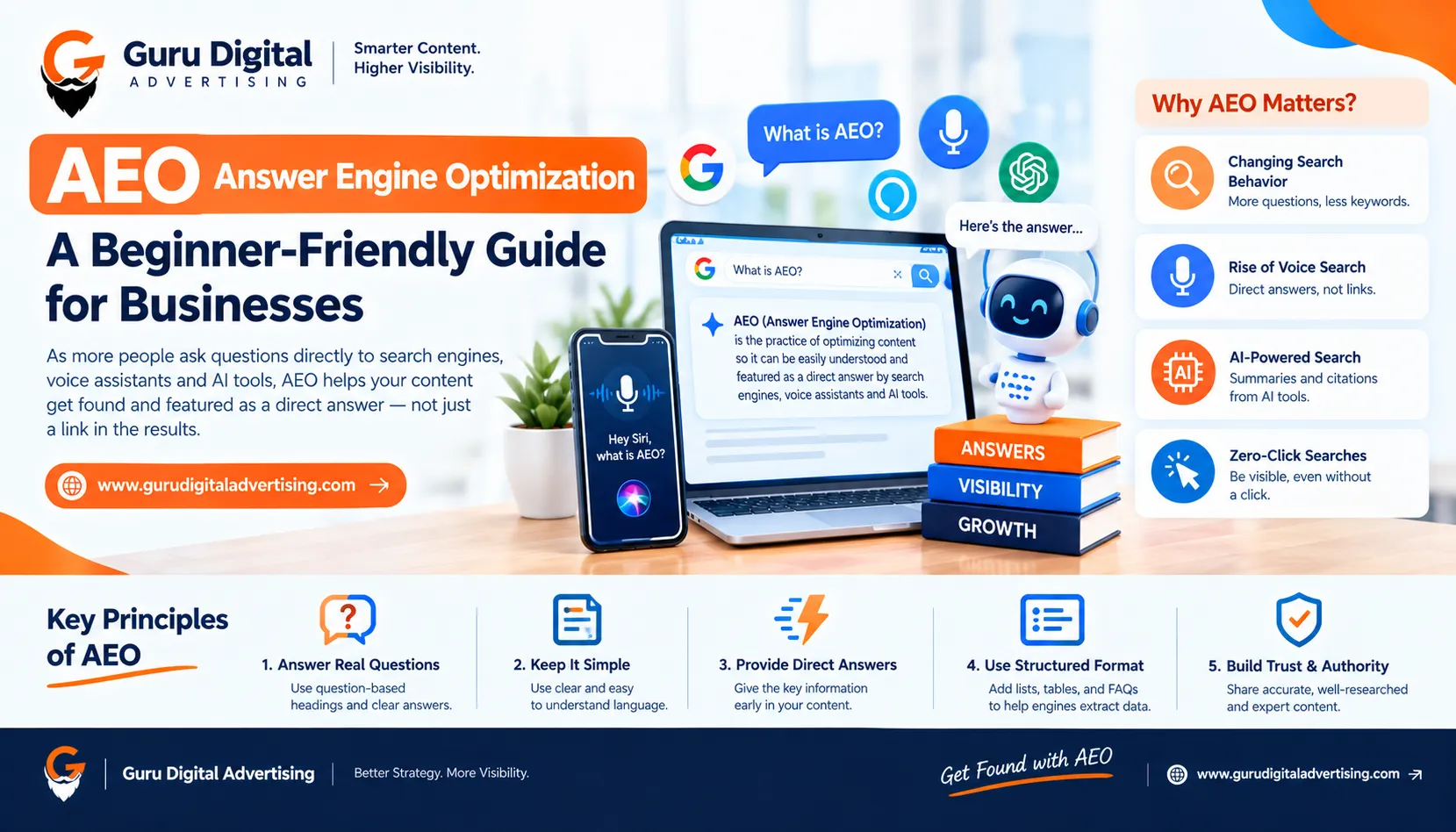
Answer Engine Optimization (AEO) involves designing and optimizing content in a way that makes it readily comprehensible, (machine) extractable and deliverable as an answer by search engines, voice search, digital personal assistants, and AI-augmented tools. It covers Google Featured Snippets, voice assistants like Alexa and Siri, and more and more AI chatbots and generative search applications. When classic SEO applies mostly to getting your webpage ranked on the results page, the goal of AEO is being chosen as the answer instead (before you even ask for it).
Why Is AEO Becoming Important?
1. Searchers are Changing Their Behavior: More searches are being made by voice and by asking complete questions ("how do I load Photoshop" as opposed to "Photoshop loading" - long-tail keywords.
2. Voice Search Is Here: Voice assistants and smart speakers are everywhere now, so searchers aren't clicking through ten blue links anymore - they just ask one question.
3. Search Is Taking Place: Through AI/On the Page Search engines already provide answers in a snippet on the page or through an AI Chatbot. Well-written content that directly responds to a question can be more easily included in these summaries.
4. Zero-click Searches Are Increasing: More searches are answered directly on the page, and your brand and messaging need to be present whenever this happens.
How AEO Is Different from Traditional SEO
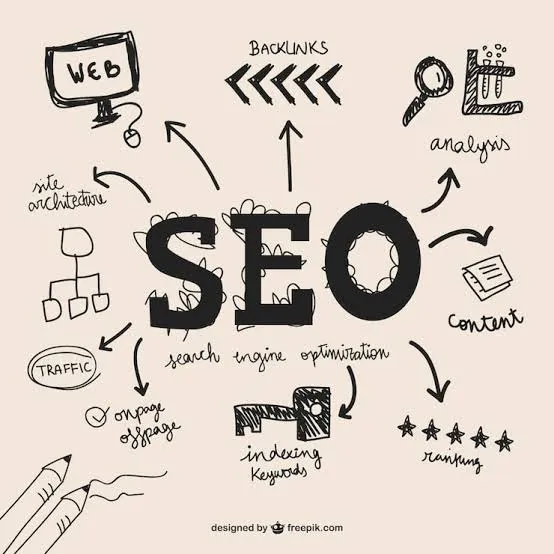
It is important to understand that AEO does not replace SEO — it builds on it. Traditional SEO focuses on rankings, backlinks, and overall site authority, while AEO focuses specifically on how well content can be understood and extracted as a direct answer.
| Focus Area | Traditional SEO | AEO |
| Primary Goal | Rank higher on search results | Get selected as a direct answer |
| Content Format | Long-form, keyword-optimized | Clear, structured, question-and-answer based |
| Success Metric | Rankings, organic traffic | Featured snippets, voice answers, AI citations |
| User Intent | Broad search intent | Specific question-based intent |
Core Principles of Good AEO Practice
1. Structure Content Around Real Questions
Rather than creating generic paragraphs, good AEO content answers the actual questions you are receiving from your audience, in some cases in the form of questions as headers, and then a short, concise answer.
2. Use Clear, Simple Language
Answer engines tend to prefer content that is simple to read. Long, convoluted sentences and "buzzy" terms are more difficult for answer engines (and humans) to find a clean answer in.
3. Provide Direct Answers Early
A great tip is to start a section with the key question in one or two sentences and then get into the detail second. This is how featured snippets usually works.
4. Use Structured Data and Formatting
Bullet points, numbered lists, tables, and frequently asked questions (FAQs) all help answer engines easily find and extract information.
5. Maintain Accuracy and Authority
Because answer engines are choosing what will be shown as the "answer", credible sources that demonstrate trustworthiness and authority are what would be best (meaning that legitimate content and content that is well researched will rank better in the long-run).
How Does AEO Fit Into a Broader Digital Strategy?
AEO does not work in isolation — it is most effective when paired with strong foundational SEO and a solid overall online presence. For example, before content can be considered for a direct answer, it usually needs to already have some level of visibility and trust with search engines.
Paid channels also play a supporting role here. Businesses running Google Ads campaigns often find that combining paid visibility with strong organic and answer-engine-optimized content creates a more complete presence — covering both immediate visibility (through ads) and long-term discoverability (through AEO and SEO).
Common Mistakes Businesses Make with AEO
1. Not considering question-based search intent: A common error made by businesses is to create content around keywords rather than the types of questions people are actually asking. Question-based search intent is the key to appearing as a direct answer.
2. Creating unnecessarily complex content: Question-based answers work best when they are easy to access and understand. Complex language or corporate buzzwords can make content less accessible.
3. Neglecting to use a structured format: Answer engines prefer easy-to-browse content in blocks, lists, and bullet points, rather than pages of long paragraphs. Making your content easier to consume will help you stand out as an answer.
4. Treating AEO as a one-and-done strategy: Like SEO, AEO is something you need to constantly adapt to improve your answer engine content in response to changing user demands, new questions, and new answer engine algorithms.
Getting Started with AEO for Your Business
For businesses just beginning to explore AEO, a practical starting point is:
- Identify the most common questions your customers ask (sales team, support tickets, and social media comments are good sources)
- Create content that directly and clearly answers each question
- Use proper formatting — headers, bullet points, and concise answers
- Monitor which content starts appearing in featured snippets or voice search results over time
Frequently Asked Questions
Is AEO only relevant for large businesses?
No. Businesses of any size can benefit from AEO, especially local businesses answering common customer questions, since this often has less competition than broader SEO terms.
Does AEO require completely rewriting existing content?
Not necessarily. Often, existing content can be restructured — adding clear headers, direct answers, and better formatting — without a complete rewrite.
How is success in AEO measured?
Common indicators include appearing in featured snippets, being cited by AI-powered search tools, and increased visibility in voice search results, though these can be harder to track precisely compared to traditional SEO metrics.
Final Thoughts
As search trends move toward more direct answers to questions through simple, conversation-style searches, Answer Engine Optimization is becoming a significant component of an overall digital marketing strategy. It's not moving away from search engine optimization, but rather complementing it as we find new ways to search for information, source products, and ask questions today.
Want to learn what AEO could do for your business and niche? The experts at Guru Digital Advertising can help you develop a content marketing plan aligned with how your customers are searching.
























Sign in to leave a comment.