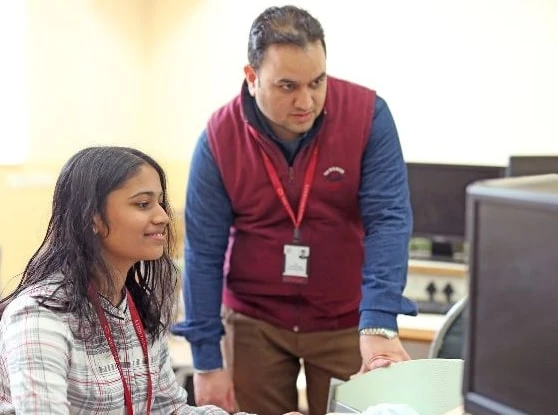

Most advice after Grade 12 lists dozens of degrees without telling you how to decide. A better approach is to match what you enjoyed in Class XI–XII with the kind of work you want to do at 20–21, the exams you can realistically clear, and the support (time, money, coaching) you actually have. Use this compact guide to sort courses after 12th science into clear tracks and link them to credible career options after 12th science—without chasing brand names.
Step 1: Choose by work you want to repeat, not by subject you scored
- Problem-solving with math/physics: engineering (core branches and modern ones like CS, data, AI), statistics, actuarial science. Work looks like building systems, debugging, modelling.
- Life sciences and patient care: MBBS/BDS/BAMS/BHMS/physiotherapy, pharmacy, biomedical, nutrition. Work is clinical or lab-based with licensure.
- Chemistry and making things: chemical engineering, materials, environmental, food tech. Work mixes plant operations, quality, and R&D.
- Computing without traditional engineering: B.Sc. Computer Science, BCA + add-on maths, data analytics diplomas. Work is software, analytics, automation.
- Designing with science context: design (product/UX), architecture (needs NATA), ergonomics/HCI. Work blends creativity and constraints.
Write the daily verbs you like—measure, code, explain, build, treat, design—and pick the track where those verbs are routine.
Step 2: Know the exam and timeline reality (2026 entry cycle)
- Engineering: JEE Main/Advanced; state CETs (MHT-CET, KCET, etc.); some private entrance tests; central universities via CUET-UG.
- Medicine & allied health: NEET-UG for most clinical seats; separate tests for some paramedical/physio/nursing through state agencies.
- Design/Architecture: UCEED/NID DAT; NATA/JEE Paper 2 for architecture.
- Sciences (B.Sc.) & interdisciplinary: largely CUET-UG or institute tests; merit in boards still used by many state universities.
Map application windows and counselling rounds now. If your best exam is nine months away, plan a bridge term (internship, online modules, portfolio) rather than drifting.
Step 3: Decide depth vs. speed vs. cost
- Depth (4–5 years): engineering, medicine, architecture. Highest ceiling; heavier entrance pressure and fees.
- Balanced (3 years + add-ons): B.Sc./BCA with targeted certificates (SQL + Python, lab techniques, regulatory). Faster to internships; easier to pivot to master’s.
- Skill-first (1–2 years): industry diplomas/apprenticeships (CNC, process control, hospital tech, cloud support). Early income; stackable later.
Run a simple ROI check: total fee + living costs + 3 years of time vs. likely entry-level pay and licensure delays. Choose the longest path you can finish, not the shortest you will abandon.
Step 4: Read syllabi like a hiring manager
For any course page, look for:
- Currency: updated every 1–2 years; labs aligned to the track (GPU/EDA tools for CS/ECE; wet labs with instrument lists for life sciences).
- Projects and clinics: multi-term projects, hospital rotations, plant visits, hackathons tied to labs—not just festivals.
- Assessment: fewer rote finals; more design reviews, vivas, OSCEs (for clinical), code reviews (for CS).
- Outcomes: median salaries by role, licensure pass rates, PPO (pre-placement offer) data from internships.
If these signals are absent, outcomes will depend on your self-study, not the campus.
Step 5: Pair each track with an early credential and a role
- Engineering/CS: add Git + Python/Java, data structures practice, and one deployable mini-project by Semester 2. Entry roles: software trainee, data analyst, test engineer, CAD/CAE intern.
- Statistics/Data: complete SQL + spreadsheets + pandas + one dashboard; build a clean, small analysis repo. Entry roles: business analyst, junior data associate.
- Life sciences: earn lab safety + instrumentation badges; document two techniques (PCR, chromatography, microscopy). Entry roles: clinical assistant, lab technologist, pharma QA trainee.
- Chem/Process/Materials: learn basic P&ID, safety, and quality tools (5S, SPC); do a plant or pilot-lab exposure. Entry roles: production trainee, QA/QC, EHS intern.
- Design/Architecture: create a portfolio with problem–process–prototype; learn drafting tools and usability basics. Entry roles: junior designer, site intern.
Step 6: If you are undecided, use a 6-month explorer plan
Months 1–2: complete two micro-projects (one code/quant, one lab/design) and shadow a professional for a day.
Months 3–4: pick the stronger fit and sit for the right entrances while building one portfolio piece.
Months 5–6: apply broadly across tiers; keep a skill track running so you have an internship even if the first choice slips.
Bottom line
There isn’t a single “best” choice after science in Grade 12. There is a best fit—the course whose entrance you can clear, whose labs and projects you will finish, and whose first roles match the verbs you enjoy. Read courses through outcomes and assessment, not slogans, and your career options after 12th science will stay open without wasting years on paths you never wanted to walk.













Sign in to leave a comment.