
Image via: Unsplash
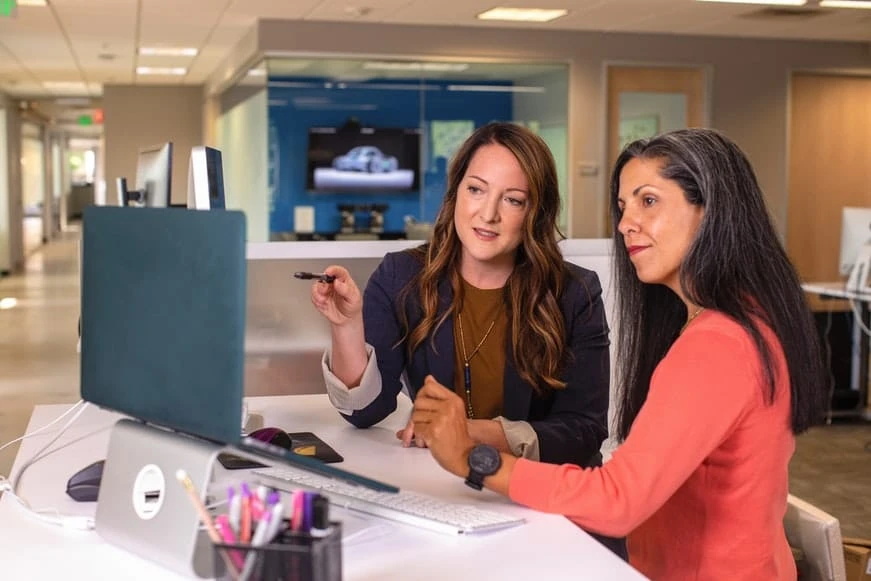
An age diverse workplace is increasingly becoming more common. Whether it’s due to longer life expectancy, higher costs of living - or simply the increased desire to work - many workplaces are seeing a mix of both older and younger generations leading their team.
While this comes with many advantages, it can be difficult for employers to keep everyone on the same page.
Since everyone is at different stages of their career and life, age gaps at work can make way for conflicts or even discrimination between employees.
Here are some ways to bridge the age gaps at your work and keep younger and older employees engaged:
1. Stop the stereotypes
1 in 2 workers feel that annoying assumptions have been made about them at work because of their age.
Never assume a person’s capability or skillset based on their age. Age-based stereotypes are harmful to you and your employees. Valuing diversity and inclusion is key to a successful team and business.
As a business leader, it’s your job to recognize stereotyping and to avoid making assumptions about a person’s age. This includes presuming an older employee isn’t interested in career progression since they must be due for retirement soon.
It also includes the assumption that a young employee will job hop when/if a better opportunity comes along.
2. Encourage collaboration
It’s natural for people to flock to those of a similar age group when in a mixed-aged environment. Yet professionally, this can cause problems in the workplace.
For a team and business to be successful, everyone needs to work together - irrespective of age gaps.
Encouraging cross-generational collaboration can help younger and older employees to learn from each other.
As a business leader or employer, you may want to facilitate this by:
Assigning each employee a mentor of the opposite age groupSet up team-building activities or projects with mixed-age teamsPlan social outings where employees are encouraged to mix in an informal settingAvoid establishing age-affinity groups/employee resource groups3. Cater to each age group
Different generations value different benefits at work. If you have an age-diverse workplace, then take some time to get familiar with common generational motivations:
Generation Z (1997-2012)These digital natives are experts on social media and digital platforms. They are actively engaged in their jobs and are highly motivated in a workplace that has access to the latest cutting-edge technology. They tend to prioritize salary over benefits.
Millennials (1981-1996)Born during the technology wave, Millennials are more comfortable communicating digitally than other generations. They value efficiency and meaningful work and are motivated by a workplace where they feel they’re making a difference. Millennials tend to prioritize benefits and work/life balance.
Generation X (1965-1980)This generation tends to be more highly educated than other generations and is self-reliant and hard-working. They are comfortable using technology but also value face-to-face interactions. They typically perform well unsupervised and value a flexible schedule that will allow them a better work/life balance. Additionally, they also prize monetary gifts.
Baby Boomers (1946-1964)Known for their strong work ethic and goal-centric tendencies, Baby Boomers tend to be more hard-working than any other generation. While they didn’t grow up with computers, they tend to be far better at face-to-face interactions and developing interpersonal relationships. Job security is highly important to them.
4. Provide new work opportunities
Now more than ever, flexible work arrangements including remote work have become favourable incentives for employees across all generations. The Australian Seniors Ageing in the Workforce 2021 virtual roundtable revealed those over 50 in particular find great benefit from working in a flexible work environment such as a hybrid working model.
Few workplaces actively promote flexibility for mature-age workers. This is despite 3 in 4 seniors desiring to work longer and later in life.
Employers should look at providing more flexible work arrangements to give their age-diverse team a better chance of working to their level of comfort and skillset.
5. Conflict resolution
Conflicts will most likely arise even in a forward-thinking, inclusive workplace.
In order to maintain collaboration and communication between age groups, employers need to be able to address issues quickly.
Conflicts create the opportunity to forge stronger relationships. Try to use conflict to grow your team, and to provide employees with the wisdom to find new opinions and challenge existing biases.
When managing different age groups in the workplace, it can be a challenge to ensure collaboration among employees.
Closing the generational gap requires the relinquishment of biases or stereotypes surrounding age. It also involves encouraging age groups to mix while at work in order to gain a deeper understanding of other generations.
Providing more and better opportunities for employees such as flexibility at work will also help your team to be stronger and more successful, ultimately driving your business forward.










Sign in to leave a comment.