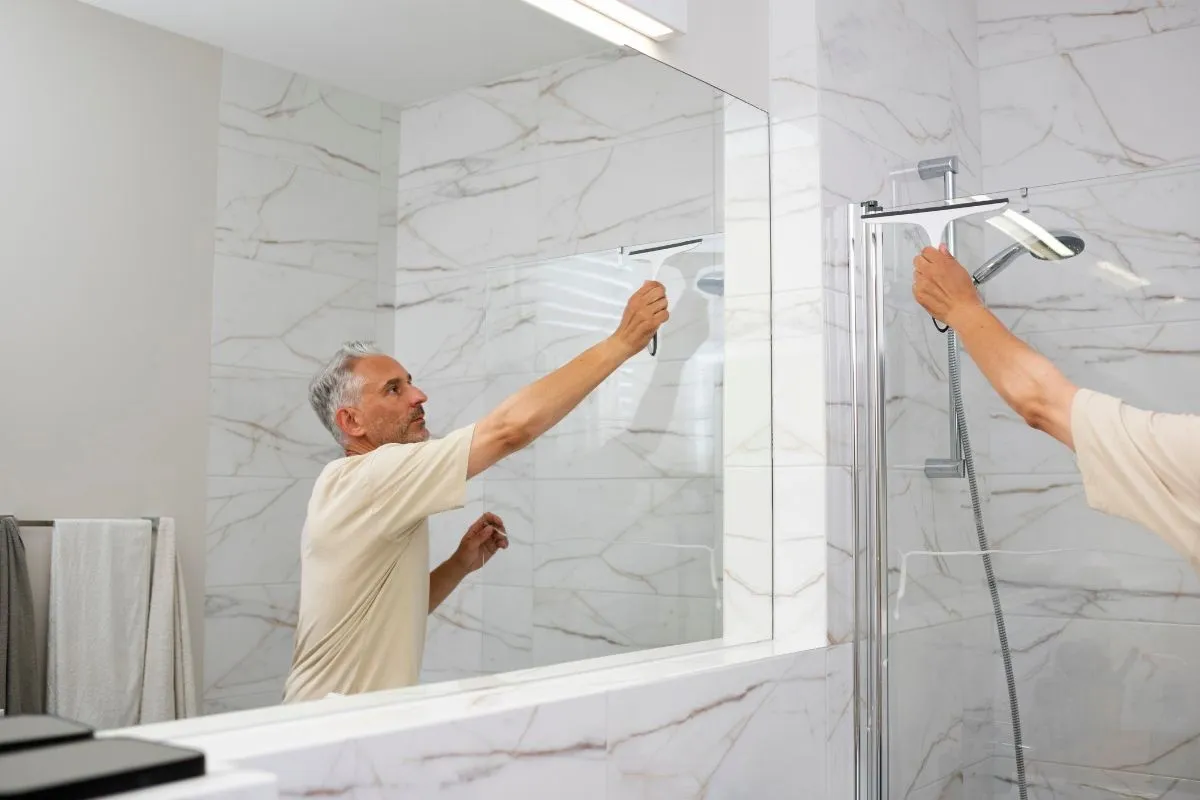
Aging in place bathroom remodeling means updating your bathroom with safety features such as curbless showers, grab bars, non-slip flooring, and better lighting, so you can bathe and move around safely without needing to move to a new home. This guide covers the features worth prioritizing, what they cost, and how to plan the work in order.
Bathrooms are the room where most falls at home happen. According to the Centers for Disease Control and Prevention, more than 14 million adults aged 65 and older report falling each year, and falls remain the leading cause of injury for this age group. Among falls that require emergency room care, the majority occur inside the home, and bathrooms rank as one of the most common rooms where they happen.
Most homeowners are not planning to move. AARP's 2024 Home and Community Preferences Survey found that 75% of adults aged 50 and older want to stay in their current home as they age. Staying put is a reasonable goal. Making the bathroom safe enough to support that goal takes planning.
This guide walks through the features that matter most, backed by data, and explains how to prioritize them if you cannot remodel everything at once.
Why Does the Bathroom Carry the Highest Fall Risk?
The bathroom carries the highest fall risk because it combines wet, slick surfaces with tight spaces and hard fixtures. Water on tile, a high tub wall to step over, and a toilet that sits too low all create the exact conditions that lead to a fall.
Add in poor lighting and grab points that were never installed, and a routine task like showering turns into the highest-risk activity in the house. Older adults also need more light to see clearly than younger adults do, so a bathroom that felt fine at 40 can feel genuinely unsafe at 70.
What Are the Most Important Safety Features in an Aging-in-Place Bathroom Remodel?
The most important features are a curbless or low-threshold shower, grab bars placed at the shower, tub, and toilet, non-slip flooring, a comfort-height toilet, and improved lighting. These five changes address the specific conditions that cause most bathroom falls.
Here is how each one works and why it matters:
- Curbless shower installation. Removing the step-over curb eliminates the single biggest tripping point in the bathroom. A curbless shower also works for wheelchairs and walkers, without looking like a hospital fixture.
- Bathroom grab bars. Placed near the shower entry, inside the shower, and beside the toilet, grab bars give a stable hand hold exactly where balance is most tested. Modern versions come in finishes that match towel bars and hardware, so they do not stand out.
- Non-slip bathroom flooring. Textured tile, slip-resistant vinyl, or specialty coatings cut down on the wet-surface slips that cause most bathroom injuries.
- Comfort-height toilets. A taller seat reduces the strain of sitting down and standing up, which matters for anyone with knee or hip limitations.
- Improved lighting. Brighter, layered lighting with fewer shadows helps aging eyes judge distance and footing accurately.
Curbless Shower vs. Walk-In Tub: Which Should You Choose?
The right choice depends on how you bathe today and what you expect to need in the next five to ten years. Here is a side-by-side comparison to help you decide.
| Feature | Curbless Shower | Walk-In Tub |
| Entry | Zero-threshold, no step | Low step, sealed door |
| Best for | Standing showers, wheelchair or walker access | Soaking baths, joint or arthritis relief |
| Wait time to use | None, water drains immediately | Must wait for tub to fill or drain before entering/exiting |
| Resale appeal | High, appeals to all age groups | Narrower appeal, some buyers view it as a specialty fixture |
| Typical cost range | Moderate to higher, depending on tile and drain work | Moderate, unit-dependent |
If daily safety and broad resale appeal matter most, a curbless shower for seniors is usually the stronger choice. If therapeutic soaking is a daily need, a walk-in tub can be worth the tradeoff.
Is Universal Bathroom Design Different from ADA Compliance?
Universal bathroom design is not the same as ADA compliance, though the two overlap. ADA standards are legal requirements for public and commercial spaces. Universal design is a broader approach used in private homes that aims to make a space work well for people of every age and ability, without looking clinical.
A residential ADA bathroom remodel might borrow specific measurements from ADA guidelines, such as clearances around a toilet or grab bar height, but a homeowner is not required to meet the full commercial code. This distinction matters because it gives you flexibility to choose fixtures that look like a normal, well-designed bathroom rather than an institutional one.
How Much Does an Accessible Bathroom Remodel Cost?
Cost depends on the scope of work, but most accessible bathroom remodels fall into a moderate range once you move beyond adding grab bars alone. Full curbless shower conversions, comfort-height fixtures, and flooring replacement cost more than a partial update, while a phased approach spreads the investment over time.
If a full remodel is not possible right now, prioritize in this order:
- Grab bars at the shower, tub, and toilet
- Non-slip flooring in the shower and on the bathroom floor
- A curbless or low-threshold shower entry
- Comfort-height toilet
- Lighting upgrades
This order addresses the highest-risk fall points first and lets you spread the remaining work across a longer timeline or a financing plan.
Does an Accessible Bathroom Remodel Affect Resale Value?
An accessible bathroom remodel generally supports resale value rather than hurting it, especially when the design avoids an institutional look. Curbless showers, comfort-height toilets, and good lighting appeal to buyers of every age, not only older buyers, because these features also serve younger families, guests with limited mobility, and anyone who prefers easier cleaning and a more open layout.
Getting the Remodel Done Right
A safe, well-planned bathroom remodel takes more than swapping in a grab bar or two. It takes an understanding of where falls actually happen, how fixtures need to be reinforced behind the wall, and how to keep the finished space looking like a bathroom you would choose regardless of age or ability.
PHD Bathroom Remodeling has served homeowners in Loganville and the Northeast Atlanta area for more than 30 years, with a 10-year warranty on installation and materials. The team handles curbless shower installation, grab bar placement, non-slip flooring, and full bathroom remodels, along with bath inspection and repair for homeowners who want an assessment before committing to a full renovation. For larger updates, PHD also offers financing options to help spread out the cost of a full accessibility upgrade.
If you are planning ahead for yourself or a family member, a short consultation can identify which features matter most for your specific bathroom layout and budget.
Key Takeaways
- Bathrooms carry the highest fall risk in the home, and falls are the leading cause of injury among adults 65 and older.
- The five highest-impact features are curbless showers, grab bars, non-slip flooring, comfort-height toilets, and better lighting.
- Universal design differs from ADA compliance, and residential remodels have more flexibility in how they meet safety needs.
- A phased approach, starting with grab bars and flooring, works well if a full remodel is not possible right away.
- Accessible upgrades tend to support resale value rather than reduce it.
Frequently Asked Questions
What is aging in place bathroom remodeling?
Aging in place bathroom remodeling is the process of updating a bathroom with features like curbless showers, grab bars, non-slip flooring, and better lighting, so a homeowner can bathe and use the toilet safely as mobility changes, without needing to move to a different home.
What is the single most important safety feature to add first?
Grab bars at the shower, tub, and toilet are the lowest-cost, highest-impact feature to add first, since they address the exact points where most bathroom falls occur.
Will an accessible bathroom look institutional or clinical?
No. Modern grab bars, curbless showers, and comfort-height fixtures come in finishes and styles that match standard bathroom design, so the space does not need to look like a medical facility.
How long does an aging-in-place bathroom remodel take?
Timelines depend on scope. A grab bar and flooring update can take a few days, while a full curbless shower conversion with tile work typically takes one to two weeks.
Can I remodel gradually instead of all at once?
Yes. Starting with grab bars and non-slip flooring, then moving to a curbless shower and lighting upgrades later, is a common and effective approach for homeowners working within a budget or financing plan.
























Sign in to leave a comment.