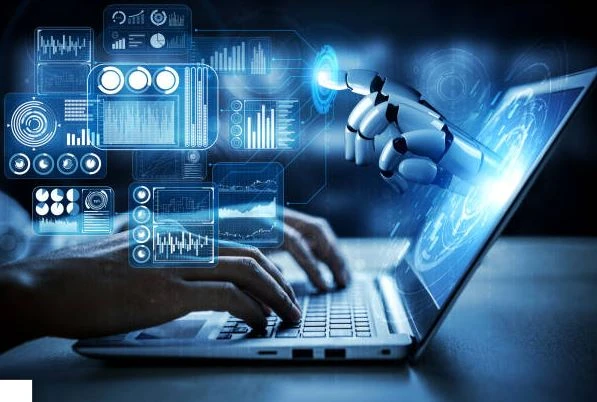

Have you ever envisioned a work environment where robots handle mundane tasks and artificial intelligence simplifies your job? AI and automation have arrived, transforming the way we work and enhancing our daily routines. Let\'s explore how these technologies are changing processes and increasing productivity, and why you should be interested.
To begin with, let\'s discuss the true definition of AI and automation. Artificial Intelligence (AI) is when machines are able to think and learn similar to humans, while automation utilizes technology to manage repetitive tasks. Working collaboratively, they are transforming workplaces by simplifying processes and handling boring tasks that used to slow us down.

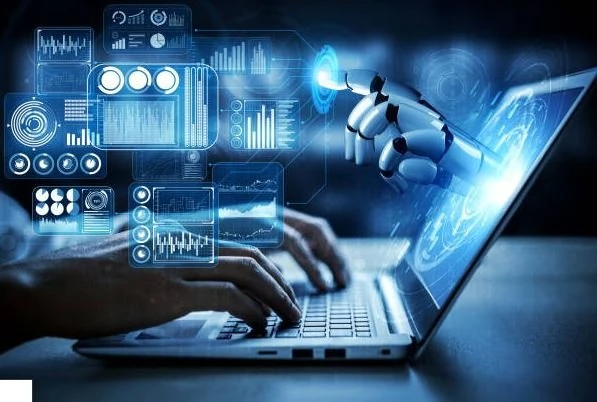
One major impact of AI and automation is allowing more time for creative and strategic tasks. Picture a scenario where you are not required to spend lengthy amounts of time analyzing information or organizing numerous spreadsheets. AI-driven tools allow for quick data analysis and automated handling of tasks such as scheduling and email organization. This change enables you to concentrate on more influential and creative aspects of your work, which can significantly enhance personal fulfillment and efficiency.
Consider customer service as a prime example. Chatbots and virtual assistants can now manage a wide range of queries around the clock. These tools powered by AI are capable of addressing frequently asked questions, solving problems, and assisting customers in navigating complicated procedures. This improves customer satisfaction and lightens the burden on customer service agents, enabling them to handle more intricate issues.
In the field of project management, AI tools are becoming essential. They have the ability to forecast project schedules, distribute resources effectively, and offer valuable insights on possible risks before they escalate. Automated project management platforms assist teams in maintaining organization, monitoring progress, and meeting deadlines without the need for continuous manual supervision as was previously needed.
Furthermore, automation is transforming the field of human resources. Automated systems now handle many HR tasks, from recruitment to onboarding. AI can analyze resumes, select potential candidates, and even perform initial interviews using chatbots. This accelerates the recruitment process and guarantees that only the most appropriate candidates advance to the next level.
However, the focus is not solely on increasing speed; it also involves improving precision. Automation decreases the chance of mistakes made by humans in tasks that are repeated, guaranteeing that the work is always precise and dependable. Financial departments utilize automated systems for managing transactions, balancing accounts, and producing reports. This reduces mistakes and offers more dependable information for making decisions.
Naturally, certain worries arise with these developments. The concept of machines replacing jobs can be frightening, and there is legitimate concern about the loss of jobs. Nevertheless, the truth is more complex. Although some tasks may be automated, there are new roles and opportunities being created. Employees will be required to adjust by obtaining additional skills that enhance these technologies, such as supervising AI systems, handling data, or engaging in creative and strategic projects.
Education and training are crucial during this transition. Businesses and schools are already increasing their efforts to get the workforce ready for the future. Training programs for improving skills will be necessary to remain competitive in a world that is becoming more automated. It will be important to embrace lifelong learning in order to adjust to new roles and responsibilities as technology keeps evolving.
Therefore, what is our current situation? AI and automation are more than just trendy terms—they are changing the way we work, streamlining tasks, and enabling us to concentrate on what is truly important. In the future workplace, human creativity will work hand in hand with machine efficiency as technology becomes more intertwined with daily tasks.
To summarize, the workplace landscape is being reshaped by the emergence of AI and automation. These technologies are not only altering how we work, but also reshaping our perception of work by simplifying procedures, improving precision, and allowing for more significant tasks. Embrace change, enhance your skills, and prepare for a future where technology and human creativity merge to form fresh opportunities.










Sign in to leave a comment.