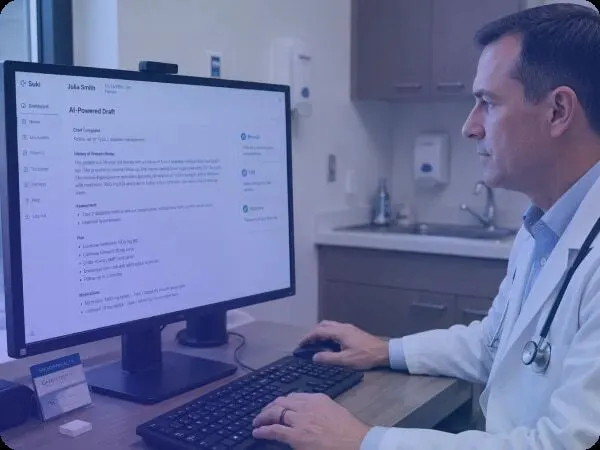

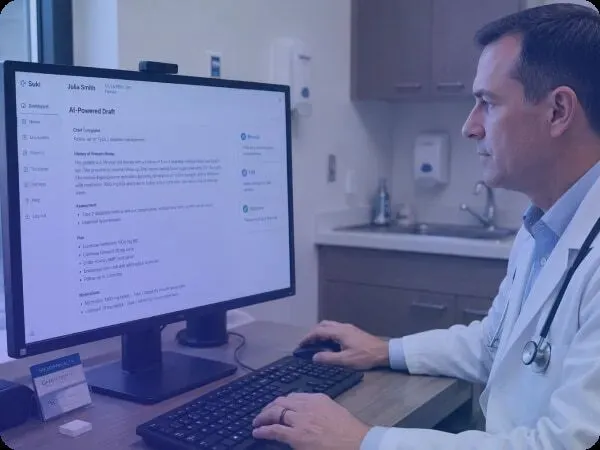
Physicians are spending too much of their day inside documentation workflows. Every patient encounter requires history capture, note preparation, assessment details, orders, follow-up instructions, and sign-off. When documentation is delayed, care teams lose visibility, billing teams receive incomplete records, and physicians often carry unfinished charting into evenings and weekends. This is why AI Clinical Documentation Services are becoming a practical priority for hospitals, specialty practices, telehealth providers, and digital health platforms.
The goal is not to replace the physician. The goal is to reduce repetitive work while keeping clinical judgment, review, and approval in the provider’s hands. Modern AI physician documentation workflows can capture encounter inputs, summarize conversations, organize clinical details, and prepare draft notes that clinicians can review, edit, and finalize. This creates a faster documentation cycle without removing accountability from the care team.
One of the strongest use cases for AI for clinical documentation is same-day chart closure. Many providers struggle with unfinished notes because they must move quickly from one patient to the next. AI-assisted workflows can create structured drafts from dictation, visit transcripts, forms, previous notes, and approved clinical inputs. Instead of starting from a blank screen, physicians begin with a review-ready note that can be corrected and signed faster.
A well-designed ai clinical documentation software platform should also support specialty-specific templates. Primary care, cardiology, orthopedics, behavioral health, urgent care, and post-acute care all require different note formats and clinical language. Generic documentation tools may create broad summaries, but specialty teams need structured outputs that reflect how they actually document care. This is where healthcare software development becomes important. Custom-built systems can align AI documentation logic with real provider workflows, EHR requirements, approval steps, and reporting needs.
Another important benefit is documentation consistency. When notes vary widely across providers, downstream teams may struggle with coding, quality reporting, referrals, and care coordination. AI can help standardize sections such as history of present illness, assessment, plan, medication changes, patient instructions, and follow-up recommendations. However, the system should also allow physicians to modify language, add context, and preserve their clinical voice.
Security and governance are equally important. Clinical documentation involves protected health information, so AI workflows must be designed with access controls, audit trails, encryption, consent rules, data retention policies, and clinician approval checkpoints. Healthcare organizations should avoid using disconnected tools that do not match their compliance and integration requirements. The safest approach is to build documentation automation into a controlled clinical workflow.
The future of documentation will be physician-led and AI-assisted. The best platforms will not simply generate text. They will detect missing information, surface relevant patient history, create after-visit summaries, support referral letters, and connect documentation with EHR and operational systems. For healthcare organizations, this means less manual charting, faster note completion, cleaner records, and more time for direct patient care.
Implementation should start with a narrow, measurable workflow. For example, an organization may begin with primary care SOAP note drafting, telehealth visit summaries, or referral documentation. Once adoption is stable, the workflow can expand into additional specialties, document types, and integration points. This phased approach reduces risk, gives physicians time to adjust, and helps leadership measure the real effect on chart closure time, note quality, and staff satisfaction.
The strongest programs also train clinicians on how to review AI drafts. Providers need to understand where the system performs well, where human correction is required, and how to document exceptions clearly. This keeps adoption practical, safe, and aligned with medical responsibility.
AI clinical documentation is gaining traction because it solves a problem clinicians feel every day. When implemented correctly, it can reduce cognitive load, improve documentation quality, and support better workflow efficiency. Providers that invest early in secure, specialty-aware documentation systems will be better positioned to improve both physician experience and patient care delivery.
























Sign in to leave a comment.