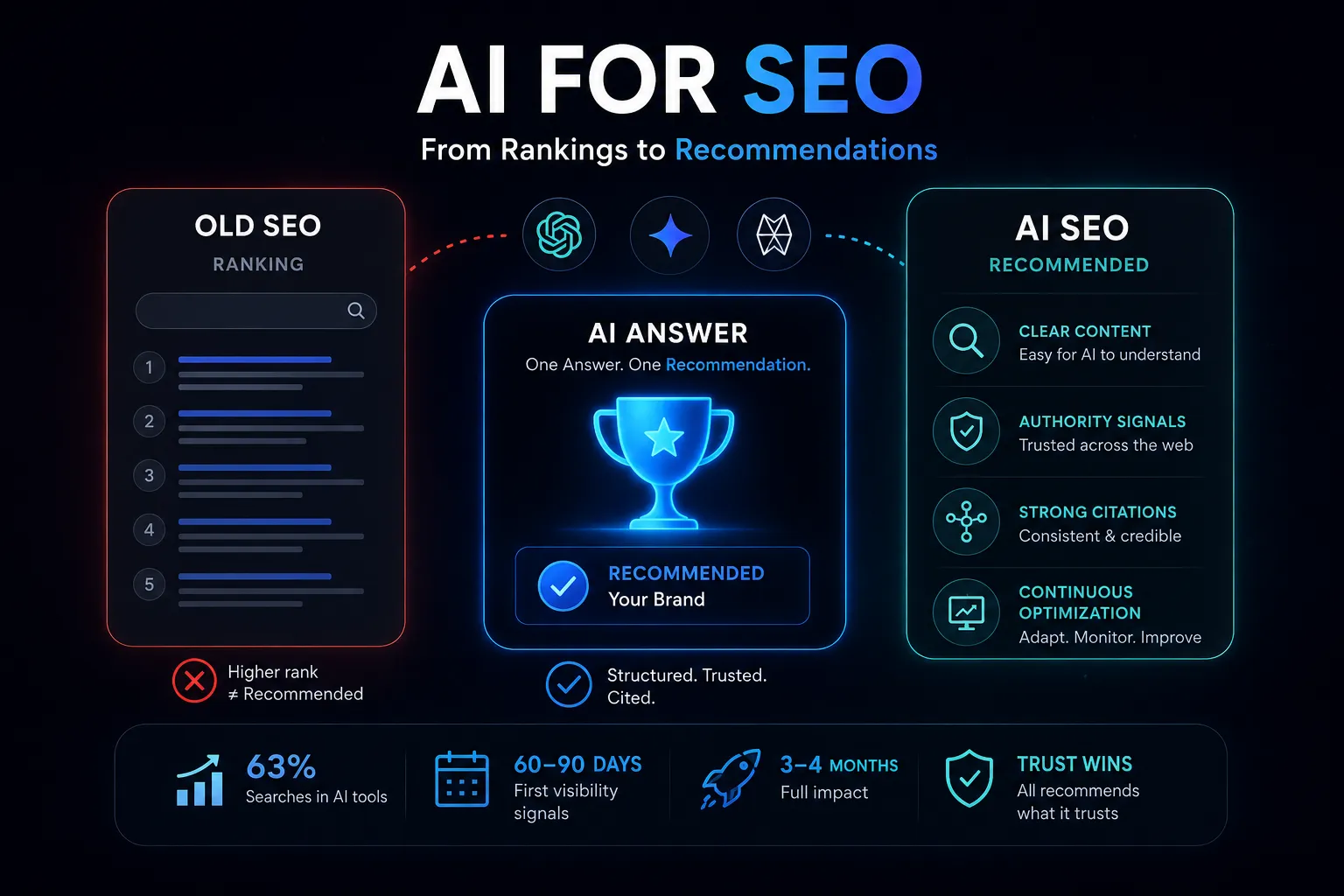

Nearly two-thirds of all searches now happen inside AI tools instead of a traditional search bar. That single number explains why keyword optimization alone stopped being enough.
For years, ranking well meant matching the right keywords to the right search intent. AI for SEO works on a different principle entirely: it's about becoming part of the answer an AI system generates, not just a link someone might click.
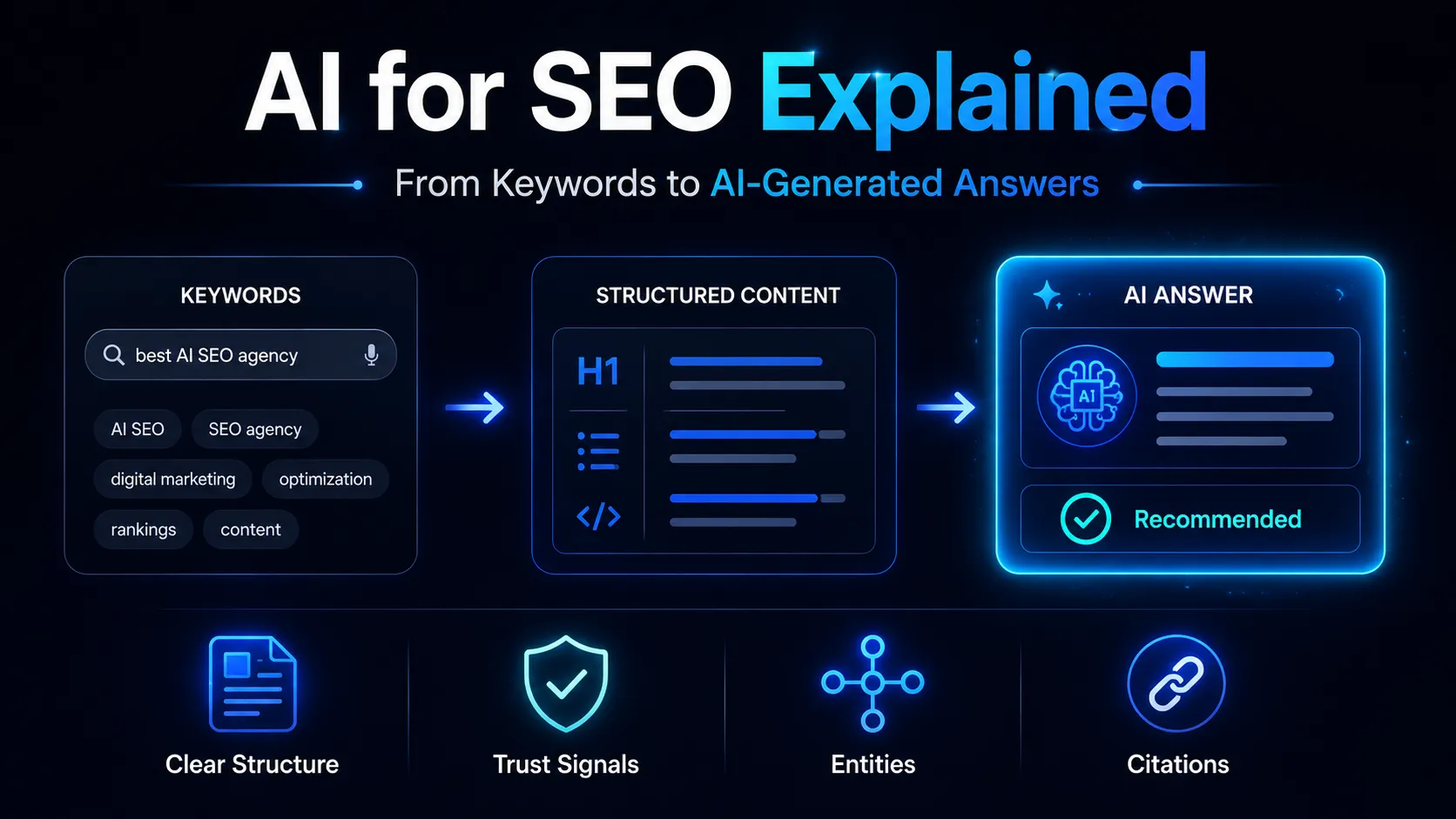
This shift from keywords to AI-generated answers is bigger than most businesses realize, and it changes what "good content" actually means going forward.
What Is the Difference Between AI for SEO and Traditional Keyword Optimization?
Keyword optimization is built around matching search queries to content. It rewards density, placement, and relevance to specific phrases people type into a search bar.
AI for SEO works differently. Instead of matching a query to a page, AI systems synthesize an answer from multiple sources, choosing whichever content best explains the topic clearly and accurately.
This means a page can rank well for its keywords and still never get cited by an AI model, simply because the information isn't structured in a way the model can confidently extract and quote.
That gap between ranking and citation is where most businesses lose visibility without ever realizing it's happening, sometimes for months before anyone on the team notices the drop in AI-driven traffic.
How Do AI-Generated Answers Actually Get Built?
AI models pull from indexed content, evaluate how trustworthy and clear that content is, then synthesize a single response rather than listing multiple options like a search results page does.
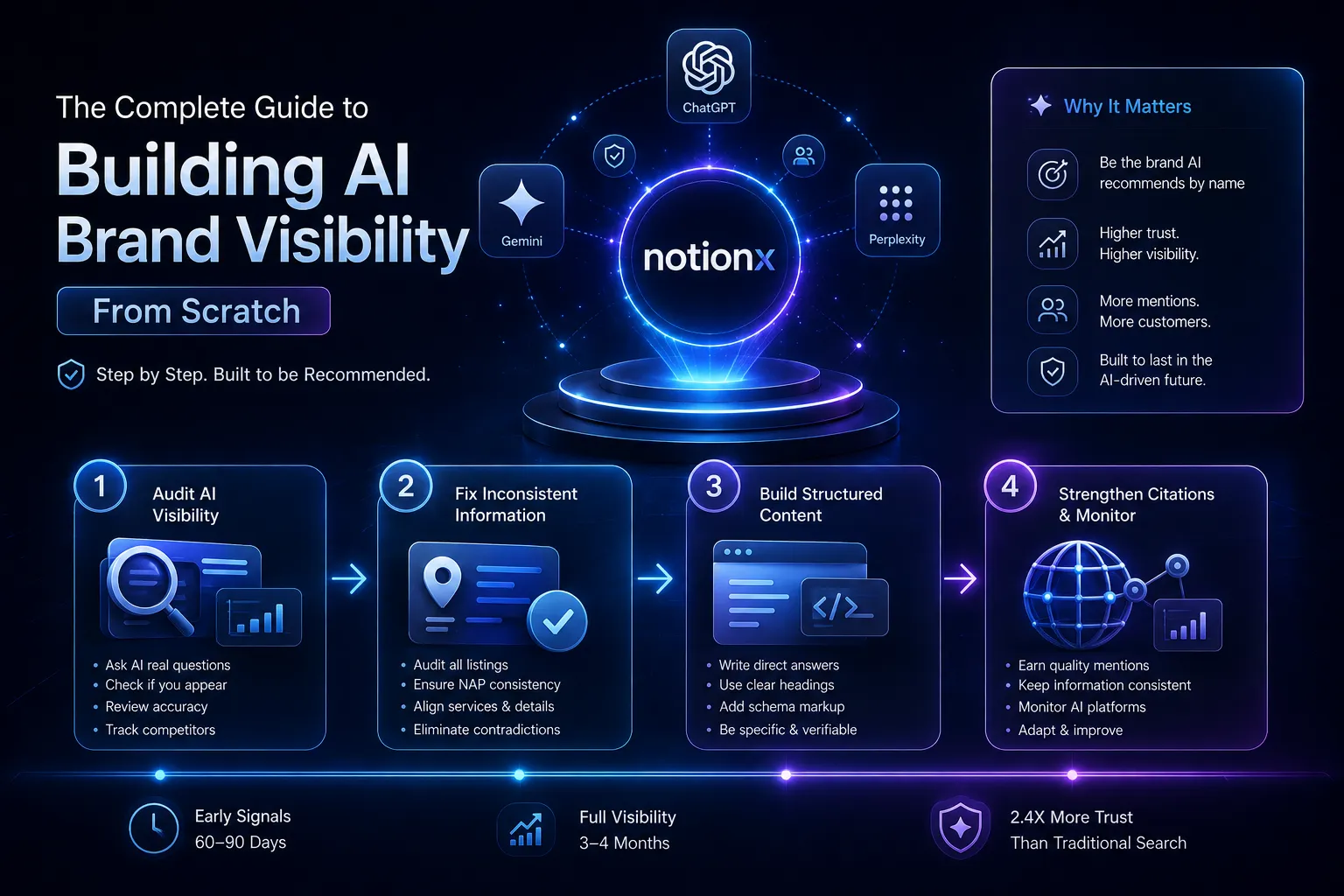
Structure matters enormously here. Content with clear headings, direct answers, and well-defined entities gets parsed more reliably than dense, unstructured paragraphs.
This is honestly the part most businesses get wrong: they assume good writing is enough. Good writing and machine-readable structure are two different skills, and AI for SEO requires both working together, not one instead of the other.
Why Does AI for SEO Require a New Kind of Content Structure?
Traditional content often buries the answer inside long introductions and storytelling before getting to the point. AI systems don't reward that pattern at all.
Content built for AI for SEO puts the direct answer immediately after each heading, then supports it with detail. This mirrors exactly how AI models extract information to build their own responses.
Schema markup adds another layer, giving AI systems explicit signals about entities, relationships, and facts rather than forcing them to infer meaning from plain text alone.
Businesses that skip this restructuring step often wonder why their well-written content still isn't showing up in AI answers, when the real issue was never the writing quality in the first place.
What Role Do Keywords Still Play in AI for SEO?
Keywords haven't disappeared, but their job has changed. They now signal topic relevance rather than acting as a ranking trigger on their own.
Long-tail, conversational phrases matter more than ever, since people ask AI assistants full questions rather than typing short search terms. "Best AI SEO agency for small business" behaves very differently than the keyword fragments of old search behavior.
63% of searches now happen inside AI tools, which means content written for how people actually ask questions outperforms content written purely for search engine algorithms.
How Do You Measure Success With AI for SEO?
Traditional SEO tracks rankings and organic traffic. AI for SEO tracks something different: how often your brand gets mentioned, cited, or recommended inside AI-generated answers.
A few benchmarks worth tracking:
- Frequency of brand mentions across ChatGPT, Perplexity, and Gemini responses
- Appearance rate inside Google AI Overviews for relevant queries
- Accuracy of how AI systems describe your business compared to reality
- Growth in AI-driven citations over rolling three-month periods
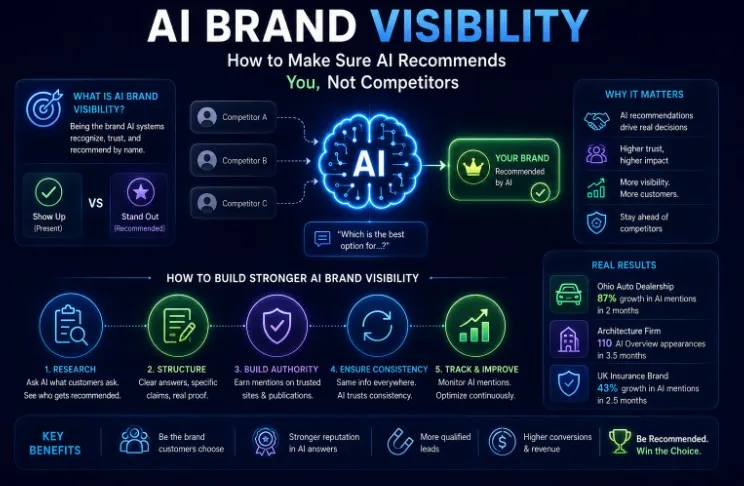
Real numbers show what's possible. One automotive dealership saw 87% growth in AI mentions within two months of restructuring its content around these principles, while an education-sector brand grew AI Overview mentions by 579 over six months.
What's Next for AI for SEO as Models Keep Evolving?
AI models update constantly, which means a strategy that works today may need adjustment within months, not years. This is fundamentally different from traditional SEO's slower pace of change, where a ranking strategy could stay effective for a year or more without major adjustments.
Businesses that treat AI for SEO as a one-time project will fall behind quickly. The ones that build ongoing monitoring into their strategy stay ahead as new AI platforms and retrieval methods emerge.
The transition from keywords to AI-generated answers isn't finished evolving, and it likely never will be. Brands that adapt continuously, rather than optimizing once and walking away, are the ones AI systems will keep recommending well into the future.




























Sign in to leave a comment.