
Introduction
In the rapidly evolving landscape of manufacturing, AI-powered production scheduling stands out as a pivotal innovation. As industries strive for efficiency, agility, and cost-effectiveness, integrating artificial intelligence into production processes has become essential.
The Evolution of Production Scheduling
Traditional production scheduling methods often relied on static data, manual inputs, and rigid timelines. These approaches, while effective in the past, struggle to accommodate the dynamic demands of modern manufacturing, leading to inefficiencies and increased operational costs.
AI in Smart Factories: A Game Changer
Artificial Intelligence (AI) revolutionizes production scheduling by:
- Real-Time Data Analysis: AI algorithms process vast amounts of data instantaneously, enabling proactive decision-making.
- Predictive Maintenance: Anticipating equipment failures before they occur, reducing downtime.
- Dynamic Resource Allocation: Adjusting resources in real-time based on current production needs.
According to a study by Composites in Manufacturing, AI-driven scheduling minimizes downtime and ensures efficient resource utilization.
📊 Comparative Analysis: Traditional vs. AI-Powered Scheduling
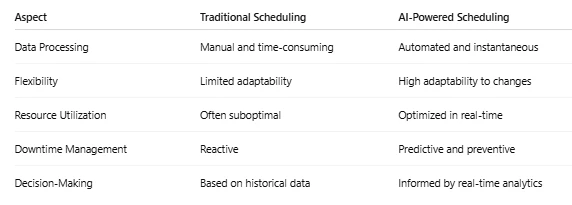
Source: Deskera Blog on AI in Manufacturing
🏭 Real-World Applications and Case Studies
1. Siemens' Smart Factory Initiatives
Siemens has integrated AI into its manufacturing processes, resulting in improved production speed and reduced downtime. Their approach emphasizes data analytics and predictive maintenance, showcasing AI's potential in enhancing operational efficiency.
2. BMW's Virtual Factory
BMW employs AI to create virtual simulations of its assembly lines, allowing for detailed planning and optimization. This strategy has led to enhanced efficiency and reduced risks associated with real-world experimentation.
🔧 Implementing AI in Your Manufacturing Process
To successfully integrate AI into production scheduling:
- Assess Current Systems: Evaluate existing processes to identify areas where AI can add value.
- Choose the Right Tools: Select AI solutions that align with your operational needs and can integrate with current systems.
- Train Your Team: Ensure staff are equipped with the necessary skills to work alongside AI technologies.
- Monitor and Adjust: Continuously analyze AI performance and make adjustments to optimize outcomes.
Implementing AI requires careful planning, but the long-term benefits in efficiency and cost savings are substantial.
✅ Conclusion: Partnering with AQe Digital
Embracing AI in smart factories is more than a technological upgrade; it's a strategic move towards sustainable and efficient manufacturing. At AQe Digital, we specialize in integrating AI solutions tailored to your unique production needs, ensuring a seamless transition into the future of manufacturing.
Discover how smart scheduling is transforming production across industries:


























Sign in to leave a comment.