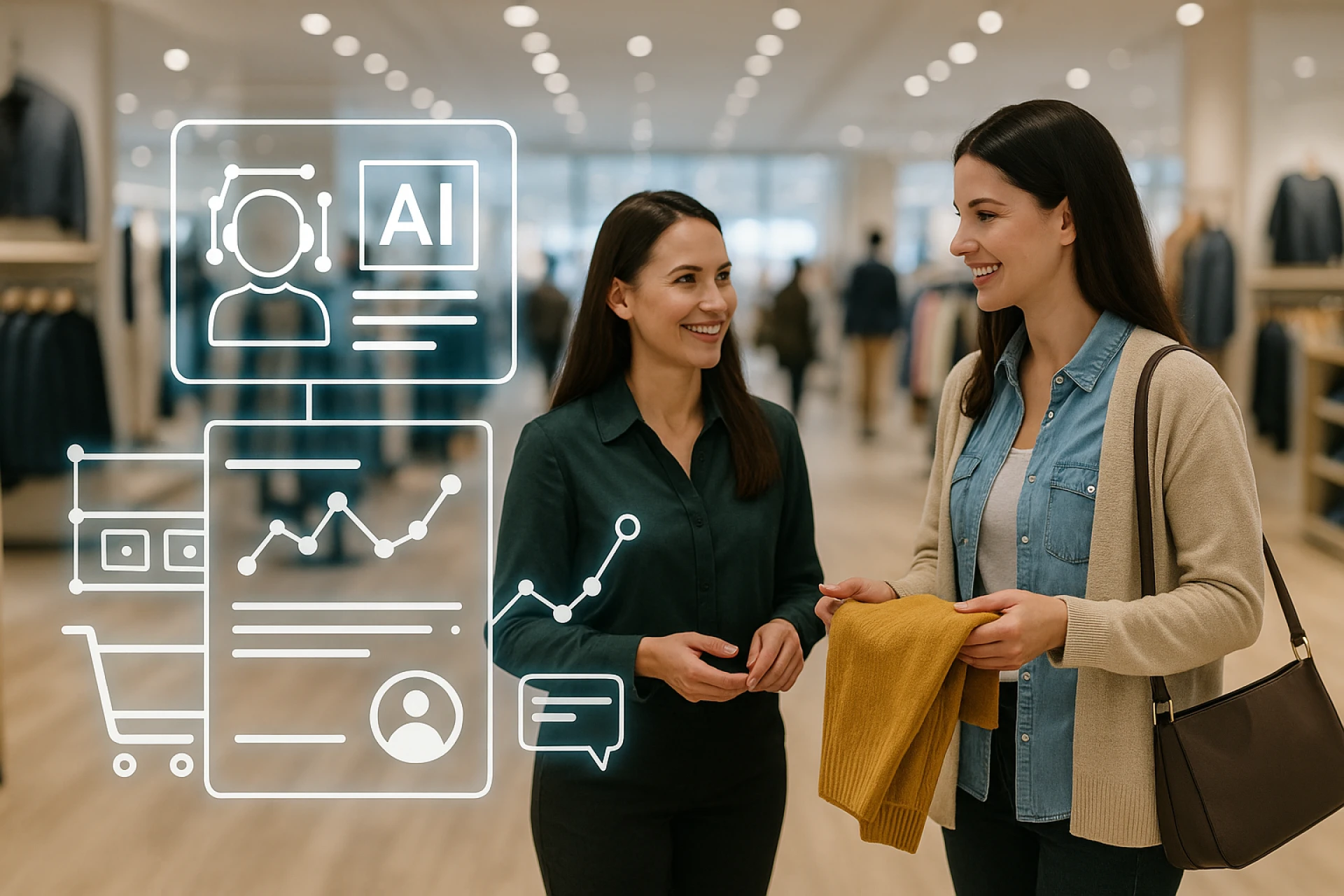

In today’s fast-evolving retail landscape, artificial intelligence (AI) and automation are no longer futuristic ideas, they're integral to business strategy. From predictive analytics to cashier-less stores, retail AI solutions are driving tech-driven innovation across the sector. Over 80% of retail executives believe that AI will significantly enhance customer experience by 2030.
But as businesses race to automate, a critical question arises: Can retail remain personal and human-centered in a world increasingly run by algorithms?
This article explores how retail leaders can harness the power of AI while preserving the empathy, creativity, and intuition that only humans bring. Because while automation wins transactions, humans win relationships.
The Rise of AI in Retail
AI’s impact on retail is undeniable. From streamlining operations to personalizing shopper journeys, it is transforming the way brands interact with customers and manage resources.
Market trends indicate exponential growth: global spending on AI in retail is expected to exceed $30 billion by 2026. Retailers are using AI in multiple ways:
- Chatbots and virtual assistants provide instant support and reduce pressure on call centers.
- Smart shelves and robotic inventory systems monitor stock levels and replenish supplies with minimal human intervention.
- Predictive analytics helps forecast demand, optimize pricing, and reduce overstocking.
These tools offer clear benefits:
- Operational efficiency by automating repetitive tasks
- Cost savings through reduced labor and waste
- Round-the-clock service that meets customers where they are
But amidst these gains lies the danger of depersonalization, especially if automation replaces—not augments—human connection.
The Value of the Human Touch
Despite digital progress, retail remains deeply emotional. Customers seek more than convenience—they want to feel seen, understood, and valued.
Emotional intelligence, which AI still struggles to emulate, plays a crucial role in building customer loyalty. Consider these real-world examples:
- A store associate picks up on a shopper’s hesitation and offers alternatives that AI may overlook.
- A customer calls with a complaint, and a human agent’s empathy diffuses frustration in a way scripted bots rarely can.
- A personal stylist suggests a bold wardrobe choice based on subtle cues like confidence level and body language.
According to PwC, 59% of global consumers feel companies have lost touch with the human element of customer experience. Retailers who blend high-tech with high-touch have a distinct edge.
Brands like Apple, Nordstrom, and Lush invest heavily in people—not just tech—because they understand that relationships drive repeat business, not just algorithms.
Integration Strategies: Combining AI with Human Insight
The future isn’t man or machine—it’s man and machine working in harmony. Here’s how leading retailers are integrating AI without sacrificing the human touch.
1. Human-in-the-Loop Models
AI manages routine tasks—inventory checks, product recommendations, scheduling—while humans intervene in nuanced, high-emotion situations.
Example: Sephora offers virtual try-ons powered by AI, but customers can also chat live with beauty experts for deeper consultation.
2. AI-Augmented Associates
Equipped with real-time data, frontline employees can personalize interactions far more effectively.
Imagine a store associate receiving prompts from an AI tool: “This customer bought hiking gear last month; recommend trail shoes now.”
The result? Faster service, smarter suggestions, and a more personal feel.
3. Personalized Experiences at Scale
AI tailors experiences, while humans provide warmth and interpretation.
At Nordstrom, personal stylists access customer data to refine recommendations but rely on instinct and rapport to seal the sale.
4. Case in Point: Lowe’s
Lowe’s uses in-store robots to guide shoppers to items, freeing staff to provide project advice or upsell services like installation.
The message is clear: Let machines handle the ‘what’, so humans can focus on the ‘why’ and ‘how.’
Common Pitfalls and How to Avoid Them
While automation offers efficiency, poor implementation can erode customer trust. Here are key pitfalls to avoid:
1. Over-Automation
Fully replacing human support can create cold, frustrating experiences.
Imagine a customer trying to resolve a billing issue but stuck in an endless chatbot loop—likely resulting in churn.
Solution: Always offer a “talk to a human” option.
2. Algorithmic Bias and Privacy Risks
AI systems trained on biased data can discriminate unintentionally.
Examples include biased hiring algorithms or recommendation engines skewed by incomplete demographic data.
Solution: Regular audits, ethical frameworks, and transparent data usage.
3. Tech Fatigue
Constant notifications, chatbot pop-ups, and digital check-ins can overwhelm rather than delight.
Solution: Design AI to be helpful, not intrusive. Prioritize frictionless, choice-driven journeys.
Ultimately, automation should support—not smother—the customer experience.
Training the Workforce for a Hybrid Future
To successfully blend human touch with automation, retailers must invest in their people.
1. Reskilling & Upskilling
Frontline employees should be trained in digital tools and soft skills like empathy, storytelling, and adaptability.
Think: A cashier turned product consultant, aided by AI-driven insights.
2. Change Management
Employees may fear AI as a job threat. Leadership must frame automation as an enabler.
Culture is key—staff should see AI as a co-pilot, not competition.
3. Leadership’s Role
Executives must walk the talk. Showcase how AI can empower, not replace.
Encourage open dialogue, reward innovation, and lead with clarity.
When people feel supported, they’ll embrace technology—and elevate customer experience in the process.
Designing Human-Centered AI
Technology should adapt to human needs, not the other way around.
1. Human-Centered Design Principles
- Transparency: Let customers know when they’re interacting with AI
- Accessibility: Ensure experiences work across age groups, abilities, and languages
- Feedback loops: Continuously refine based on real customer input
2. Involve Frontline Staff in AI Development
These employees have unmatched insights into customer behaviors. Their input can improve UX, flag potential pitfalls, and inspire features that truly serve.
3. AI as a Relationship Facilitator
Use automation to surface deeper insights—then empower humans to act on them with authenticity.
Retailers who bake empathy into their tech stack will set a new standard in customer care.
Future Outlook: The Empathetic Retail Ecosystem
Looking ahead, the most successful retailers will create blended experiences—fluidly combining AI precision with human creativity.
Imagine:
- A virtual AI concierge that remembers past purchases
- A smart mirror suggesting outfits while a human stylist adds flair
- Autonomous checkout paired with friendly post-purchase follow-ups
Retail won’t just be efficient—it will be empathetic, inclusive, and deeply personal.
But that future requires responsible innovation: robust governance, ethical safeguards, and a relentless focus on value, not just novelty.
Final Thought
AI is reshaping the future of retail—but it’s your people who will shape its soul.
Let automation handle transactions. Let humans build relationships. And together, through thoughtfully implemented retail AI solutions, they'll create the next great retail revolution.










Sign in to leave a comment.